4 Ways Fractals Changed Tech Forever
Audio Summary
AI Summary
Before being named "fractals," intricate shapes like the Koch snowflake were considered mathematical "monsters." Initially confined to pure mathematics, fractals were not thought to exist in nature or have practical applications. However, this notion changed, revealing fractals' ubiquitous presence in nature, from clouds to coastlines, and their significant engineering applications.
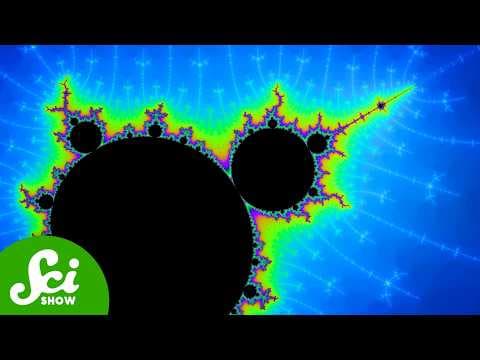
Benoit Mandelbrot, working at IBM in the 1980s, explored mathematical functions that, when iterated repeatedly, produced complex and iconic shapes like the Mandelbrot set. He discovered that fractals possess a unique characteristic: infinite intricacy upon zooming into their edges, a property he observed also in natural phenomena like coastlines. Mandelbrot coined the term "fractals" and initiated a revolution in understanding and creating them.
One key application of fractals is in antenna design. Traditional antennas, typically straight lines or simple arrangements, are frequency-specific. Fractals, however, can act as multiple antennas in a single, compact design. Their space-filling properties, like those of the Hilbert curve, allow for greater antenna length within a small area, crucial for devices where space and weight are limited, such as microchip ID tags or drones. The repeating patterns in fractals enable resonance across various radio wave frequencies, leading to clearer signals. Research demonstrates fractal antennas, incorporating patterns like the Sierpiński gasket and Hilbert curve, capable of receiving signals across multiple frequency bands effectively, with potential for improved mobile reception.
Fractals also aid in cooling small devices like fuel cells and microchips. Traditional cooling methods involving fluid circulation become challenging at micro-scales due to liquid viscosity. Fractal heat exchangers, with their branching structures, offer a solution. These designs allow for "pressure recovery" at each branch, reducing the pressure needed to move the liquid. Furthermore, the branching mixes the fluid, bringing hotter liquid to the surface for more efficient heat dissipation, similar to stirring hot tea. These fractal heat exchangers can be up to 25% more efficient than conventional designs, which is significant for preventing overheating in sensitive micro-devices.
The concept of fractal dimension, a single value quantifying a fractal's intricacy, is also applied in biomedical research. By analyzing the fractal dimension of biological systems, such as retinal blood vessels, researchers can identify disease risks. For instance, studies have linked increased fractal dimension in retinal arteries to a higher risk of dementia and retinopathy.
Finally, fractals are fundamental to generating realistic, expansive environments in video games like Minecraft. Instead of storing vast amounts of data, games use fractal-generating algorithms, like Perlin noise, to create detailed landscapes on the fly. This process involves applying iterative mathematical functions with slight random variations, allowing for the generation of complex details at progressively finer scales as a player approaches. This technique conserves memory and processing power, making it efficient for creating vast game worlds and realistic textures.