Cambodia's BIGGEST Holiday is Coming - Khmer New Year!
Audio Summary
AI Summary
The speaker, Ryan, who lives in Cambodia, is preparing for Khmer New Year, also known as Songkran, the biggest holiday in the country. He plans to discuss the holiday's traditions, the controversial water fights, the government's stance on them, and his personal plans for this year's celebration. Before delving into the New Year details, he's heading to the Phnom Penh Central Post Office to pick up a package from his PO Box, which he will unwrap at the end of the video.
Khmer New Year is a celebration of the solar New Year, derived from the Hindu calendar, which tracks the sun's movement relative to the stars. Specifically, it marks the sun's transition from the Pisces to the Aries constellation. While technically this astrological event occurs around April 18th, the New Year holiday typically aligns with the Gregorian calendar, falling between April 14th and 16th. This year, the festivities are extended by three additional days, lasting until April 19th. Despite its solar origins, the speaker notes that on the ground in Cambodia, the holiday is more practically linked to the end of the harvest and dry seasons, as the Gregorian calendar is universally used.
Traditional celebrations involve visiting temples and spending time with family. Phnom Penh usually empties out as residents return to their home provinces. However, this year, the capital is expected to be busier, a point the speaker intends to elaborate on later. Cambodians also organize community events featuring traditional games. The speaker mentions two examples: Choul Chhoung, which he roughly translates as "lotus toss" or "bowl toss," involves two teams (usually boys and girls) throwing a krama (traditional Cambodian scarf) tied into a ball. The game includes specific rules for catching or dropping the scarf, accompanied by songs and dances. Another game, Orb Tralok, meaning "hugging the winter melon," involves a buyer, a seller, and other players acting as "winter melons" who form a chain by wrapping their arms and legs around a tree or pillar and each other. The buyer then attempts to pull away the last person in the chain. The speaker humorously compares it to the violent game of Red Rover from his own school days. He intends to seek out people playing these games during the New Year festivities. He also describes a non-traditional game he observed last year, similar to "duck, duck, goose" but involving two pairs of people running in opposite directions and switching partners before racing back to an empty space.
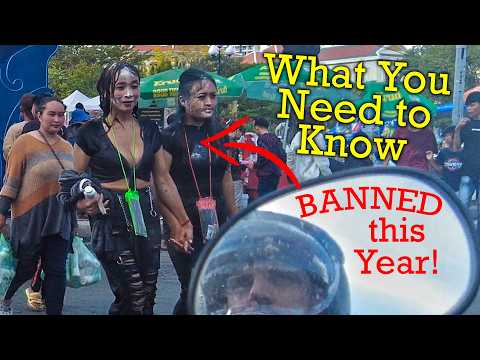
The discussion then shifts to water fights, a popular but not entirely traditional aspect of Khmer New Year. Historically, the third day of the celebration, Vireak Laung Sak (which Google Translate suggests means "the matter is resolved"), is a day of respect and thankfulness. On this day, people traditionally wash Buddha statues with perfumed water as an offering and sprinkle perfumed water on elderly family members as a blessing and a sign of care. This respectful act has evolved into large-scale water fights where people spray each other, often for amusement. While acknowledging the fun of these modern water fights, the speaker notes they depart significantly from the original respectful tradition.
Consequently, the Cambodian government has issued guidelines for this year's Khmer New Year, explicitly prohibiting water fights, water throwing, and water guns, citing traffic accident and injury prevention. Fireworks are also banned from use and sale. Despite similar announcements last year, the speaker recalled getting wet, suggesting the bans might not be strictly enforced. He personally enjoys the water fights, viewing them as an evolution of tradition, but expresses curiosity about how Cambodians feel about them.
Normally, the largest Khmer New Year celebration takes place in Siem Reap, particularly on Pub Street, known for its massive water fights. However, this year, the main festivities have been relocated to Phnom Penh, a decision the speaker speculates might be related to a border dispute with Thailand. He plans to attend the events in Phnom Penh, including a behind-the-scenes tour and preview of the setup. He has also translated an event map from the tourism ministry, which details activities like traditional dancing, fighting, singing, shadow puppet shows, and games across various city locations. He encourages viewers to check out the map link in the video description and stay tuned to his channel for comprehensive coverage of the holiday.
Finally, the speaker opens the package from his PO Box. It's from Joshua Casey in West Virginia, containing two gifts. The first is "top-tier American-made anti-itch foot cream," a humorous jab at the speaker's "itchy feet" (a metaphor for wanderlust). The second gift is a "practical shoulder bag for moto trips," chosen because Casey considers the speaker his "favorite Canadian YouTuber." The speaker clarifies he is not Canadian, referencing the "Terrance and Phillip" characters from South Park who are Canadian stereotypes. He expresses gratitude for the gifts and the supportive message, inviting viewers to send their own packages to the displayed PO Box address.