So you're a sophomore, what now? | Briana Wheeler | TEDxMurfreesboro
Audio Summary
AI Summary
The sophomore slump, also known as the second-year blues, describes a period of uncertainty and disillusionment that follows an initial period of success or accomplishment. This phenomenon affects various individuals, from athletes and artists to students. In high school, sophomore year is particularly characterized by this slump, stemming from a perceived lack of social and institutional power.
Socially, seniors are at the top due to their experience and impending departure. Juniors, as upperclassmen, have a stable place. Freshmen, while at the bottom, receive attention and support as they assimilate into the school culture. Sophomores, however, are in a unique position of invisibility. They are no longer freshmen with built-in support, nor are they upperclassmen with established influence. This lack of external focus can lead to social pressures, friendship drama, and a sense of loneliness as they navigate shifting values and a changing sense of self.
Institutionally, juniors are paramount, with their year heavily focused on college preparation, academic rigor, and influencing school decisions. Seniors are celebrated and prepared for their exit through events like prom and graduation. Freshmen are guided through orientation and acclimatization programs, benefiting from a period of grace for mistakes. Sophomores, again, fall into a middle ground. They are past the freshman support structures but not yet at the cusp of graduation. This leaves them in a state of maintenance, continuing their studies without significant institutional focus, which can lead to monotony and a decline in motivation.
This framework defines the sophomore slump as a combination of social loneliness and institutional invisibility, where progress is made without significant external acknowledgment.
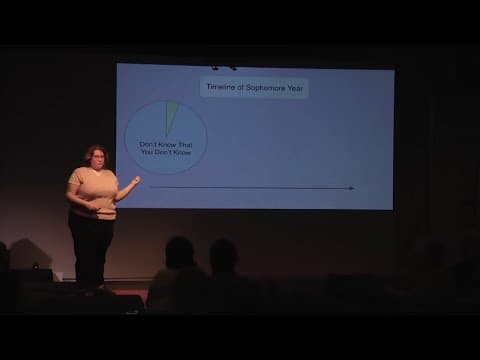
To understand this, the transcript introduces a framework for knowledge categorization:
1. Things you know you know (e.g., 2+2=4).
2. Things you know you don't know (e.g., the feeling of flying for the first time).
3. Things you don't know you don't know (the most difficult to grasp, as acknowledging them changes their status).
Sophomores often believe they know more than they do, perceiving their knowledge as complete. In reality, their base of "things they know they know" is small, while the majority is "things they don't know they don't know." This disconnect contributes to the "sophomoric" trait – being simultaneously confident and immature, stemming from the Greek words *sophos* (wise) and *moros* (foolish).
The first semester of sophomore year is challenging, marked by disillusionment, grumpiness, loneliness, and fatigue. Winter break offers a crucial respite, allowing for reflection and a settling of experiences. This break facilitates a realization that sophomore year is about confronting the intersection of invisibility and despair, which then transforms into opportunity. The instability of their perceived foundation becomes a chance to establish new friendships and explore new activities, all while operating "under the radar." This period of invisibility allows for significant personal course correction that will impact their future journey, unlike older students whose changes are more readily noticed.
By the end of sophomore year, the goal is for students to recognize the vastness of what they don't know, leading to a more nuanced understanding of their knowledge base. A key skill to develop is discernment – choosing which unknown areas to explore.
The speaker then relates this to their own "sophomore slump" at age 27, after achieving several life milestones. Feeling a lack of excitement and a sense of misalignment, they realized they were experiencing a personal sophomore phase. This led to a career change, choosing to leave teaching despite enjoying it, to reclaim their time. They suggest this sophomore phase can extend beyond high school into adulthood, and even apply to families, cities, and nations grappling with their next steps after initial development or achievements. The core question for all these entities, and for individuals experiencing a slump, is "What now?"