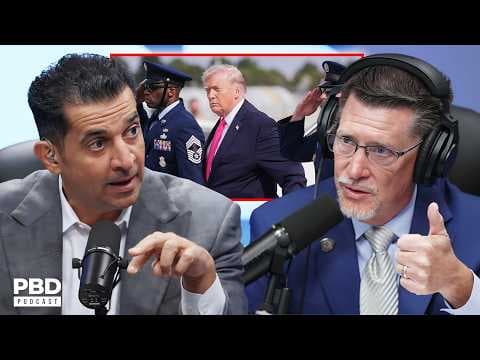
“Strait Of Iran Is FULLY OPEN” - Trump DECLARES Iran War Victory As Hormuz Reopens
Audio Summary
AI Summary
Recent developments include a significant announcement regarding the Strait of Hormuz. Iran's foreign minister posted on X, declaring the passage for all commercial vessels through the Strait of Hormuz completely open for the remaining period of the ceasefire in Lebanon. This declaration follows coordination with the Ports and Maritime Organization of the Islamic Republic of Iran.
This news has had an immediate and strong impact on the stock market. The S&P is at an all-time high, up 71.20 points, and the Nasdaq is also at an all-time high. The VIX, which measures market volatility, is very low, indicating a calm market. Gold prices are approaching $4900, and Bitcoin is around $75,000.
The speaker emphasizes the importance of understanding the details of what was negotiated behind closed doors to achieve this opening. He draws a parallel to a previous discussion about the strategic importance of the Panama Canal, which he considers crucial for the U.S. to control to prevent manipulation by China. Now, he suggests that Karg Island in Iran, and other islands in that vicinity, could hold similar strategic importance for the U.S.
The discussion then delves into the geopolitical implications for China. The Strait of Hormuz and the Panama Canal are critical for China's energy supply and trade routes. The speaker explains that China utilized the Panama Canal to obtain Venezuelan oil during embargoes, transporting it across the Pacific. In the current global landscape, if China lacks a dominant negotiating position in both these crucial areas, it becomes vulnerable and reliant on other nations, particularly the United States, for its energy needs.
The speaker also touches upon the "fear and greed index" on CNN, noting that despite periods of extreme fear, like during the COVID-19 pandemic, the market eventually recovers and reaches new highs. This cyclical nature suggests that while short-term volatility exists, the long-term trend can be upward.
Returning to the strategic locations, the speaker reiterates the importance of the Panama Canal for the Western Hemisphere's safety, suggesting that control over it could prevent future global disruptions similar to COVID-19. However, he raises concerns about potential political shifts in Panama that could alter this control.
Regarding the Strait of Hormuz, the speaker notes a significant detail in a tweet from Donald Trump, who referred to it as the "Strait of Iran" instead of the "Strait of Hormuz." This deliberate choice of wording is seen as a crucial part of a negotiation strategy. The speaker recalls a historical interview with the Shah of Iran, where the naming of the "Persian Gulf" versus "Arabian Gulf" was a point of contention, highlighting that words carry significant weight in diplomacy and negotiations.
The speaker speculates that the renaming of the Strait to "Strait of Iran" could be a vanity concession made by the U.S. in exchange for significant strategic gains, such as establishing a military presence or influencing Iran's nuclear ambitions. He believes this is part of a larger negotiation where the U.S. aims for complete control or influence, rather than just a partial agreement. The speaker expresses a strong desire to uncover the full extent of what was negotiated and what "all" truly means in this context.
Finally, the video transitions to an unrelated product introduction: a "Faith Over Fear" hat. The hat, black on white with a cross and "Hebrews 11:1" on the back, is presented as a symbol of faith in Jesus Christ and a mindset of fearlessness. The speaker notes a recent Gallup poll indicating a significant increase in the percentage of young men (18-29) who consider religion very important in their lives, suggesting a societal shift towards faith. The hat is available on vtmerch.com, with limited supply.