From Gigawatts To Grab-And-Go: Crusoe Leans Into Modular AI Data Centers
Audio Summary
AI Summary
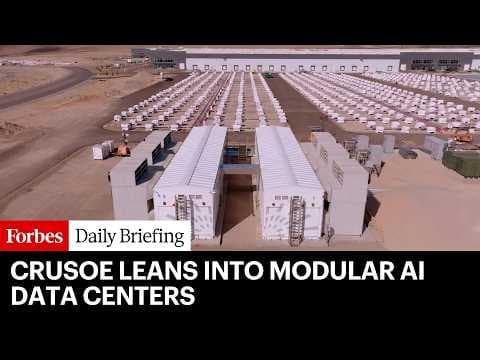
Crusoe, a company that shifted its focus from Bitcoin mining to AI data centers in 2024, is now investing $200 million over the next year into smaller, pre-packaged modular data centers, branded Crusoe Spark. This includes a new 350,000 square-foot factory in Brighton, Colorado, to produce these units. Unlike the larger Abilene partnership, which involves buildings drawing over 100 megawatts, Spark units are about 1 megawatt each and are designed for inference—the actual running of AI models—rather than massive training.
Crusoe plans to produce approximately 100 modular data centers annually, with the first units expected this summer. Co-founder Cullen Cox describes this as a "barbell strategy," emphasizing that the company will continue with its hyperscale units while also developing Spark as a significant product offering. Cox views Spark units as the next phase of AI infrastructure, allowing for distributed data centers that can be easily transported and stacked. This modularity enables Crusoe to deploy capacity in chunks on schedule, avoiding delays associated with large-scale builds.
Currently, all Spark capacity is sold through Crusoe's cloud offering, serving customers like AI startup Deckard for video generation. These smaller units are suitable for companies needing data centers closer to users for faster response times or enterprises requiring on-site AI systems for security. Crusoe is also exploring deploying these units through a new product called Edge Zones.
The move towards modular data centers comes amid uncertainty surrounding large-scale projects, with reports suggesting potential limitations on the Oracle partnership, though Crusoe's co-founder dismissed this. Modular data centers are gaining traction as hyperscale projects face delays, power bottlenecks, and public pushback. Projections indicate significant growth in global sales of smaller, repackaged data centers, from $11 billion in 2025 to $48 billion by 2030, as AI demand shifts from training to model usage. While Crusoe enters a competitive market with existing players, modular data centers are seen as a way to deliver compute quickly and reliably wherever needed, offering a hedge against potential overcapacity in hyperscale deployments.