India That We Are Adjusted To | Prince Rathore | TEDxSainik School Bijapur Youth
Audio Summary
AI Summary
India, a country revered for its religion, unity, and culture, faces severe internal challenges despite being the world's fourth-largest economy and a developing nation. Approximately 30% of its population lives below the poverty line, over 200 million people contribute to a significant global hunger report, and unemployment remains a major issue.
Despite strong laws, India ranks 128 out of 177 in women's sexual harassment reports. It stands at 176 in the Environmental Performance Index, 131 in the Gender Gap Report, 96 in Corruption, and 111 in the World Hunger Report. Thirty of its cities are among the top 20 most polluted globally, making India the second most polluted country. For instance, Delhi, the capital, often experiences air quality index levels above 400.
These problems stem from the people and the government, particularly flawed politics. Politics, meant to serve the nation, now dictates it. We choose sides over leaders, leading to poor governance. The tax system is burdensome, with citizens paying taxes on income, spending, purchases, and sales, often on already taxed items. Despite this, facilities are lacking, and we demand honest leaders while refusing to be honest voters. Democracy isn't just voting; it's daily questioning. The Central Commission of India, meant to supervise politics, is also failing. Politicians often make false promises, as illustrated by a village example where a minister promised a hospital and internet connectivity, only to reveal these were empty assurances.
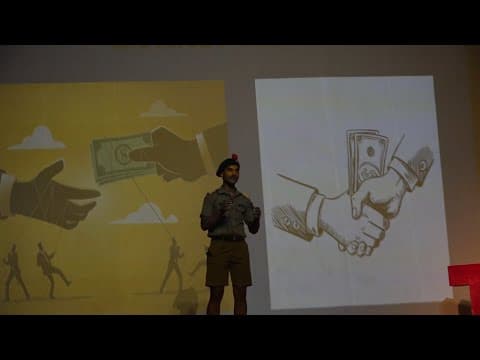
Corruption in India is insidious, often adjusted and deemed illegal only when not political. It influences everything from licenses to elections, where money dictates power and silence. We condemn corruption on television but practice it, often asking, "Is there any setting?" rather than "Is this right or wrong?" Politicians even justify their corruption by claiming others are more corrupt.
Religious devotion is paradoxical. While cows are worshipped as gods, their condition is poor. Rivers, prayed to and respected, remain heavily polluted despite government spending. Government schools, associated with the goddess Saraswati, are in a deplorable state. The mistake lies in prioritizing religion over reality, using it to divide rather than unite.
The health sector, despite numerous hospitals and new doctors, sees 500,000 deaths annually from tuberculosis, a number unchanged since independence. A recent case highlighted a father carrying his dead child in a plastic bag due to lack of an ambulance.
Education and civic sense are declining. Degrees increase, but critical thinking decreases, as "unthinking people are easy to control." Civic sense is so low that people clean their homes but litter their colonies. Even educated individuals, like technicians and engineers, litter public spaces.
India's biggest problem is not poverty or population but a lack of accountable leadership and responsible citizens. Real patriotism is about responsibility. Change will only happen when both the people and the government unite. As the Prime Minister said, "Governments will come and go, parties will be formed, they will break, but this country should remain. The democracy of this country should remain immortal."