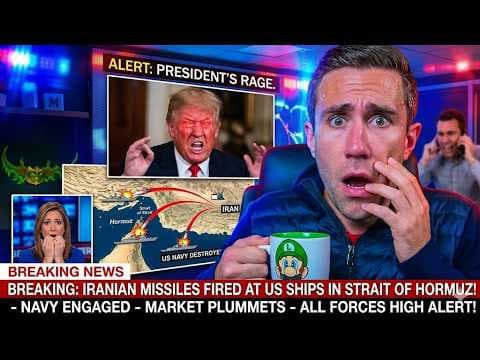
Iran JUST Attacked | Crap - What this Means.
Audio Summary
AI Summary
The geopolitical situation, particularly concerning Iran and its actions in the Strait of Hormuz and surrounding areas, is impacting global markets and economies. Iran has attacked a UAE port, Fujairah, which is strategically located on the Gulf of Oman, outside the Strait of Hormuz. This port is significant as it allows for the rerouting of oil via land, bypassing the Strait. The attack involved drones and cruise missiles aimed at ships, including US and North Korean vessels.
Iran's actions are interpreted as a response to a "semi-permeable blockade" implemented by Donald Trump. This blockade allows certain neutral or allied vessels to pass while potentially restricting those affiliated with Iran. Iran claims it has ceased further attacks, stating its goal was to send a signal. Their demands for a resolution include lifting blockades, reopening the Strait of Hormuz, delaying nuclear discussions, and securing a permanent ceasefire.
The speaker speculates that Iran is also using this situation to buy time for its uranium enrichment activities, particularly at the Pickax Mountain facility, which they believe is active and deeper than other known sites. This is viewed as a strategic move to maintain leverage, as nuclear weapons provide deterrence. The speaker highlights the concern that countries with less to lose might be more prone to using nuclear weapons if they possess them, referencing the situation in Ukraine.
The economic implications of these events are discussed. In the short term, volatility in stocks and bonds is expected, with potential for higher oil prices leading to sustained higher interest rates. However, the speaker suggests that the stock market might absorb this "drama" and continue to rise, which could influence Donald Trump's policy decisions.
Upcoming economic data releases, including jobs reports (ADP, JOLTS, Challenger job cuts) and earnings from major companies like Palantir, AMD, and ARM, are anticipated to be significant catalysts. Institutional analysis suggests that despite the seemingly irresistible setup for shorting, market positioning indicates it's too early. Leverage is subdued, and significant deleveraging has occurred, meaning cash is available for deployment.
The speaker notes that even crowded trades in sectors like semis are not at extremes. They believe that companies like Nvidia and AMD are currently undervalued. The current market sentiment, with high doubt and low leverage, does not yet signal a contrarian top.
Looking beyond the immediate conflict, the speaker anticipates a future scenario with an oil glut and a significant stimulative boom driven by defense, infrastructure, and AI spending, coupled with cheaper oil. Recent economic data, such as strong factory orders (1.5% monthly gain, 18% year-over-year) and increases in durable and non-durable goods orders, supports this optimistic outlook for economic growth.
Iran's need to lash out is seen as a tactic to keep its issues, particularly its nuclear program, in the global spotlight and pressure for negotiations. The speaker believes Iran aims to secure concessions on its nuclear ambitions in exchange for a cessation of hostilities.
Overall, the expectation is for continued volatility, with a focus on the end of the month for potential bullishness. The speaker advises a conservative approach, looking for good deals in the stock market rather than just chasing momentum. The ongoing AI boom, evidenced by Google Cloud's growth and increasing capital expenditures, is also highlighted as a major driver of economic activity, with significant spending expected in AI and real estate valuation technologies.