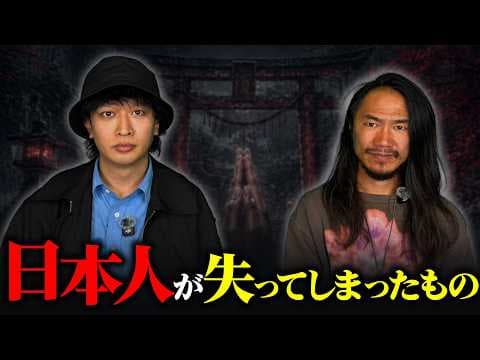
【LIVE】夜明け前の日本配信
Audio Summary
AI Summary
The speaker begins by greeting the audience for a YouTube Live session, noting a recent increase in their live streaming frequency. They apologize for a delayed video release, explaining it was due to unforeseen circumstances requiring system review and involving some very long videos. The speaker expresses gratitude for the audience's participation, especially those attending a live stream for the first time.
The conversation shifts to a personal anecdote about a tractor getting stuck in a swamp during Golden Week, which was shared on Instagram and X. The speaker describes the difficulty of the situation, noting that rice paddies have a base underneath mud, and the tractor got stuck when it went off this base. Despite hours of effort and various suggestions from others, the tractor remained stuck. The speaker hopes someone will help pull it out, mentioning that their tractor was small and the location, a terraced rice field on a hill, makes it inaccessible for services like JAF. The speaker notes that their troubled expression, usually consistent on social media, was genuinely visible and garnered many helpful comments.
The discussion then moves to upcoming events, specifically lectures in Kyoto, Kagoshima, and Hiroshima. The speaker mentions that the lecture in Shibushi, Kagoshima, on June 3rd, was influenced by Narumi Shuhei's work. They express excitement about reaching 1 million subscribers this year. The speaker notes that Kagoshima is a rare location for them to visit and expresses anticipation for the event, for which they have already booked a hotel. The Kyoto event, with 200 seats, sold out in minutes, while the Kagoshima event, initially for over 600 people, is now almost at 700 and selling quickly despite its remote location.
The speaker reveals a deeper significance behind these locations: Kyoto, Kagoshima, and Hiroshima are all places connected to their ancestral roots. Kyoto is linked to their maternal grandmother, a master carpenter; Kagoshima to their mother's side, a family connected to Shinto shrines; and Hiroshima to their father's side, where their great-grandfather conducted research. This personal connection makes these locations particularly meaningful for the events. The speaker shares that their family, initially from Tokushima, moved to Osaka, and that their ancestors' history and contributions are being re-evaluated within the family.
The speaker's great-grandfather, for instance, researched expulsion from school in Shibu, a topic that caused family discord but led to deep academic engagement. The speaker believes their own current interest in history, particularly "What the Japanese Have Lost," is directly related to this ancestral legacy. They emphasize the importance of asking elders about their family history, noting that psychological research suggests anxiety disorders can be inherited up to three generations, highlighting the impact of ancestral patterns.
The speaker explains that some ancestors, after a certain point, began to cherish their lineage, moving graves to Osaka to maintain family connections. Their maternal grandmother was a revered temple carpenter from Kyoto, and their paternal grandfather, who moved from Hiroshima, ran two restaurants in Osaka before his son started a carpentry company, building the family home. This legacy underscores the importance of individual contribution and responsibility within a family line.
The conversation then shifts to a broader discussion about societal changes and the "loss" of certain values in modern Japan. The speaker mentions the perceived decline in interest in family history among current generations, partly due to the post-war era and the difficulty in tracing lineage. They suggest that the direct grasp of identity is becoming harder.
The speaker connects this to a contemporary debate about the Imperial family, specifically the discussions around female emperors and the male lineage. They argue that the aggressive push for a female lineage, appearing at this particular time, feels like an external influence attempting to fundamentally alter Japan's system. They reference the post-WWII GHQ plan to weaken Japan, including reforms to the Imperial family system, which systematically reduced the number of imperial branches and made it harder to maintain the lineage, effectively setting a 80-100 year plan for its eventual disappearance. The speaker views the current debate as a continuation of this calculated effort to dismantle important Japanese traditions.
The speaker expresses concern that many people are swayed by emotional arguments rather than understanding the historical weight and implications of such changes. They highlight the paradox that the intense effort and resources being used to push for these changes indicate the immense value and importance of what is being targeted. They compare this to other cultures, like Polynesia and Mongolia, where historical lineage and identity have been lost due to external forces, leading to suffering and a lack of self-understanding among the people. The example of the Chamorro dance, revived by an individual due to the complete loss of original traditions, illustrates the desperation that arises when history is broken.
The speaker argues that modern discussions, like those about female emperors, often lack nuance and are framed in black-and-white terms, preventing genuine understanding. They emphasize that the Imperial family's role is not a popularity contest but a matter of deep historical and cultural accumulation. The current attacks on traditional systems, using significant resources, confirm their inherent value.
The conversation broadens to the state of the world and individual well-being. While data suggests improvements in physical health, life expectancy, and access to information, the speaker feels that individual mental states are deteriorating. They note an increase in mental illness and a sense of disconnection. The speaker, having a background in psychology, highlights the importance of attachment formation in childhood. They argue that modern parenting, characterized by conditional praise and an imbalance between maternal and paternal roles, contributes to issues like "eternal boyhood" in men—a reluctance to make decisions and take responsibility.
The speaker explains that the disappearance of "injustice" (referring to the father's role in challenging and separating the child from the mother's embrace) has led to this imbalance. Historically, fathers exposed children to the outside world and its challenges, fostering independence. Now, with fathers often working in factories and being less visible in the community, children don't witness this "injustice" or the father's reliable side, leading to an unclear understanding of what a father is. This results in adults who seek a mother figure in romantic partners, lack confidence in guiding others, and are easily swayed by external opinions due to a lack of internal standards.
This dynamic manifests in relationships where no one wants to take responsibility, leading to difficulties in love and marriage. The speaker notes that the legal system can sometimes disadvantage women in these situations, making it harder for both partners to navigate challenges like finances, time, and childcare. The lack of responsibility-taking and decision-making skills can turn disagreements into hostile confrontations, as individuals interpret any challenge as an attack. They describe a psychological phenomenon where people with a strong victim mentality rewrite memories, retaining only perceived harms and external criticisms, making it difficult for them to engage in constructive dialogue.
The speaker explains that research suggests the only way for such individuals to change is to "hit rock bottom" – to experience a significant failure or loss that breaks their current cycle and forces self-reflection. This is not something that family or friends can easily achieve through persuasion; it requires an expert or a profound personal experience. They connect this to the idea of "outsmarting the devil," where a major setback is necessary for personal growth.
Finally, the speaker references Japanese mythology, specifically the story of Susanoo, who was initially a troublemaker but was forced by his father to leave his mother and embark on a journey. This journey, involving challenges and battles, served as an "initiation" into adulthood, leading to his recognition and eventual acquisition of the Kusanagi Sword. This mythological narrative, the speaker concludes, highlights the ancient understanding of the importance of these transitional rituals for developing into a responsible adult, a concept that has largely been lost in modern society. The speaker encourages the audience to reflect on these themes, inviting them to future events and noting that tickets are still available for the Kagoshima event.