A-t-on touché le fond ? Ce que le marché ne te dit pas (Iran, VIX, 6 avril) - La Météo des Marchés
AI Summary
The speaker begins by acknowledging an earlier re-recording of the market weather update due to a breaking news story that caused some repetition. The main question addressed is whether now is the time to "buy the dip," if the market has hit bottom, or if further capitulation is yet to come. The speaker states there's no exact answer and encourages collective reflection, hoping for a clearer market outlook in the future.
A series of consecutive green days with strong momentum would indicate a positive shift, aligning with the "good side of the V" theory, where one avoids catching a falling knife but embraces the upward trend. Even if it's not the absolute bottom that's bought, a positive reversal would be welcomed.
The speaker reveals plans to present research to Alpha members on an under-identified sector where "money is flowing," specifically tracking the funds from tech giants like Microsoft, Google, and potentially Nvidia. This is seen not as an "AI bubble collapse" as media might portray, but rather a visible sector rotation.
Some sectors are currently performing well, notably energy, especially oil-related assets, and some AI hardware. Metals are also showing potential for a rebound, appearing to struggle to go lower and possibly heading towards a resistance level of 80 for silver, provided oil doesn't surge.
The dollar index is described as particularly strong, seemingly accepting the 100 level, which is a crucial pivot point. Despite past rejections at this zone, it currently appears resistant to further rejection. The question of whether there's room for further decline, a rebound, or if capitulation has already occurred, remains open.
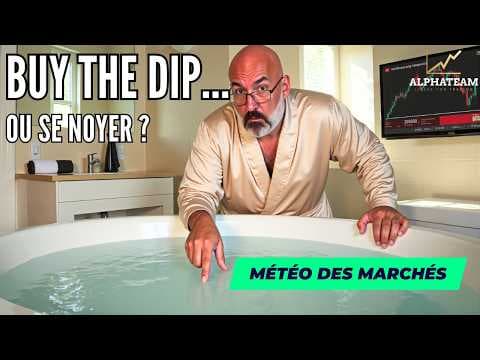
The speaker's personal thesis, reflected in the video's thumbnail, questions if the worst is behind us, especially concerning the situation in Iran, which appears to be at its lowest point. Stress indicators are at their peak, theoretically suggesting an upcoming improvement, with the VIX expected to go lower. However, shorting the VIX is a popular, almost "crazy" trend on platforms like Reddit, with many believing they'll profit. This strategy might have worked during periods of volatile but non-bearish markets, but the current extreme stress phase is different. A spike to 40 on the VIX might be necessary to "crash the markets" if current levels aren't enough.
The speaker ponders if investors have truly panicked, given that many online investors have been educated never to sell. A significant factor is the Federal Reserve's inability to assist, with a 50% chance of interest rate hikes by December, a stark contradiction to earlier expectations of one or two cuts. Inflation projections from the University of Michigan (3.8%) and Goldman Sachs (5%) indicate a worsening situation, raising concerns about a recession.
The new normal might be a regime of high volatility. The speaker is concerned whether bullish charts they analyze will be "destroyed," requiring a re-evaluation of where money is truly flowing.
Regarding day traders, playing the bounce on the Nasdaq isn't unreasonable. The pre-market currently shows some green, but it's not "furious madness."
A significant news item is Trump's statement about "big progress" and a "nearly achieved deal" with Iran, threatening to "completely obliterate Iranian electricity and Cargagand" if not reached within six days. This news caused a market reaction, with a significant "wick" on indices, suggesting potential insider trading offering good entry points, but this wick was ultimately rejected. A similar instant wick and rejection occurred in oil. The speaker notes that Trump's statements seem to have less impact on markets than before. The market is now waiting to see if Iran denies these negotiation claims. The amplitude of the dip in response to similar news last week was 16%, compared to 2% now, suggesting things aren't improving.
If the situation doesn't change and the conflict continues longer than expected, the dollar index chart remains "super bullish." A strong dollar, which can gain 5% with zero risk while other assets lose significantly, puts pressure on all risk assets. Being in cash is considered a good position, as "cash is king."
The speaker revisits the "taco trade" and the six-day deadline for Iran. The market's rebound on indices might anticipate that Trump will back down from military action, leading professionals to "buy the rumor, sell the news" or "buy the rumor, everything will be fine." The public, however, is paralyzed by Trump's threats. The speaker believes Trump's threats are a bluff and won't go through, but this doesn't guarantee improvement. Trump is simply applying pressure, a tactic outlined in his book "The Art of the Deal," which involves extreme demands, risk assessment, and de-escalation if things go wrong.
The speaker concludes the general market discussion, emphasizing caution and waiting for further developments. Monday is noted as a "fuckery" day, with the true market direction expected tomorrow. Information on flows is still awaited.
Finally, the speaker addresses cryptocurrencies. Bitcoin experienced a "flush" at 2 AM, clearing open interest on Binance, potentially marking a low. MicroStrategy saw a rebound. However, the speaker doesn't consider it an optimal low, preferring more discharged Binance open interest. There might be a billion dollars in long positions, or potentially shorts adding to positions given the downward movement. The funding isn't particularly bearish. The speaker doesn't find BTC interesting at the moment. Goldman Sachs announcing the crypto bottom has arrived is seen by the speaker as an inverse indicator, suggesting the bottom has not yet been reached. MicroStrategy's 2% rebound is minimal given its volatility, and its chart isn't particularly attractive. A macro bottom (weekly double bottom) for both MicroStrategy and Bitcoin could be confirmed if a specific line is crossed, indicating a more serious trend. The speaker speculates if Goldman Sachs and "Big Boys" are targeting Michael Saylor.
The speaker ends by encouraging listeners to take care and invites them to join Alpha Team for trading education and tools.