10 Final Bosses That RUINED Other Bosses For Us
Audio Summary
AI Summary
This discussion highlights some of the coolest final bosses in video game history, focusing on their unique characteristics, challenging gameplay, and memorable presentations.
Starting at number 10, Isshin, the Sword Saint from a Souls game, is lauded for his pure "cool factor." His introduction, where he explodes out of another character, is described as grotesque, insane, and badass. Isshin lives up to his name, being a master fighter with an overwhelming array of fast attack patterns, making him one of the hardest Souls bosses. Despite the difficulty, his coolness never diminishes, showcased by his mid-combo weapon swaps, use of a gun alongside his sword, and defiant final killing blow deflection.
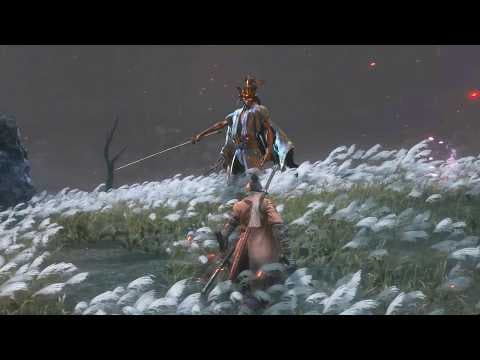
Number nine features "The Boss" from Metal Gear Solid 3. The entire climax of the game is considered, but The Boss stands out as the true final antagonist. The fight is deceptively simple, set in a field of white flowers with no music initially, pitting the player against their mentor. It's an unconventional fight, forcing hit-and-run tactics as a clock ticks down before the area is bombed. As time runs out, the game's main theme builds, adding urgency to the methodical battle. The Boss's ability to disarm and dismantle guns mid-fight makes her a unique and formidable opponent, described as a "John Wick" equivalent.
At number eight is Ganondorf in Tears of the Kingdom. Following a perceived underwhelming conclusion in Breath of the Wild, Nintendo "pulled out all the stops" for this sequel's final boss. The pacing leading up to the confrontation in the underground is excellent, and the fight itself is brilliantly executed. Ganondorf is depicted as a total badass, with an extra-long health bar and the ability to interrupt attacks. The final phase, where he transforms into a dragon, is a cinematic and unexpected conclusion for a Zelda game.
Number seven spotlights the Vergil fight in Devil May Cry 5. This is described as an incredible, challenging, and badass fight without unnecessary embellishments. The buildup, including Dante climbing into space, is excellent, and the long history between the two brothers adds significant weight to the confrontation. This is the third time players fight Vergil in the series, but the developers made this encounter feel both different and recognizable, with classic tricks and new twists. The fight is tough and drawn out, forcing players to manage their Devil Trigger or play defensively. A unique aspect is getting to fight Vergil again as Nero, showcasing Nero's new abilities in a "revenge tour" that feels powerful and liberating, as Vergil seems to lack answers for Nero's moves. The fight culminates in the brothers' reconciliation and joint entry into a demon portal.
Uncharted: The Lost Legacy's final boss takes the sixth spot. The Uncharted series traditionally struggled with final encounters, but Lost Legacy is praised for "going all out." The final chapter is an homage to Uncharted 2's classic train mission, but improved. The two-on-one fight against the villain, Asav, is lauded as one of the best choreographed and executed fight scenes in game history, being brutal, fast-paced, and interactive. Asav is an unstoppable threat, shrugging off blows, and the fight's opening, involving driving a car into the train, provides spectacular, albeit grounded, action.
At number five, Split Fiction's final boss is highlighted, despite the generic "tech bro baddy" antagonist. The game's secret weapon lies in its intense and compelling boss fights, but nothing prepares players for the final one. The ending gets "crazy" by slowly introducing fourth-wall-breaking mechanics, where the boundaries between worlds break down, and players see different realities on their split screens. The boss manipulates the split-screen mechanic itself, forcing players to navigate hazards. This battle is considered a technological marvel and the core reason for the game's existence, making the split-screen line a literal hazard. The spectacle is so well done that it transcends the generic boss character.
Number four goes to the Horus fight in the Burning Shores DLC for Horizon Forbidden West. The Horizon games previously lacked great final bosses, but this DLC delivers. The Horus, the largest and most destructive of the old-world mechs, was previously only seen in the distance. Fighting a diminished version of this "walking factory" is an impressive final battle. The fight involves chasing it to a beach, engaging in a one-on-one battle, and eventually entering its interior to defeat the pilot. This long-awaited confrontation is memorable and well-executed.
At number three, Senator Armstrong from Metal Gear Rising: Revengeance is chosen. While Armstrong himself is not the "coolest" with his balding politician appearance and incoherent motivations, the final battle is undeniably cool. Both concluding fights, first against the spider-like Metal Gear and then the mano-a-mano fight against Armstrong, are fantastic. The latter is described as classic Metal Gear meets "insane over-the-top platinum anime," testing all player skills. Armstrong is fast, hits hard, and uses unconventional tactics like knocking swords away or throwing debris that must be cut. The fight, combined with hype music, makes for an incredible, thrilling finale.
Number two is Raven Beak from Metroid Dread. Metroid games have a strong pedigree for dramatic final encounters, but Raven Beak stands out for his sheer coolness. He's a badass villain, and his fight is likened to a 2D Devil May Cry or Hollow Knight boss—an unexpected direction for Metroid, usually featuring giant monsters. Raven Beak is relentless, teleporting, and offers no quarter, requiring trial and error to learn his patterns. The intensity makes losing less discouraging and more motivating. After defeating his first form, the parasitic X merges with him, but instead of another tough boss, Samus unleashes a full Metroid DNA energy blast, annihilating him in a spectacular fashion. This wraps up the storyline, offers a tough yet fun challenge, and allows fans to use the iconic rainbow cannon.
Finally, at number one, the DLC final boss from Asura's Wrath is chosen. While making the ending DLC was a "misguided idea," it's credited for being "insanely over-the-top" and worth the price. The nearly hour-long battle has three increasingly abstract phases, starting with a galaxy-sized enemy throwing planets. The final boss is a manipulative, all-powerful god. The fight provides the experience of "killing a god," reminiscent of Frieza's energy. Reality falls away as Asura battles in a blank void, winning through sheer anger and powerful punches. It's a "ultimate video game shonen final boss," prioritizing spectacle over deep gameplay, but the spectacle is so well done it earns a pass.
Bonus cool bosses include Higs from Death Stranding 2, whose final battle is a literal guitar fight, described as ridiculous, over-the-top, and cheesy, pure "wacky cinema." Also, "Save the World" from Wonderful 101, Platinum's most over-the-top final battle. It reaches ridiculousness, with multiple phases, including merging with the Platinum logo and protecting Earth by mashing buttons as it spins like a marble. These are presented as brilliant, unique action game endings.