We've been Doing Solar All Wrong - This Is the Way
AI Summary
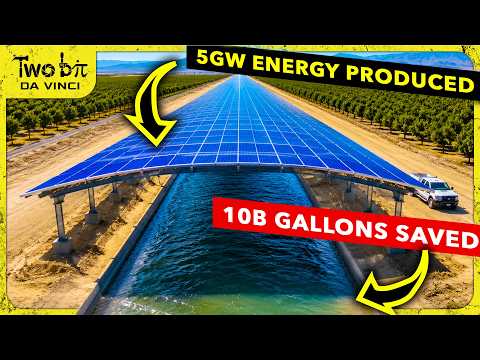
California has completed its latest solar power plant, uniquely built atop an aqueduct in the Central Valley. This plant generates 1.6 megawatts of clean electricity, avoids using farmland, and reduces water evaporation, offering a "win-win" solution. Despite the benefits, this approach isn't widely adopted due to higher costs compared to traditional solar farms.
Solar capacity is rapidly expanding, with the world installing its second terawatt in just two years, thanks to a 99% drop in panel prices and cheaper battery storage. However, solar panels require significant land, leading to conflicts in California's Central Valley, a major agricultural region.
A 2021 study by Brandy Mcun proposed covering California's 4,000 miles of canals with solar panels. This could save 63 billion gallons of water annually, irrigate 50,000 acres, and generate 13 gigawatts of electricity—half of California's 2030 decarbonization target. The study also found significant savings from reduced algae and weed cleanup ($40,000 per canal mile per year) and displaced diesel irrigation pumps.
Project Nexus, a $20 million pilot, is testing this concept in Turlock, California, where the irrigation district also owns the utility, aligning incentives. Arizona's Gila River Native American Community, however, activated the first solar-over-canal project in the Western Hemisphere in October 2024, demonstrating faster, cheaper implementation.
While canal solar costs roughly twice as much as standard solar farms due to structural and operational challenges, Mcun's paper argues it's cost-competitive when co-benefits like water savings and reduced maintenance are factored in. The main barrier is that water savings benefit irrigation districts, while electricity revenue goes to utilities, which are typically separate entities.