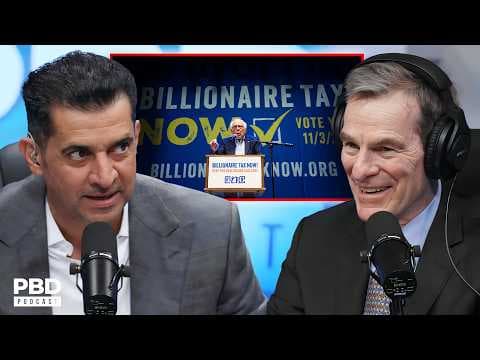
"This Is SOVIET UNION Socialism" - California's Wealth Tax OFFICIALLY Hits The Ballot
Audio Summary
AI Summary
California’s proposed billionaire tax, a one-time 5% levy on those with a net worth of a billion dollars or more, has gathered enough signatures to appear on the November ballot. The initiative, supported by SEIU United Healthcare Workers West, aims to fund hospitals and protect healthcare access, citing a potential $100 billion loss to California’s healthcare system.
However, the measure faces significant opposition, including from Governor Gavin Newsom, who fears it could harm the state’s economy and budget by prompting wealthy residents to leave. Google co-founder Sergey Brin has reportedly already left California, citing the proposed tax and comparing it to Soviet Union socialism. Brin, one of the wealthiest individuals, allegedly told Newsom of his departure at a treehouse party in December, criticizing the tax that would heavily impact his $260 billion net worth.
Experts, like Josh Rau of Hoover, predict that billionaires will exit California, leading to a net loss of revenue for the state, as their future income will also no longer be taxable. Economist Emmanuel Saez, a proponent of the tax, openly admitted its primary goal is not revenue generation but rather to diminish the political power of billionaires. Critics argue this demonizes successful individuals and concentrates power in the government, a concept they deem a bad idea.
The "one-time" nature of the tax is viewed skeptically, with the expectation that it would not truly be a singular event. There's also a call for an audit of California’s substantial financial mismanagement, including the high-speed railway project, billions allocated for the homeless that disappeared, and issues with CalPERS, rather than resorting to such taxes. The narrative that taxing billionaires is the only way to save hospitals is dismissed as false, suggesting funds could instead be redirected from wasteful projects like the "bullet train to nowhere."
The discussion also highlights the high existing tax burden on the wealthy in California, with the top one percent already paying 41% of taxes and a marginal tax rate exceeding 60%. The proposed tax is seen as a political maneuver, creating a "villain" in billionaires to rally support. Despite the challenges, some residents, like the speaker, express a strong attachment to their homes and a reluctance to leave, though they acknowledge that if the tax extends beyond billionaires, it could affect more people.