Armée française
Audio Summary
AI Summary
For over a month, the United Arab Emirates (UAE) has been targeted by Iran, with its energy and military infrastructure, including a base where French forces are deployed, coming under attack. French army air defenses have intercepted dozens of Iranian drones and missiles, resulting in limited material damage and no reported casualties. This situation has prompted France to reinforce its defensive posture and support for the UAE.
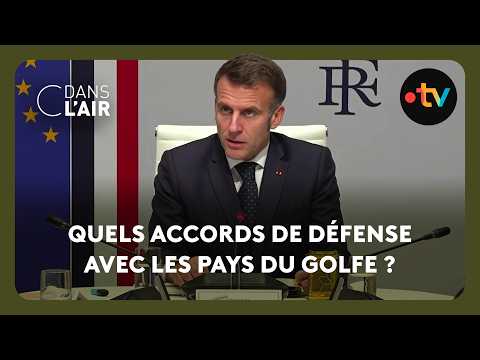
France maintains a significant military presence in the UAE, with three bases—naval, air, and land—and 900 mobilized soldiers. Cooperation between the two nations began in 1995 when the UAE expressed concerns about being targeted by Iran. France committed to defending the security, sovereignty, territorial integrity, and independence of the UAE. This agreement was strengthened four years later with the inauguration of a French base in Abu Dhabi by then-President Sarkozy, marking France's first such presence in the Persian Gulf. Sarkozy highlighted the strategic importance of a military presence near the Strait of Hormuz and emphasized the need for joint action to combat oil price volatility, a concern for both consumers and producers.
Beyond defense, France and the UAE cooperate on military training, with annual desert exercises involving nearly 500 French and Emirati military personnel. These exercises simulate various combat scenarios, including tactics, desert warfare, urban combat, and live-fire campaigns. France's commitment to the UAE's defense was demonstrated in January 2022 when it deployed air defense systems to counter Houthi drones and missiles targeting Abu Dhabi. In June 2025, preventive air support was provided during a 12-day conflict. French President Emmanuel Macron has personally visited French soldiers in the UAE, underscoring the strong ties between the nations. The presence of French military families in the UAE, even during recent attacks on the peninsula, is seen as a significant mark of confidence.
Cooperation also extends to major defense contracts, including missiles, vehicles, and fighter jets. In 2021, the UAE placed a record order for 80 French Rafale fighter jets. While authorities remain discreet about contract details, they openly celebrate cultural cooperation, exemplified by the inauguration of the Louvre Abu Dhabi. This project is viewed as fostering dialogue, communication, and an alliance between civilizations, protecting human civilization from its adversaries. The UAE has become France's largest purchaser of French arms, with orders totaling 21 billion euros.
The current situation raises questions about the extent of future cooperation. France's political line is clear: it will defend the UAE's airspace and territorial integrity, honoring the 2009 defense agreement. However, the situation would become complicated if the UAE were to join the United States in attacking Iran, as France would then be defending an aggressor. Recent statements from Emirati officials, indicating readiness to join efforts to open the Strait of Hormuz, suggest a potential for increased engagement. If the UAE, Saudi Arabia, or Kuwait were to engage in such a conflict, it would likely be within the framework of Gulf cooperation.
From a strictly military perspective, the added power of these armies to the "massive determination" of Israeli and American forces is debatable. It's also possible that these capitals are seeking to leverage their position in future diplomatic negotiations, asserting their right to retaliate against Iranian attacks but choosing restraint for the sake of a more favorable outcome. With the exception of the Emirati army, which demonstrated its capabilities in Yemen years ago, the military prowess of other Petro-monarchies remains largely unproven, despite their significant investments in advanced military hardware over the past 50 years.
The ongoing conflict, now 38 days old, is existential for Iran and equally so for the Gulf monarchies. These relatively young states, such as the UAE, which emerged in the 1970s, built their models on oil exports through the Strait of Hormuz and access to foreign investment and tourism. The threat of the Strait being closed means their entire economic model is at risk. Therefore, these states, even if open to diplomatic solutions, are likely to seek an escalation to ensure the definitive eradication of the Iranian threat. While the operational aspect of their armies may not always be their primary strength, the UAE's acquisition of 80 Rafale jets demonstrates their capacity for advanced military operations. Their potential involvement, though not openly communicated, could be significant due to their military capabilities and strong ties with Israel and the United States, especially through the Abraham Accords. Saudi Arabia, a historical rival of Iran, also faces humiliation from attacks on its capital, suggesting a shared interest in a decisive resolution.