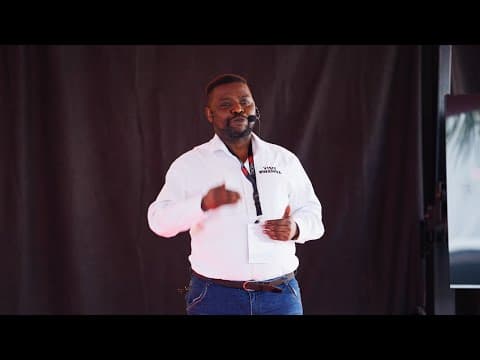
Bridging Academia with Communities through Voluntourism & Ecotourism | Jules NDASHIMYE | TEDxKigali
Audio Summary
AI Summary
The speaker discusses their journey to bridge the gap between academia and community needs. Academics prioritize theoretical research and long-term outputs, while communities require immediate support for issues like shelter and clean water. This journey began in 2010 when the speaker received a scholarship for a Master's in Tourism, initially aiming for personal wealth and a high position in Rwanda's tourism sector.
After completing studies in 2013 and starting to teach in universities in 2014, the speaker realized their initial vision was unachievable. They shifted their focus from personal wealth to helping the community, aiming to leave a legacy. This led them to integrate modules like ecotourism and voluntourism into their teaching, seeing them as ways to connect with the community.
Recognizing the challenges of large initiatives, the speaker leveraged their connections with students from various universities, forming volunteer groups. They also organized community members into cooperatives and cultural groups to facilitate engagement. To further support students and community members with limited capacity, they partnered with community-based tourism enterprises in the western part of Rwanda, specifically in Timokura.
The initiative focused on voluntourism, combining vacations with volunteering to co-create activities and share experiences between volunteers and local communities. However, the speaker soon realized the need for financial resources and human capital. They utilized their negotiation skills to secure a partnership with Westchester University in Pennsylvania, US, through a friend. This collaboration led to Kiza, a partner, donating 150 eco-stoves and solar panels to 30 families in the community, helping reduce firewood consumption and providing socio-economic benefits.
The speaker emphasizes that this collaboration is about mutual value, not just aid, connecting local communities with global institutions. Despite these successes, the challenge of connecting universities and local communities persisted. The speaker developed a strategy focusing on participatory research, moving beyond traditional academic studies to actively engage the community in co-creating solutions like planting trees, building shelters, and providing clean water. This approach integrates local cultural solutions like Umuganda and Ubud.
This model brings together international and local students, communities, and eco-travelers to plant trees, build shelters, share food, and dance. Participants are seen as both volunteers and co-researchers, contributing to articles based on lived experiences. Academics benefit from authentic research papers co-authored with communities, while communities gain socio-economic benefits and a voice in decision-making. Volunteers experience life-changing experiences. The speaker concludes that a clear vision, hard work, determination, and strategic approaches are crucial for success.