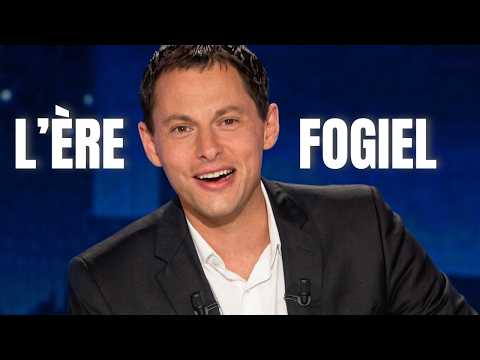
La Télé de Marc-Olivier Fogiel
AI Summary
Marc-Olivier Fogiel’s twenty-five-year career in French television is defined by ambition, transformation, and a relentless pursuit of journalistic rigor. Known for creating live television events, Fogiel established a "brand" characterized by a sharp, often confrontational tone that earned him the nickname "the pitbull of the media." According to the transcript, his flagship show, *On ne peut pas plaire à tout le monde* (You Can’t Please Everyone), was an arena where celebrities, politicians, and public figures were subjected to intense, unfiltered questioning.
Fogiel’s style was built on the idea that an interview should not be consensual or complicit. He viewed his role as a journalist who must provide the viewer with "their money’s worth" in terms of information and sincerity. This often led to high-tension "psychodramas." For instance, comedian Michael Youn famously walked off the set after Fogiel dismissed his antics as a "little act" and insisted on a serious conversation. Similarly, Fogiel’s refusal to back down during a tense exchange with Philippe Bouvard regarding his dismissal from RTL showcased a host who prioritized legitimate questions over being "nice."
The transcript highlights Fogiel’s ability to blend genres, a secret to his success. He famously mixed reality TV stars with high-level politicians, creating "transgressive" and "disruptive" television. A pivotal moment in French political history occurred on his set when Nicolas Sarkozy appeared alongside Christine Bravo. The surreal, laughter-filled interaction humanized Sarkozy and marked a significant turning point in his career. Fogiel also hosted unpredictable figures like Fabrice Luchini, whose chaotic energy—such as his famous "orange" routine—turned the show into a unique spectacle that balanced entertainment with information.
However, Fogiel was not merely a provocateur; he was also capable of deep emotional resonance. The transcript points to his interviews with the singer Renaud, who spoke candidly about his battle with alcohol, and Etienne Daho, where a mutual affection created a rare "alchemy" on screen. This softer side was most evident in his encounters with moral icons like Abbé Pierre and Sister Emmanuelle. Facing these figures, the "pitbull" disappeared, replaced by a respectful, almost childlike interviewer moved by their wisdom and positive energy.
A major evolution in his career was the show *Le Divan* (The Couch). Here, Fogiel transitioned from an aggressive interrogator to a listener. He focused on the "flaws" and "family earthquakes" of his guests, such as Jean d'Ormesson, who opened up about the lifelong pain of disappointing his father. This shift represented a professional "odyssey," where Fogiel used his experience to guide guests through deep introspection, proving he could be as effective in silence as he was in confrontation.
Despite his success, Fogiel’s career was marked by significant controversies that stirred French society. One of the most legendary was his confrontation with Brigitte Bardot. While he admired her as an icon, he refused to "serve her soup" when she released a book containing what the transcript describes as "horrific" and "vulgar" remarks about refugees and Muslims. Despite a hostile audience, Fogiel challenged her directly, a move that some say cost him popularity but gained him immense professional credibility.
Even more impactful was the Dieudonné incident. During a live sketch, the comedian appeared in a balaclava and made anti-Semitic remarks. Fogiel, unable to hear the audio clearly from the control room, was initially overwhelmed. The fallout was catastrophic, leading to set invasions by protesters and death threats. Fogiel was deeply hurt by accusations of racism, which he felt were a deliberate tactic used by Dieudonné to turn the tide. This period was a test of his endurance, as he faced intense public hatred while maintaining his commitment to live broadcasting.
Fogiel’s professional journey also involved a long-standing rivalry with Thierry Ardisson. Seen as Ardisson’s "son" and successor, Fogiel eventually became a competitor, leading to a "war" between their respective weekend shows. Over time, however, the two found a level of mutual respect, with Ardisson eventually appearing on Fogiel’s "couch" for a revealing, unfiltered interview.
Ultimately, Fogiel’s career is the story of a "workaholic" who transitioned from a "director of television chaos" to a "pure and hard-core journalist." He eventually moved to radio, taking over prime-time slots at Europe 1 and RTL, where he established himself as one of the best in the field. His peers describe him as someone who works "like a lumberjack," constantly anticipating and imagining the next move. He successfully shed his image as a "clumsy" or "aggressive" youth to become a figure of professional excellence. By the time he "lowered the shutter" on his television career, he had left an indelible mark on the medium, defined by a unique mix of rigor, emotion, and an uncompromising demand for the truth.