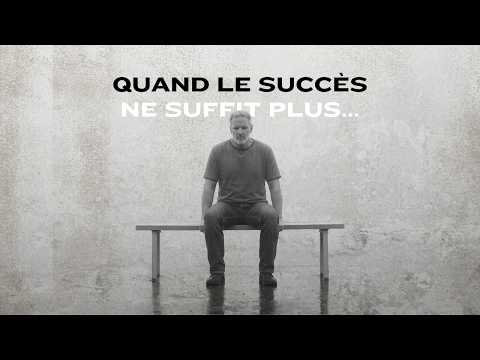
Tu as réussi… alors pourquoi ce VIDE intérieur ?
AI Summary
The video discusses the "hedonic paradox," where achieving success and obtaining material wealth doesn't necessarily lead to happiness. It explains that our brains are wired with a reward system, the mesolimbic dopaminergic circuit, which releases dopamine when we achieve a goal. However, this effect is temporary, lasting only 24 to 72 hours, after which our brains return to their baseline level. This phenomenon is known as hedonic adaptation, and it's the same mechanism that drives addiction, requiring increasingly stronger stimuli to achieve the same feeling of reward.
The speaker uses examples like Michael Phelps, the most decorated Olympian, who felt a void after achieving his goals, and Andre Agassi, who confessed to hating tennis despite being world number one. Alex Hormozi is also cited as an example of someone who realized he was driven by "push motivation" – fear, pressure, and the need to prove himself – which depletes energy and leads to burnout. The core issue isn't success itself, but how our brains process it.
The video then contrasts two types of motivation: push and pull. Push motivation is driven by fear and the avoidance of negative outcomes like poverty, judgment, or failure. It activates the amygdala and the HPA axis, leading to short-term effectiveness but long-term devastation. Chronic cortisol release, associated with this stress response, can damage the hippocampus, impairing memory, creativity, and the ability to feel pleasure, leading to burnout. Zinedine Zidane's transition from a player driven by intense, almost survival-like reactions to a coach motivated by a desire to transmit knowledge is presented as an example of shifting from push to pull motivation.
Pull motivation, on the other hand, is driven by a sense of purpose, connection, and contribution. It engages the prefrontal cortex and is characterized by a feeling of being drawn towards something, rather than being pushed by external pressures. Steve Jobs's experience after being ousted from Apple is highlighted. During his time away, he founded Pixar and NeXT, driven by his passions. He later considered his eviction the best thing that happened to him, as it forced him to embrace pull motivation and create what truly mattered to him. When he returned to Apple, he was a different person with a different brain, operating on different circuits. While push motivation helps you win, pull motivation helps you win sustainably.
The video outlines four steps to transition from push to pull motivation:
1. **Identify Your Drivers:** Honestly assess if you would continue your pursuits if no one knew about them. If the answer is no, you are likely driven by push motivation, relying on external validation. This dependence is neurobiologically similar to physical pain and drains energy, clarity, and health. Lady Gaga's journey of feeling empty despite immense success and her subsequent need to create for herself before creating for others is a powerful illustration. This shift led to acclaimed works like the album "Joanne" and the film "A Star Is Born," born from pull motivation.
2. **Reactivate the Default Mode Network (DMN):** The DMN is active during rest, daydreaming, and introspection. Individuals in constant push mode often have their DMN deactivated. The protocol involves dedicating 20 minutes daily to complete silence, free from guidance, music, or phones. This space allows for the rebuilding of one's internal compass. Studies show that even 20 minutes of daily "doing nothing" can increase connectivity between the DMN and the ventromedial prefrontal cortex, clarifying identity and self-awareness. Kobe Bryant's "dark hours" of silent reflection before training exemplify this practice, crucial for developing his Mamba mentality.
3. **Reprogram the Reward Circuit:** Instead of focusing on external results (e.g., a specific amount of money or medals), shift the focus to what you want to *feel* daily. This activates the insular cortex, which processes internal sensations and fosters a mind-body connection. Jeff Bezos's "regret minimization framework," projecting into the future and considering what he might regret not doing, is an example of focusing on future emotional experience rather than immediate results, thereby bypassing the short-term reward circuit.
4. **Create Neurochemical Gratitude:** Gratitude is not just a positive emotion but a potent neurochemical tool. Expressing gratitude releases endorphins and dopamine in a stable, lasting way, unlike the peak-and-crash cycle of achievement. The practice involves noting three specific things each night for which you are grateful. Specificity, rather than generalities, activates the hippocampus and reinforces positive memories. Over time, this practice can lead to a brain that automatically scans for positives.
The video concludes by emphasizing that a lack of purpose can feel like a prison. The brain is designed for progression, not accumulation, and the difference between these two is the difference between surviving and living. The speaker encourages viewers to apply these principles to their lives, as immediate action can be life-changing. The video also offers resources for coaching and further training in applied neuroscience for coaching.