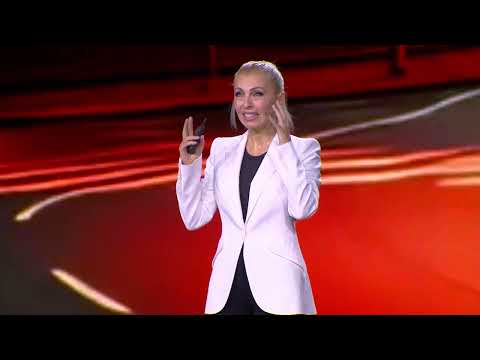
How to Succeed Without Confidence, Motivation, or Healing | Evy Poumpouras | TEDxAthens
AI Summary
The speaker, a former special agent with the U.S. Secret Service and now an NBC News correspondent covering crime and national security, shares insights gained from years of mentoring individuals. Initially, people sought guidance on various issues, from asking for raises to changing careers, often expressing fear and uncertainty. These one-on-one mentor sessions, which grew from a few to hundreds, revealed common patterns of thinking and behavior that acted as inhibitors, preventing people from moving forward.
One significant inhibitor is the belief that "you're not that special." While it's common to want to feel unique, this mindset can lead to a sense of separation and extreme self-focus. The speaker, drawing on her criminology background, notes that chronic offenders often believe laws don't apply to them because they are special. Similarly, those who view their problems, pain, and suffering as special often experience higher rates of depression and anxiety, feeling alone and misunderstood. However, realizing you're not special means you're also not alone. The speaker recounts her experience during the September 11th attacks in New York City, where witnessing widespread suffering made her realize her pain wasn't unique. This understanding helped her cope, knowing that if others could endure similar trauma, so could she.
Another common misconception is the need for confidence. The speaker argues that "confidence is overrated" and unnecessary for action. People often delay pursuing goals, believing they first need to find confidence, which leads to a convoluted and often abandoned path. Instead of directly pursuing an achievement, they embark on a "wild journey to find confidence," often getting distracted or losing faith. The speaker emphasizes that action should precede confidence, not the other way around.
Similarly, motivation is deemed "mediocrity." Relying on motivation to act often results in doing the bare minimum. The speaker illustrates this with her Secret Service training experience, where she had "zero motivation" to endure grueling early morning runs and constant threats of failure. Despite the lack of motivation, she persevered. She asserts that confidence and motivation often emerge *after* action has been taken, not before. Waiting for motivation can lead to stagnation, as it's an elusive and fleeting emotion.
The "victim mindset" is another powerful inhibitor. When individuals see themselves as prey or constantly victimized, they embody that perception. A study in New York City, where convicted felons identified potential targets from videotaped pedestrians, revealed that they consistently chose people who walked timidly or with a lack of awareness. Conversely, those who walked deliberately and with conviction were not selected. This highlights how one's internal state manifests externally, influencing how the world perceives and interacts with them. The message is clear: "You are nobody's prey."
Fear, while a natural and useful emotion for self-preservation, becomes an inhibitor when it's embraced as an identity. Like anger or sadness, fear is an emotion that comes and goes. However, many people unintentionally label themselves as "fearful people," allowing fear to make a permanent home in their minds. The speaker advises against this, stating that "labels are for clothing, they are not for people." Fear should be acknowledged, allowed to pass through, and then released, not internalized as a core aspect of one's being.
Finally, the speaker addresses resilience, asserting that "you don't need to heal to be resilient." While healing from traumatic experiences is valid, resilience is a distinct process. Resilience means going through hardship and being able to recover, returning to a functional state similar to before the stressor. It's not about making the pain disappear or forgetting the past, nor is it about trying to revert to one's "old self." True resilience is built by repeatedly navigating difficult situations and recovering, which increases one's "bounce-back rate" and speed of recovery. The more challenges one faces and overcomes, the more resilient they become.
The speaker ties these inhibitors to her own life experiences, particularly two near-death moments. The first occurred during the 9/11 attacks, when she believed she would die as the World Trade Center's first tower collapsed. In that moment, she regretted not having truly lived and vowed to live fully if she survived. The second experience happened 20 years later during childbirth, when she lost a significant amount of blood and her organs began shutting down. This time, she felt a sense of peace, realizing she had lived her life fully and not allowed inhibitors to hold her back.
She concludes by emphasizing that at the end of life, one won't focus on material possessions but on whether they truly lived. She reiterates the core messages: understand you're not special, so you're not alone; don't chase confidence or motivation, just act; be aware of how you present yourself to the world, as you are nobody's prey; recognize fear as an emotion, not an identity; and build resilience by facing and recovering from challenges. By living in this way, when the time comes, one can look back and say, "I'm okay to go because I lived."