ELLE QUITTE SON COPAIN, IL REVIENT POUR LA T*ER ET LA BRÛLER
AI Summary
Fadila recounts her experience of escaping a femicide attempt. She met a man who initially appeared to be a perfect gentleman, charismatic, elegant, and attentive. He was a successful entrepreneur, generous with gifts and restaurant outings. Their relationship progressed quickly, and for the first four weeks, Fadila believed she had found the perfect partner.
However, as the summer progressed, she began to notice changes. He became increasingly demanding, particularly regarding physical intimacy, and disregarded her need for personal space. When she tried to end the relationship, he refused to accept it, insisting on a "break" instead of a definitive breakup. During this break, he continued to appear at her workplace and near her home, acting as if they were still together. Fadila discovered he was commenting on her social media, calling her "my darling," and was in contact with "dubious" individuals online, revealing a side of him she hadn't seen before.
She realized he didn't respect her boundaries and decided to end the relationship definitively. This time, she was firmer, recognizing he was unreliable. She had previously tried to block him, but he would appear in person, making her feel it was easier to manage calls and texts than physical confrontations. At this point, she acknowledges a subtle form of control he exerted, leading to a fear she didn't fully realize until months later.
After their final conversation, he went silent for 48 hours, which relieved Fadila but also made her uneasy. She mentioned this unusual silence to a friend. Two days later, on Thursday, September 25th, at 6:45 AM, as Fadila was leaving for work, her door was forcefully opened. Her ex-partner stood before her, holding a black weapon with two "hublots." He tried to activate it multiple times, but it failed to fire. Fadila repeatedly asked him what he was doing and pleaded with him to stop. As he struggled with the weapon, she felt her body giving way and began to fall. He caught her, sat on a chair, and placed her on his lap.
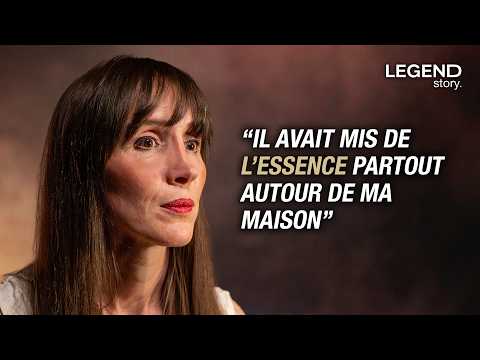
At this moment, she noticed a strong smell of gasoline in her dining room. She understood then that he intended to kill her. He told her, "You see what you're pushing me to do? It's your fault. You are responsible, all of this is your fault. Are you scared?" She admitted she was. While on his lap, he kissed her, and she feigned affection, telling him she loved him, realizing she needed to comply to survive and get out of the house. She asked about the gasoline smell, and he claimed he had just bought a canister at a gas station and that "it's nothing." She also asked about the weapon, and he dismissed it as "nothing, it won't do much."
However, Fadila understood the full gravity of the situation: the gasoline, the bucket she saw near her car, and the weapon meant he intended to burn her alive. She saw herself burning. She maintained a facade of normalcy, expressing concern about being late for work. He allowed her to leave, telling her not to worry about work. Outside, near her car, she saw a large construction bucket. He followed her to her car, preventing her from closing the door, and insisted she have dinner with him that evening. Again, she agreed to everything, giving him a time and promising to call him later to decide on a restaurant. As she drove away, she saw him put the weapon into his long black coat.
Still in shock, Fadila drove to work, arriving in tears. She recounted the events to a colleague, who urged her to file a complaint. Fadila, an nurse, tried to perform her duties but found she couldn't concentrate, realizing the severity of her condition. She decided to call the police (17) immediately, fearing she would lose the strength to do so later. The police arrived, listened to her account, and asked her to come to the station.
At the police station, she briefly explained what happened to two officers. They showed her photos of weapons, and she identified it as a flash-ball, a weapon she had never seen before. The officers informed her they were going to apprehend him, telling her they had already located him at his home. Initially, Fadila pleaded with them not to "break down the door," still not fully grasping the danger she had faced. She was then taken to another room for a full audition with two female officers.
During the audition, she learned that her ex-partner denied everything and tried to shift blame onto her, portraying her as the problem. However, the police found the flash-ball at his home, along with a receipt from the previous day. He had purchased it because he was angry with her. He eventually confessed on the first day, and again on the second, admitting to entering her home with the flash-ball. The smell of gasoline was also present in his car, and the weapon itself was soaked in gasoline. Despite this, the investigating judge told Fadila's lawyer that the man's intention was to "steal from her."
Fadila stated she never imagined him capable of such an act, as he had never threatened her before. This lack of warning, she said, was the most shocking aspect. The day after the attack, she saw a forensic doctor who documented her psychological and physical state, noting her severe distress. However, she was sent home without immediate psychological support or referral to a specialized victim support unit in her city, which was created in 2015.
The following Monday, Fadila was informed that her case would go to an immediate court appearance at 2 PM. She didn't understand what this meant, as no one had explained the process to her. She called a friend to accompany her to the courthouse. There, she experienced a panic attack upon hearing his name. She tried to hide from him, but he kept looking in her direction and insulted her. His court-appointed lawyer also made "aberrant" statements about her. When she spoke, he laughed, and his lawyer continued to attack her character. He shouted "I love you" while simultaneously insulting her, creating a confusing and theatrical scene.
In the first hearing, he was sentenced to 18 months in prison and a 5-year ban on owning weapons and contacting Fadila. He appealed the decision, but Fadila was not informed of the appeal until a month later due to an administrative error. She only sought legal counsel after the first hearing, as the judge advised her to do so. The second hearing took place in Dijon, where his lawyer challenged the initial psychiatric evaluation that stated he had discernment at the time of the facts. This hearing was postponed due to insufficient evidence.
During this second hearing, he continued to minimize Fadila's post-traumatic stress and other symptoms, despite having confessed to the crime and the evidence found. The judge in Dijon, however, was firmer and ordered him to be silent. The third hearing, a month later, presented a new psychiatric report stating he lacked full discernment at the time of the facts, leading to a finding of criminal irresponsibility.
This decision was a shock for Fadila. Although the court confirmed the facts of the case, he was transferred from prison to a psychiatric hospital for full hospitalization in a closed unit. Fadila feels insecure because during the appeal, he told a psychiatrist that he felt entitled to return to her home if released. She has since installed a reinforced security system with cameras, knowing that legal procedures require proof. She doubts the validity of the judgment of criminal irresponsibility, believing his actions—buying a weapon the day before and bringing gasoline—suggest premeditation and a degree of discernment.
Fadila expresses anger at the justice system's leniency, finding it reflected in media narratives about such cases. She believes her story is not unique and that many women face similar situations, with the justice system often falling short. She questions the reliability of psychiatric evaluations conducted in short periods, especially when initial expert opinions contradicted each other.
Living with the fear that he might return is a daily reality. She has received anonymous calls and constantly worries about someone being behind her door. While she initially resisted the idea of moving, she now considers it, feeling that she can no longer expect protection from the system and must protect herself. She has initiated procedures to be informed of his permissions or release but remains skeptical, given the differing perceptions of danger between victims and the judicial system/psychiatric experts.
Fadila emphasizes that violence affects women from all social classes and backgrounds, debunking the stereotype that only "weak" or uneducated women are victims. She recounts meeting women from various professions and educational levels in a women's shelter. She also highlights the shame and guilt victims often feel, which she experienced herself, questioning if she could have prevented what happened by not opening the door to the relationship.
The attack, despite the relationship lasting less than three months, has profoundly changed her. She no longer recognizes herself, experiencing post-traumatic stress disorder (PTSD), dissociation, and memory issues. She explains that PTSD affects the brain, causing hyper-vigilance, fatigue, and heightened fear. She empathizes with women who struggle to leave abusive relationships or speak out, as PTSD makes daily life and decision-making incredibly difficult.
While some symptoms have decreased, others may remain for life, requiring her to accept a "grieving process" for her former self. As a sophrologist, she is acutely aware of her body's changes and the amplified emotions. She experiences flashbacks and revisitations, like the constant feeling that someone will enter her home, despite therapy.
She is currently unwilling to engage in new romantic relationships, acknowledging that this consequence will likely last for a while. She still believes in healthy love but prioritizes her own healing and reconstruction. Despite everything, Fadila finds happiness in her projects and maintains confidence in life. She sees positive changes in her life choices, having realized the preciousness of life after nearly dying. She feels she has gained strength and resilience.