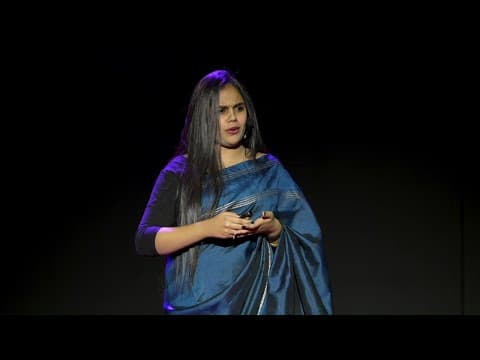
The “I’m Not a Feminist, But… | Sana Abhichandani | TEDxSNK Youth
Audio Summary
AI Summary
The speaker introduces the topic of feminism, acknowledging it might be a sensitive subject. They begin by referencing the 1940s, when a "We Can Do It" poster encouraged women to join the workforce during World War II, stepping beyond traditional societal roles. This experience ignited a spark of independence in women, which the speaker identifies as feminism.
However, the speaker notes that today, the word "feminism" is often misunderstood. They observe that when "feminist" is mentioned, many conjure images of "angry, man-hating, bra-burning women." A survey indicates that one in three men believe feminism causes more harm than good, and even many women avoid the label. The speaker highlights the irony that people often say they believe in equality but hesitate to call themselves feminists, despite equality being the core meaning of the term. A pure research study found that 69% of non-feminists actually believe in gender equality, suggesting a significant disconnect between the perceived meaning of feminism and its actual definition.
The speaker attributes this gap to "branding" the word with negative baggage. A significant percentage of women in the US find the word polarizing (45%) or outdated (30%), indicating that decades of misconceptions have created a myth around feminism. Oxford and Merriam-Webster dictionaries define feminism as the advocacy or belief in the equality of the sexes, emphasizing that equality is the key principle. An American study showed that while only 29% of women initially identified as feminists, this number jumped to 61% when they were presented with the true definition.
Beyond negative stereotypes, another reason people shy away from the label is the belief that feminism is no longer needed, as women can vote and work, implying equality has been achieved. While acknowledging progress, the speaker points to a World Economic Forum 2023 study projecting it would take 131 years to reach gender equality, underscoring the ongoing necessity of feminism.
The speaker defines feminism simply as being about equality and fairness, stating that if one believes nobody should be held back due to their gender, they align with its core ideas. They then challenge those who identify as feminists to ensure their actions match their words, cautioning against "tokenism" in the age of social media, where liking posts or sharing quotes might substitute for real-life action. An example is given of a friend who identifies as a feminist online but allows women in his household to do all the unpaid domestic work.
Practicing real feminism, the speaker explains, involves concrete actions like equally dividing household chores, respecting a partner's ambitions, voting for candidates who support gender equality, and raising sons and daughters with equality.
Finally, the speaker addresses the misconception that feminism is solely a women's issue. They argue that it is for everyone, including men and non-binary individuals, because patriarchy—the system feminism fights—limits men as well. Feminism advocates for women to lead without guilt, and for men to express emotions and nurture without guilt. The speaker concludes by urging listeners to embrace the simple idea that making change doesn't always start with grand rallies, but with everyday actions like promoting equality and questioning norms, thus moving society beyond inherited boundaries.