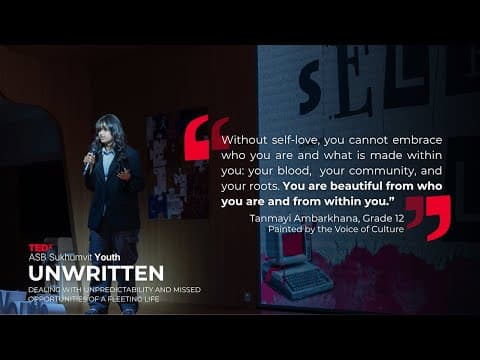
Painted by the Voice of Culture | Tanmayi Ambarkhana | TEDxASB Sukhumvit Youth
Audio Summary
AI Summary
The video discusses the evolution of beauty standards and their impact on individuals and society. Historically, people resorted to extreme measures for beauty, like tapeworms for weight loss or lead powder for pale skin. Today, while these practices are gone, we still strive to meet current beauty standards through skincare and filters, which are dictated by society and constantly changing.
The transcript highlights a shift in the use of makeup. In the past, it was a form of cultural expression and rebellion, notably during the women's suffrage movement where red lipstick symbolized defiance and confidence. However, modern beauty standards have shifted towards an external focus, emphasizing how we look in the eyes of others and the judgment we face. This constant evaluation leads to "beauty sickness" and a feeling of "always being on display."
Feminists argue that beauty trends can be oppressive, forcing makeup use for societal acceptance, though makeup and personal style can also be used for belonging, confidence, and artistic expression. The beauty industry profits immensely from "aspirational beauty," setting unattainable standards and marketing normal features like facial hair and wrinkles as flaws. Comparing ourselves to filtered and edited images takes a toll on self-esteem.
Beauty trends often benefit a narrow group, typically white, thin, and able-bodied individuals, leading to exclusion and pressure based on race, culture, gender identity, and disability. Movements are emerging to challenge these standards. In India, there's a push against colorism, with social media promoting natural skin tones over skin-lightening products. Indigenous communities in the US use beadwork, face paint, and tattoos to connect with their culture, land, and ancestors, demonstrating that beauty can be about identity and heritage, not just external appeal or industry profit.
Ultimately, the video emphasizes the importance of self-love to embrace one's true self, including heritage and community. While not advocating for abandoning personal style, it encourages viewers to remember their inherent beauty from within and resist the pressure to constantly change or improve themselves.