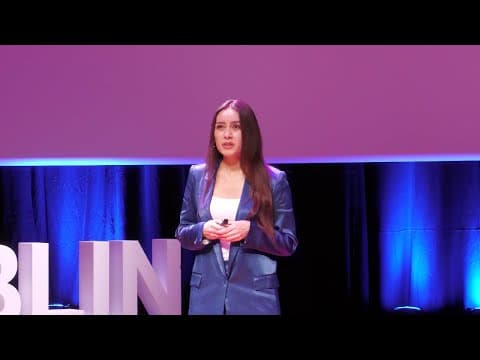
Turning Power Games into Power Moves | Emmy Coffey Nguyen | TEDxTUDublin
Audio Summary
AI Summary
The speaker recounts a childhood experience of defending their mother at age six, discovering personal power and developing skills to navigate manipulation and deescalate conflict. This trauma-born resilience prompts a reflection on why understanding power is often only prompted by its abuse. The speaker's grandmother's escape from Saigon illustrates how external geopolitical forces shape individual lives across generations, influencing opportunities and visibility.
Despite power's profound impact, formal education on the subject is lacking, leaving individuals ill-equipped. The speaker pursued politics and worked in various fields, including international trade and humanitarian aid, and even attempted to get the youngest presidential candidate on the ballot. Across these diverse sectors, a consistent pattern emerged: the necessity of understanding and playing power games, as power is inherent in relationships and politics.
Robert Greene's "The 48 Laws of Power" is presented as a key text, highlighting that power is a learned skill, not solely tied to hard work. The book, though controversial, reveals the unwritten rules governing the world, emphasizing perception, timing, and strategy. Workplace dynamics are cited, where managers, rather than qualifications, often drive employee departures, indicating an overemphasis on competence and an undervaluation of power's influence. Historical figures like Hitler and Gandhi are contrasted to show how power can be wielded with vastly different resources, both employing the strategy of courting attention.
Modern discussions on masculinity reveal fear of women's power, mistaking dominance for strength. The speaker asserts that a woman's empowerment is perceived as a threat due to narrow definitions of masculinity. The prevalence of sexism and misogyny necessitates a societal shift in how power is defined and discussed. The speaker advocates for teaching power dynamics in schools, like any other core subject, to equip future generations. Ultimately, the speaker encourages the audience to identify someone feeling powerless and apply learned principles to help them transition from pain to empowerment, emphasizing that true power empowers others.