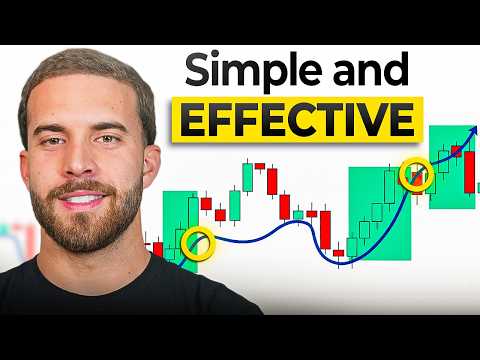
The ONLY confirmation YOU need to make $500/day Trading Forex
AI Summary
This video explains a crucial confirmation signal for entering trades, emphasizing that it must be integrated into an existing trading strategy. The core principle is to enter trades based on market confirmation, not anticipation. This means waiting for the market to "show its hand" through specific candlestick patterns before committing to a trade.
The two primary candlestick patterns that serve as confirmation are rejection candlesticks (like a doji with a long wick) and engulfing candlesticks (where one candlestick's body completely covers the previous one). The effectiveness of these patterns is amplified when they appear in conjunction, such as multiple dojis followed by a bullish engulfing candlestick at a support level. It's crucial to wait for the candlestick to **close** before considering it a confirmation. A candlestick that is still forming is considered anticipation, as its direction can change in the final moments before closing. Higher timeframes generally provide stronger confirmations.
A rejection candlestick, characterized by a small body and a long wick, signifies price rejection. For instance, a long wick to the downside on a daily chart might appear as a rejection, but when examined on a lower timeframe like the 4-hour chart, it could reveal that the price had actually moved down significantly before retracing upwards within the same day, setting up a higher low. This nuanced understanding of how lower timeframes contribute to higher timeframe patterns is key. When a daily rejection candlestick is observed, it can be interpreted not just as a rejection but as a setup for a subsequent bullish engulfing candlestick, especially if the underlying 4-hour structure has shifted bullish. The combination of these patterns can lead to trades that move directly into profit, avoiding losses and liquidity grabs.
The location of these confirmation signals is as important as the patterns themselves. They are most powerful when they occur at significant market zones such as support and resistance levels, supply and demand zones, or order blocks. Finding these patterns in the middle of the chart, without regard to these key areas, renders them useless. For bullish trades, a bullish rejection candlestick followed by a bullish engulfing candlestick at a support level is ideal. Conversely, for bearish trades, a bearish rejection candlestick and a bearish engulfing candlestick at a resistance level are sought. While a rejection candlestick alone can be an entry signal, it depends on the trader's strategy, risk tolerance, and other confluence factors. Traders are encouraged to be patient and not force trades if the setup isn't ideal or if they are looking for additional confirmations.
Furthermore, these confirmation patterns should generally be used to trade **with the prevailing trend**. If the market is bullish and a support level shows bullish rejection and engulfing patterns, the trade should be a buy. Conversely, at a resistance level in a bearish trend, bearish rejection and engulfing patterns signal a short opportunity. The speaker cautions against impulsively changing trading direction based on a single candlestick pattern that contradicts the overall trend. For example, if a bullish trend is in place and a bearish engulfing candlestick appears, it doesn't automatically mean one should switch to a sell bias, especially on intraday or swing trading timeframes where trends can persist for longer periods. Such a pattern might simply indicate a deeper retracement before the trend continues. Entering a trade solely on a single candlestick pattern without considering the strategy and trend is akin to gambling.
The timing of trade entry is also critical. Entering a trade immediately upon seeing a confirmation, especially at the beginning of the week or near market close, is discouraged. The speaker highlights the importance of trading during specific market sessions with higher volume, such as London and New York sessions. If a confirmation occurs just before a less active session, it's advisable to wait until the start of a more active session. This waiting period can lead to a better entry price, a tighter stop-loss, or an improved risk-to-reward ratio, even if it means a slightly less optimal entry point compared to entering immediately. While this patience might sometimes result in missing a trade that has already moved significantly, it often helps avoid losses or secures better trading conditions.
The video also specifies preferred trading days for entering trades based on these confirmations: Monday, Tuesday, and Wednesday. Trades initiated later in the week, particularly on Thursday or Friday, may not have sufficient time to reach their target profit levels before the market closes or volume decreases. While exceptions exist for shorter take-profit targets or strong momentum, the general rule is to focus on early-week trades. The key takeaway is that patience is paramount, and waiting for the right time and confluence of factors is essential.
In summary, the process involves:
1. **Confirmation Closure:** Wait for the candlestick to close before considering it a valid signal.
2. **Candlestick Patterns:** Look for rejection (doji with long wick) or engulfing (bullish or bearish) patterns.
3. **Key Zones:** Ensure these patterns occur at strong support/resistance, supply/demand zones, or order blocks.
4. **Trend Alignment:** Use these confirmations to trade in the direction of the prevailing trend.
5. **Session Timing:** Enter trades during active trading sessions and preferably early in the week (Monday-Wednesday).
The speaker emphasizes that these principles are often overlooked and require strict adherence to a trading plan. Missing a trade or avoiding a loss through disciplined execution is part of the process. The video concludes by promoting a "Swing Trading Lab" community where these concepts are discussed and practiced weekly, with trade reviews and analysis provided.