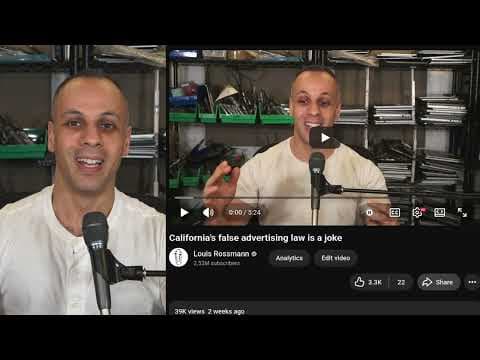
Government can no longer buy personal data on citizens if this bill passes
Audio Summary
AI Summary
This video discusses the Surveillance Accountability Act, a bill introduced by Thomas Massie, aimed at addressing the issue of government agencies accessing personal data without a warrant. The speaker highlights a previous video where they discussed AT&T, Verizon, and T-Mobile selling location data to various entities, including advertisers, bounty hunters, bail bondsmen, and even law enforcement. The core problem identified is that government agencies, unable or unwilling to obtain a warrant, can bypass legal procedures by purchasing data directly from data brokers or companies that collect and sell it, often leveraging broad end-user license agreements (EULAs).
The speaker emphasizes that these EULAs, which customers often agree to without fully understanding, frequently contain clauses permitting companies to share data with law enforcement, even without a warrant. This effectively allows companies to override constitutional protections, such as the Fourth Amendment, which requires a warrant for searches and seizures. The speaker points out that this issue is exacerbated in an age where numerous devices, from smart TVs to robot vacuums, collect vast amounts of personal data and are subject to these same EULAs.
The Surveillance Accountability Act, described as a concise eight-page document written in plain language, seeks to establish a "Presumption of Privacy." This principle asserts that the government should not access any data, metadata, or personal information held by third parties—including financial, telecommunication, internet, and cloud storage providers, or data brokers—without a valid warrant, regardless of whether the third party consents. This provision is designed to prevent EULAs from circumventing constitutional rights.
The bill also addresses the warrantless collection of data exposed to public view. It specifies that exemptions to the warrant requirement should not permit the collection, retention, querying, or analysis of data from individuals in public places or operating motor vehicles on public roadways without their informed and voluntary consent. This includes biometric data like facial images, gait, voice recognition, and license plate information obtained through automated systems.
A crucial aspect of the bill, and one the speaker believes might hinder its passage, is Section 3, which creates a direct right of action for citizens to sue. This means that individuals who have their Fourth Amendment rights violated by federal employees or entities acting under the color of law would be able to personally take legal action against them, rather than relying on government attorneys general to pursue cases. The speaker praises this provision, stating it aligns with the accountability one would expect from a Thomas Massie bill.
The speaker notes that Lauren Boebert is a co-sponsor of the bill and encourages everyone to read it due to its clarity and importance. They urge the public to pay attention to how members of Congress vote on this bill, as it will be "very telling" about their stance on Fourth Amendment rights.
The speaker expresses disappointment with previous government actions, specifically the fines imposed on AT&T, T-Mobile, and Verizon for selling user data. They argue that the fines, which amounted to a small fraction of the companies' net profits, were insufficient and effectively encouraged continued data selling practices rather than deterring them. The speaker concludes by emphasizing that the Surveillance Accountability Act is a vital step in reaffirming existing rights and ensuring companies adhere to the law, urging viewers to contact their congressional representatives to advocate for its passage.