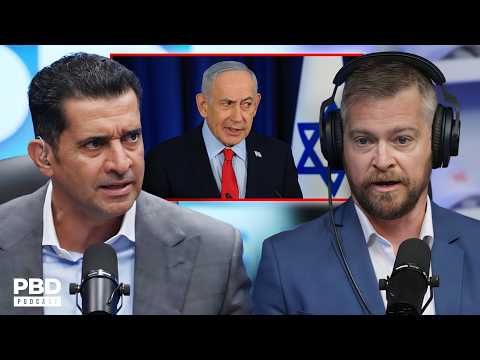
“Iran Won In A Big WAY” - Israel DEFIES U.S. Ceasefire With Lebanon Strikes
Audio Summary
AI Summary
The discussion revolves around Israel's stance on a ceasefire with Iran, specifically why Israel's Prime Minister, Netanyahu, stated that any deal excludes Lebanon. This exclusion is attributed to Israel's objective of creating a buffer zone in Lebanon, similar to one established in Gaza. The rationale is that Iran has been funding and arming Hezbollah in Lebanon, posing a problem on Israel's northern border. Israel views Hezbollah as a direct threat that needs to be addressed as part of confronting Iran.
There's a critical perspective on Israel's involvement, questioning why they weren't more actively engaged in the conflict given their deep-seated concerns about Iran. It's suggested that Israel was selective in its participation, lobbying for action against Iran and possessing extensive intelligence on Iranian facilities and operations through its Mossad agents, yet seemingly hesitant to commit ground troops. The argument is that Israel should have stepped up to be a more integral part of the solution, especially since the conflict directly benefited their security interests.
A point of contention is Israel's actions during the initial weeks of the war, where they reportedly caused more casualties than initially stated, even leading to comments from Trump about "a couple of guys we kind of liked" being killed. This raises questions about Israel's potential to complicate the situation.
The hosts ponder Israel's true feelings about the ceasefire. It's unlikely they are pleased, as they might view it as emboldening Iran and providing a "timeout" for them to re-strategize. There's a sentiment that Israel might have preferred the conflict to continue longer, implying they may have influenced the U.S. into the situation. The question is raised as to why the U.S. is fighting Israel's battles, given Israel's significant military capabilities.
The discussion then shifts to the U.S. military presence in the Gulf region, noting 8 to 10 major U.S. military bases, including two in Qatar, one in Bahrain, three in Kuwait, one in the UAE, and one in Saudi Arabia. The concern is that if Iran were attacked one-on-one, its retaliation would likely target these weaker Gulf states, prompting them to pressure the U.S. to de-escalate. This strategy, it's suggested, is Iran's way of pressing "buttons" to force a callback.
Regarding Trump's role, it's argued that he faces a no-win situation with his critics: if he brokers a peace deal, he's criticized; if he drops a bomb, he's a war criminal; if he doesn't get involved, he's weak. The current ceasefire proposal, if true, outlines ten points that suggest a significant victory for Iran. These points include no further U.S. attacks on Iran, Iran maintaining control of the Strait of Hormuz, recognition of Iran's nuclear enrichment rights, lifting of all sanctions, ending UN and IAEA resolutions against Iran, releasing frozen Iranian assets, U.S. withdrawal from the region, compensation for Iran's war damages, formal non-aggression guarantees, and a binding UN Security Council agreement. If these terms are indeed negotiated, it's seen as a major win for Iran, potentially making them bolder, tougher, and stronger in the long term. This could lead to increased military investment and a more aggressive stance in the future, similar to how past funds sent to Iran for development were allegedly diverted to weapons.
The skepticism about ceasefires is emphasized, noting their historical tendency to fail, citing examples like Ukraine and Russia. A controversial alternative solution is proposed, drawing parallels to the Iran-Contra affair. This involves secretly building an arms manufacturing base in a nearby country like Saudi Arabia to smuggle weapons to Iranian citizens who oppose the regime. The idea is to equip this anti-regime population for a civil war, as taking out leaders alone isn't enough when a significant portion of the population supports the existing power structure. This would be a long-term strategy, as the current anti-regime population isn't equipped for such a conflict.
The conversation concludes by evaluating Iran's current standing. The world now views Iran as more capable and strategic, and surprisingly resilient, given the prolonged conflict. It's noted that Iran already has an "arms manufacturing factory" in China, implying that if the ceasefire impacts China's economy, China could further aid Iran. However, the proposed solution focuses on arming citizens, not the government. The analogy of the Ukraine-Russia war is used to highlight the importance of external backing in a conflict. While Ukraine had the backing of Europe and the U.S., Iran's actions in this context were largely without significant external support, yet they still managed to hold their ground.
The hosts reiterate that if the IRGC (Islamic Revolutionary Guard Corps) still controls Iran after the ceasefire, then there has been no regime change or collapse, rendering the idea of arming the people with weapons inferior to what the U.S. and Israel possess as ineffective. The fundamental difference in a potential civil war in Iran, compared to one in America, is that the Iranian government is willing to kill its own people, making it a very different kind of conflict.