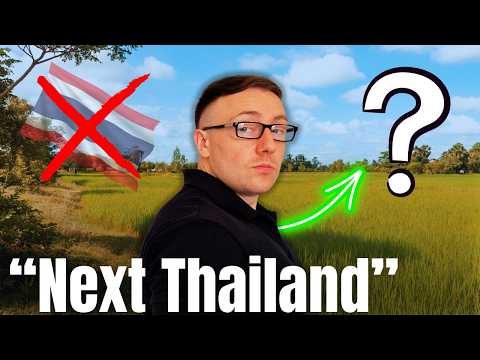
Where to go, if Thailand says no?
Audio Summary
AI Summary
Thailand has long been considered the ultimate expat dream destination, known for its delicious food, beautiful women, and vibrant atmosphere. However, the "Wild West" days of Thailand are over, and the country has become significantly stricter. Despite popular belief, Thailand is not a libertarian utopia where anything goes. The Thai people are increasingly fed up with foreigners behaving badly and are pressuring officials to enforce stricter rules. This shift means that living long-term in Thailand is becoming more challenging, particularly for mid-tier expats who are not in the top 1% or simply backpackers.
Thailand has evolved into a developed country, and with this development comes increased regulations, more red tape, higher standards, raised prices, and stricter visa requirements. The era of indefinite stays through border runs is gone. Thailand's current status reflects a country that is peaking; it feels saturated, and the reality often doesn't match people's idealized notions. The Thai people are proud of their country and dislike it being made into a circus. The perception of Thailand as a "sin city" has attracted a mixed bag of expats and tourists, and the country is now actively discouraging those deemed undesirable.
Locals are tired of seeing expats misbehave, with instances often shared on platforms like TikTok, leading to public pushback and increased scrutiny from officials. The visa exemption period is reverting to 30 days, aligning with Thailand's new policy of attracting "high-quality tourists," which essentially means wealthy individuals. If you don't meet Thailand's new visa criteria, you'll need an alternative plan.
This is where Cambodia enters the picture, often overlooked and unfairly criticized. For those seeking an experience reminiscent of Bangkok 20 or 30 years ago, Cambodia offers that "Southeast Asian energy" where anything feels possible. It's a country that is slightly chaotic but developed enough for comfortable living, and its people are genuinely happy to welcome foreigners. Unlike Thailand, where the reputation of foreigners has suffered, in Cambodia, visitors are often assumed to be contributing positively to the economy. This positive perception greatly enhances daily interactions.
Cambodia also boasts an incredibly straightforward visa system. Upon arrival, you can obtain a business visa, and within a couple of weeks, you can extend it for your desired duration with minimal hassle and no income requirements or 90-day reporting. The country is actively building a framework for long-term visa options, including investor visas, making it very accessible for those looking to settle.
While Thailand has become more polished and developed, Cambodia remains raw, rugged, and retains an element of the Wild West. It offers a sense of space and opportunity that is increasingly hard to find in a saturated Thailand. Cambodia's demographics also favor future growth, with a much younger average age (around 25) compared to Thailand (nearly 40).
Despite common misconceptions, Cambodia is not undeveloped. While it may not have the luxury malls or extensive infrastructure of Thailand or Singapore, it is rapidly improving. The food scene is underrated, offering a delightful fusion of Thai, Vietnamese, and French influences. Healthcare is also progressing, though it still has some way to go to match Thailand's standards.
The cost of living in Cambodia is a nuanced topic. While often perceived as dirt cheap, it's not as inexpensive as some might expect, especially for Western goods. However, it's still generally more affordable than many parts of Thailand, particularly Bangkok, where prices are soaring.
For many, Cambodia offers a chance for easier integration and genuine connections with locals. While Thailand will always hold a soft spot for its food and friendly people, its increasing strictness means it's actively filtering who it wants to let in. Cambodia, on the other hand, is actively seeking to attract people, representing a natural cycle in regional development. The current "Wild West" feeling in Cambodia might eventually fade as it develops, mirroring Thailand's trajectory.
Ultimately, Thailand is not a bad place; it's simply entering a new phase as a developed nation. Cambodia, often considered the "punching bag" of Southeast Asia, is currently the final frontier, offering excitement and opportunity. Its reputation is poised to improve significantly in the coming years as more people discover its potential.