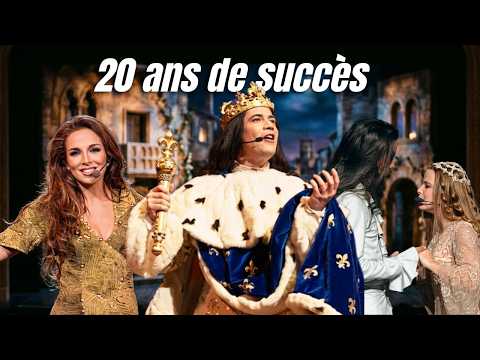
D'inconnus à Superstars - Le pouvoir des comédies musicales
AI Summary
The transcript delves into the world of French musical theatre, exploring the rise of stars, the risks involved, the financial aspects, and the phenomenon of fan adoration. It highlights how musical comedies have served as launchpads for many careers, often catapulting unknowns to widespread fame.
A significant focus is placed on Matt Pokora’s decision to star in “Robin des Bois.” This was considered a major career risk, as it involved a two-year hiatus from his solo career to fully commit to the demanding physical and artistic requirements of musical theatre. Despite initial skepticism from critics who predicted a commercial disaster, “Robin des Bois” became a massive success, attracting 800,000 spectators and generating substantial revenue, despite its record-breaking budget of 12 million euros. Pokora's salary alone was reportedly 2,000 euros per performance, significantly higher than typical musical theatre rates, underscoring his star power.
The transcript then shifts to the impact of “The Ten Commandments,” particularly the song “L'Envie d'aimer” and the career of Daniel Lévy. The song became a massive hit, selling over a million copies, and was intrinsically linked to Lévy's unique vocal talent. However, Lévy’s career trajectory was significantly impacted by his religious beliefs. His decision to not perform on Fridays and Saturdays due to his observance of Judaism meant he missed key performances, leading to his understudy, Jochaï, stepping in and even being mistaken for Lévy by audiences. Despite the musical’s immense success (2 million viewers), Lévy’s solo career struggled to replicate this triumph, a phenomenon dubbed the "Daniel Levy syndrome" where artists become inextricably linked to a single hit show.
The musical “Romeo and Juliet” is presented as another major success story, driven by a rigorous casting process that prioritized youthful appearances and vocal talent. The song "Les Rois du Monde" became a massive hit, selling over a million copies. The casting of Damien Sargues as Romeo and Cecilia Cara as Juliet, both young and attractive, resonated strongly with a teenage audience, shifting their focus from boy bands to musical heroes. The financial success was substantial, with both leads earning significant amounts, paying considerable taxes, and enjoying a period of financial security. However, like Daniel Lévy, Damien Sargues found it challenging to transition to a solo career, with his romantic image as Romeo proving difficult to shed. Cecilia Cara, while still working in the profession, has also faced challenges in breaking free from her iconic role.
The transcript highlights the transformative power of musicals, exemplified by Christophe Mahé and Emmanuel Moire in “Le Roi Soleil.” Mahé, initially a struggling artist, was discovered and propelled to stardom, with his supporting role overshadowing the main character. His raw talent and charismatic stage presence captivated audiences, leading to a meteoric solo career filled with hits. Emmanuel Moire, who played the titular role of Louis XIV, faced a more challenging transition. He navigated personal tragedy, including the death of his twin brother, and publically came out as gay, leading to a shift in his career trajectory. His revival came with the musical “Cabaret,” where he embraced a more mature and flamboyant persona, followed by a win on “Dancing with the Stars,” which ultimately helped relaunch his solo career.
The foundational success of French musicals is largely attributed to “Notre Dame de Paris.” This production, with its iconic songs and captivating characters, transformed unknowns like Garou, Hélène Ségara, and Patrick Fiori into major stars. Garou, who sang in subway stations, became a sex symbol and a respected artist. Hélène Ségara, despite initial fears of not embodying Esmeralda sufficiently, bewitched audiences, though her subsequent fame brought challenges with media exposure and a highly publicized relationship. Patrick Fiori, a local Corsican singer, found international fame as Phoebus, with his romance with Lara Fabian further amplifying his star power. The show's immense success was attributed to its extraordinary cast, powerful music by Richard Cocciante and Luc Plamondon, and relatable themes.
The transcript notes the significant financial investments required for these productions, with budgets often running into millions of euros. The risks for producers are substantial, akin to gambling, with no guarantee of recouping their investment. However, successful musicals can be incredibly lucrative, as seen with “Notre Dame de Paris” and its record-breaking single sales.
The text also touches upon the phenomenon of fan dedication, with some fans attending shows dozens of times and even relocating to follow touring productions. This intense adoration, while flattering, can also lead to overwhelming situations for the artists.
Failures within the musical theatre landscape are also explored, such as the disastrous “Cindy,” which, despite a contemporary setting and a star like Lââm, failed to attract audiences. The transcript suggests that a weak story and potentially controversial casting choices contributed to its downfall, leaving a significant financial deficit that was only offset by the success of “Notre Dame de Paris” abroad. Other flops like “Spartacus the Gladiator” and François Valéry’s “L’ombre d’un géant” are mentioned, highlighting the precarious nature of the industry.
Despite these failures, producers like Dov Attia and Albert Cohen are credited with revitalizing the genre with shows like “Le Roi Soleil,” “Mozart, l'opéra rock,” and “1789: Les Amants de la Bastille,” which brought renewed energy, impressive staging, and broad appeal. However, tragedy struck behind the scenes of “1789” with the accidental death of their technical director, Marcus Toledano, a devastating event that impacted the producers deeply and led to a temporary hiatus from creating new musicals for Attia.
The transcript concludes by looking at the current state of French musicals, with increasing competition and evolving production styles. New ventures like “A Summer of ’44” aim for more intimate storytelling and a broader range of musical influences, while dance-focused shows like “Saturday Night Fever” starring Fauve Hautot leverage the popularity of TV personalities. The ambition for Paris to become a global musical capital is evident, with established venues like the Mogador Theatre adapting Broadway hits and striving for high-quality productions. The enduring appeal of classics like “Notre Dame de Paris” and “The Ten Commandments,” with their return to the stage featuring new casts and updated staging, underscores the lasting impact of French musical theatre on popular culture.