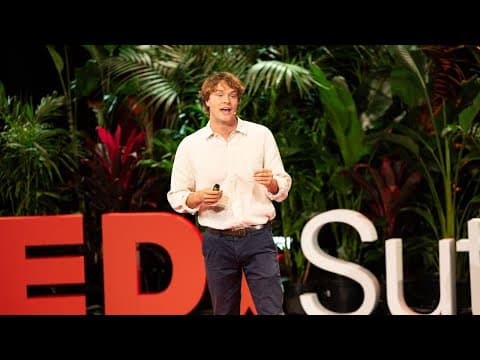
How We Can Sail Towards a Better Future | Kal Glanznig | TEDxSutherland
Audio Summary
AI Summary
For most of human history, stories were survival tools, guiding us to safety and away from danger. Today, stories still shape our lives, but they're increasingly digital and often negative, portraying a world falling apart and a doomed future. This narrative contributes to widespread apathy, nihilism, and mental health challenges, especially among young people concerned about the environment.
However, the speaker argues that this bleak story is fiction. The true story is that individuals are the main characters, capable of changing their own worlds. This belief, or agency, is crucial for positive influence. The speaker shares a personal journey from apathy to action, inspired by installing solar panels at their high school at 15, which led to further environmental activism and policy work.
To build a "raft" towards a better future, three key elements are needed: mindset, rope, and map. The mindset requires believing in your ability to build the raft and understanding your "why," ideally rooted in gratitude and love, not just anger or fear. The "rope" to tie things together can be found in identifying your "ikigai" – what you enjoy, are good at, and the world needs – or by focusing on incremental, compounding actions that create ripples of change. The "map" involves setting your compass by focusing on your circle of influence, working collaboratively with others rather than alone.
Ultimately, driving change is a collective effort. Instead of a narrative of individualistic competition, imagine a "Survivors" story focused on community and collective good. Approaching this journey with love and a smile attracts others. By building your raft and inspiring others, you create ripples that lead to new stories and leaders, shaping a future you'll be proud to pass on. The story of our planet is ours to rewrite, starting with the first word.