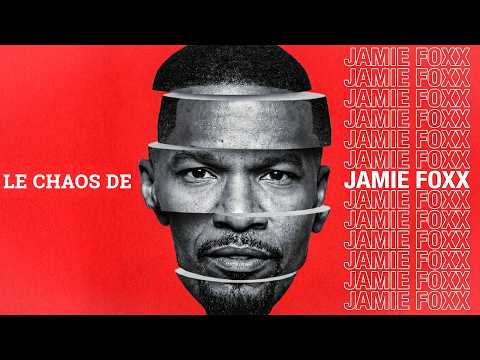
La sombre vérité sur Jamie Foxx
Audio Summary
AI Summary
Jamie Foxx, born Eric Bishop on December 13, 1967, in Terrell, Texas, is a multi-talented individual known for his acting, singing, and comedy. His early life was marked by adversity; he was abandoned by his biological parents at seven months old and raised by his maternal grandparents, Esther and Mark Talley, in a community affected by poverty and racism in the American South. Esther, a devout Christian and school principal, became the most influential figure in his life, raising him as her own son. Despite her strict rule against non-religious music, she encouraged Eric to start piano lessons at age five, recognizing his intelligence and early interest in reading. She instilled in him the belief that he could achieve anything.
As a child, Eric discovered a talent for comedy by mimicking TV shows he watched with his grandmother. His first public performances were for his classmates, facilitated by a teacher who recognized his potential and offered him a deal: behave in class and perform jokes at the end. By age 13, he was earning money playing piano in affluent homes, sometimes making $300 a night. At 15, he became the musical director and choir leader at his church. His grandmother's advice, "Stand up straight, shoulders back, and act like you have sense," became a guiding principle.
Growing up in Terrell, a segregated town, Jamie experienced racism firsthand. He recounted an incident at age eight where a white man confronted him for bringing a gas can into a store, a moment that deeply impressed upon him the realities of living in the South. Music became an escape, a way to transcend his small town. He also excelled in American football, breaking his high school’s passing record. However, the absence of his biological father at this significant moment fueled a desire to prove himself. This blend of his grandmother's intellectual nurturing and his father's absence became a powerful motivator for his diverse career paths.
Jamie received a scholarship to study piano at the United States International University in San Diego. This experience broadened his perspective, exposing him to over 81 nationalities. However, he found the classical music curriculum uninspiring and began composing and singing his own music. His dream was to enter the music industry, which he knew required a move to Los Angeles.
Upon arriving in Los Angeles, he initially gravitated towards comedy clubs, where he began performing stand-up several times a week. His early training in imitation proved valuable. One night, noticing the scarcity of female comedians, he adopted the stage name Jamie Foxx, a seemingly female name, to get more stage time. This marked the official birth of Jamie Foxx, a persona he described as his "Superman" to Eric Bishop's "Clark Kent."
In the early 1990s, Jamie made the crucial decision to drop out of college to pursue stand-up full-time. He worked odd jobs like janitor and salesman to support himself, honing his comedic skills and imitations of figures like Bill Cosby and Richard Pryor. His big break came in 1991 when he auditioned for "In Living Color," a sketch comedy show that launched the careers of many, including Jim Carrey. Observing Carrey's intense work ethic—writing his own material and working tirelessly—taught Jamie the importance of hard work and self-reliance.
After "In Living Color" (1991-1994), Jamie starred in several films and an HBO special. In 1996, he launched "The Jamie Foxx Show," a sitcom based on his own experiences as an aspiring actor from Terrell moving to Hollywood. The show was a major success, running for five seasons until 2001, and earning him an award for Best Actor in a Comedy Series in 1998.
During this period, a personal tragedy unfolded: his biological father was imprisoned for seven years. Despite their complicated relationship, Jamie's father had encouraged his success. Jamie chose not to visit him in prison but wrote a letter promising, "When you get out, I will have made it. I am well now, and I am going to save your life."
Concurrent with his acting career, Jamie pursued his musical aspirations. In 1994, he released his debut R&B album, "Peep This," which he produced, sang, and wrote. The album reached number 12 on the Billboard charts, surprising many who knew him only as a comedian. However, Hollywood initially struggled to take his music seriously. This led him to temporarily sideline his music career to focus on establishing himself as a serious actor.
His serious film career began in 1999 with Oliver Stone's "Any Given Sunday," a football film where Jamie, drawing on his own football background, underwent a significant physical transformation. The film was a box office success and marked his transition into serious acting roles. In 2001, he played Drew "Bundini" Brown, Muhammad Ali's coach, in the biopic "Ali," further demonstrating his versatility through physical transformation and accent work.
The role that would define his acting career came in 2004: Ray Charles in the biopic "Ray." The director, who had spent 15 years developing the film, was initially hesitant about Jamie but recognized his talent, look, and, crucially, his accomplished musical background. Jamie's ability to professionally play piano and sing brought unparalleled realism to the role. For two months, he immersed himself in preparation, studying hours of Ray Charles interviews and speaking with his family and friends. The most challenging aspect was portraying a blind man, and Jamie took the extraordinary step of wearing prosthetic eyes that rendered him genuinely blind for 14 hours a day throughout the months-long shoot. He wanted to fully inhabit Ray's experience. He also had the privilege of meeting Ray Charles shortly before his death.
"Ray" was a massive triumph upon its release in 2004, earning over $20 million on its opening weekend. Jamie's performance garnered universal acclaim and positioned him as an Oscar frontrunner. Tragically, his grandmother Esther passed away on October 9, 2004, at 95, just before the Oscar ceremony. Devastated, Jamie felt she had completed her mission of guiding him to greatness.
On February 27, 2005, Jamie made history at the Academy Awards, becoming the first Black actor to be nominated in two categories simultaneously: Best Actor for "Ray" and Best Supporting Actor for "Collateral." He won the Oscar for Best Actor for "Ray," becoming the third Black man to do so after Sidney Poitier and Denzel Washington.
Following his Oscar win, Jamie returned to music. In December 2005, he released his second album, "Unpredictable," featuring artists like Ludacris and Kanye West. The album's title track, "Unpredictable," became a top 10 Billboard hit, and the album itself reached number one, selling over 2 million copies and achieving double-platinum status. Jamie became only the fourth artist in history to have both an Oscar and a number one Billboard album, a feat previously achieved by figures like Frank Sinatra. He continued his musical success with the 2008 album "Intuition," which included collaborations with Kanye West, T.I., Ne-Yo, Lil' Kim, and T-Pain, earning him a Grammy for Best R&B Collaboration with T-Pain. In 2007, he received a star on the Hollywood Walk of Fame. His collaboration with Kanye West on "Gold Digger" and later "Slow Jams" also produced massive hits.
In 2012, Jamie starred in Quentin Tarantino's "Django Unchained," an acclaimed Western on slavery, alongside Christoph Waltz, Leonardo DiCaprio, Samuel L. Jackson, and Kerry Washington. The film was a monumental success, grossing nearly $500 million at the box office and further solidifying his ability to carry a dramatic film.
Throughout his career, Jamie maintained strong family ties. He fulfilled his promise to his father, taking full care of him after his release from prison, which helped them reconnect. He also spoke emotionally about his strong bond with his daughter and the pain of losing his disabled younger sister, who often accompanied him to red carpet events.
Despite his public success, Jamie faced personal struggles. Between 2004 and 2005, Oprah Winfrey intervened, expressing concern that his partying and potential substance use were jeopardizing his career. She arranged a meeting with Quincy Jones and Sidney Poitier, who told Jamie that his performance in "Ray" had elevated the art form and that he now had a responsibility to uphold that standard. Jamie broke down in tears, recognizing this as a pivotal moment of renewed hope.
However, his love for partying continued. In 2023, a woman filed a lawsuit against Jamie, accusing him of assault and battery and sexual assault at a New York bar in 2015. She alleged he complimented her body, led her to an isolated area, and touched her inappropriately until her friend intervened. Jamie categorically denied the allegations, stating through his spokesperson that a similar complaint in 2020 had been dismissed. No conviction or clear verdict has been reached.
A more recent and life-threatening event occurred on April 11, 2023, during the filming of "Back in Action." Jamie experienced a severe migraine, took aspirin, and then collapsed, blacking out completely. A first doctor initially dismissed it as a severe migraine, but his sister, Deidra Dixon, insisted he be taken to an Atlanta hospital. There, a second doctor discovered he was suffering an internal hemorrhage causing a stroke and required immediate surgery to save his life. Jamie later recounted this near-death experience in a Netflix stand-up show, describing his sister's prayers during this critical time.
Following the operation, Jamie spent 20 days in a coma, with his family protecting his privacy from the media. This silence, however, led to conspiracy theories online, ranging from claims of his death to cloning. During his coma, his daughter performed an extraordinary act, sneaking a guitar into his hospital room and singing to him. Jamie recalled, "When I heard my daughter play, that's when I started fighting."
In May 2023, Jamie woke up in a wheelchair in Chicago, with no memory of what had happened and unable to walk. He underwent intensive rehabilitation to regain coordination and mobility. In his Netflix special, he emphasized that his humor was his anchor during this difficult period, a belief that if he could remain funny, he could remain alive. He also spoke of God's blessings and his determination not to squander his talents.
In 2024, "Back in Action" was released on Netflix, more than a year after his stroke, and performed well. Jamie Foxx's story is a testament to resilience: regardless of one's origins or the challenges faced, continuous effort and fighting spirit can lead to survival and triumph.