20 AI Agents iRunning SaaStr: How We Went from Behind in AI to Ahead
AI Summary
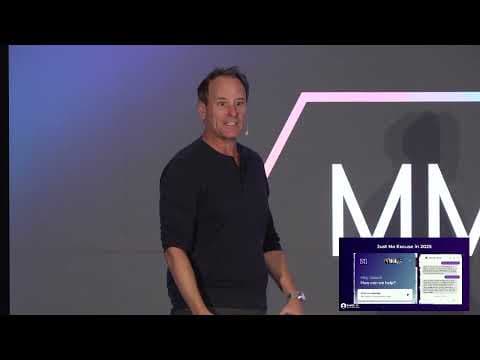
Jason Lemkin, a three-time founder, one-time VC, and the driving force behind SASTER, shared insights on the rapid adoption and impact of AI in B2B SaaS. He began by highlighting SASTER's journey from being behind on AI at the start of the year to now having 21 AI agents in production, outnumbering human employees. This journey, he noted, will be similar for many companies, including Manglement, where AI will become a deep part of operations, both internally and externally.
Lemkin detailed SASTER's first AI agent, "Digital Jason," a tool trained on 20 million words of SASTER content, including blog posts, YouTube videos, and speaker sessions dating back to 2012. Initially intended to provide strategic advice to founders, it unexpectedly became a highly effective support tool, answering questions about event dates, sponsors, and even sales collateral. This immediately outperformed their previous "nothing" support system, which often had response times of "within a month." The key learning was that "something is better than nothing," and a well-trained AI can fill critical gaps.
A crucial aspect of AI agent success, Lemkin emphasized, is consistent training. For "Digital Jason," he spent an hour daily for a month reviewing answers and correcting mistakes, especially hallucinations about future events. This daily iteration, though time-consuming initially, dramatically improved the AI's accuracy. He contrasted this with others who found AI tools ineffective because they failed to invest in proper training, citing Brian Halligan of HubSpot as an example of successful, dedicated training despite less content.
SASTER now employs multiple AI sales development representatives (SDRs) and a business development representative (BDR) called Qualified. Despite SASTER being a relatively small company, they are the number one users by performance for both Artisan and Qualified, two AI outbound and inbound platforms. This success is attributed to 30 days of intensive training before going live, followed by daily improvement efforts by Amelia, a key team member. This rigorous training led to impressive results, such as 14,971 outbound emails and the highest number of meetings and engagements on Qualified's platform. Lemkin stressed that many users complain AI SDRs don't work, but they often haven't invested the necessary time in training and iteration.
He noted that the underlying AI technology, particularly models like Anthropic's Claude 4, significantly improved at the beginning of the year, making tools like Qualified much more effective than they were previously. This technological leap, combined with dedicated training, created "magical moments" for SASTER.
A significant challenge for SMBs, like Manglement's customers, is the cost and training requirements of these advanced AI tools. While SASTER's tools cost between $50,000 to $100,000 annually and come with a month of engineering support, an average spa or salon likely lacks the budget or human resources for such an investment and training. This suggests that SMB AI solutions need to be inherently better and require less human intervention because human gaps cannot be easily filled. However, Lemkin reiterated that extensive data isn't always necessary; a small set of good, recent content, consistently updated, can yield excellent results.
Lemkin also highlighted that AI doesn't need to replace the best human employees; it can replace mediocre ones. He shared an anecdote about replacing underperforming sales and content team members with AI agents. The bar was simply for the AI to be better than "the DJ that only worked for us five hours a week" or an agency that grew tired and expensive. The AI, with training, surpassed this low bar, handling tasks like personalized outreach for sponsorships, ticket sales, and speaker recruitment more effectively than inconsistent human efforts.
SASTER segmented its AI agents based on different personas and goals: one for high-value sponsorships requiring hyper-personalization, another for 10,000 annual ticket sales with moderate personalization, and a VIP agent for recruiting CMOs and CEOs as speakers. This specialization allowed for more targeted and efficient operations.
The Qualified app, initially viewed with skepticism, became highly effective after incorporating the latest AI and SASTER's rigorous training. It now automates lead qualification and appointment setting, integrating SASTER's data to personalize interactions. For example, it can recognize a returning Google Cloud sponsor, highlight new event features, and instantly schedule a meeting with a human salesperson. This process removes the "icky feeling" of being qualified by an SDR, making the experience smoother and more efficient for prospects.
SASTER also uses Gamma, an AI tool, to automatically generate custom sales decks for each prospect by pulling data from their marketing automation tools. This ensures prospects receive up-to-date, highly personalized collateral, which is shared more widely than previous generic decks. Another internal AI micro-app was built using Replit to review and grade the thousands of speaker applications SASTER receives, saving immense time and providing instant feedback to applicants. This demonstrated how AI enables the creation of niche, highly valuable internal tools with minimal data.
Lemkin's key learnings from implementing 20+ AI agents:
1. **Daily Management and Review are Crucial:** AI agents require constant training and review. There is no "set and forget." Mistakes, a different form of hallucination, must be identified and corrected daily.
2. **Onboarding AI is Like Onboarding a Human:** Expect to invest a similar amount of time in the first 30 days of an AI agent's life as you would a human employee to ensure success.
3. **Data Quality Over Quantity:** While SASTER started with 20 million words of content, Lemkin realized that a smaller, high-quality, and consistently updated content set is more effective. The more you know about your customers, the better the AI performs.
4. **Buyers Don't Care if it's AI:** When an AI is well-trained, valuable, and fast, buyers don't mind interacting with it. In fact, they appreciate the immediate, personalized service. Lemkin advises disclosing AI use and focusing on making it excellent.
5. **AI is Always On, Which is Exhausting for Humans:** The constant activity of AI agents means human teams have to adapt to a faster pace and often start work earlier to review AI outputs and follow up on generated leads. This can be tiring and stressful.
6. **Massive Information Processing:** AI generates and processes vast amounts of information, requiring humans to manage and prioritize what to act on, unlike human teams that naturally filter and surface key issues.
7. **Cost of AI Agents:** While AI agents can be cheaper than human employees, they are not free. SASTER spends approximately half a million dollars annually on AI vendors. The nominal cost for individual agents can range from $200-$300 to $4,000-$5,000 per month.
8. **Value Distortion and Existential Threat to CRMs:** AI agents are creating and extracting significantly more value than traditional CRMs. SASTER spends 10-20 times more on AI agents around Salesforce than on Salesforce itself, demonstrating a massive value distortion. This poses an existential threat to CRMs if they don't adapt to agents doing most of the work.
9. **Cultural Shift and Empty Offices:** The presence of AI agents changes company culture. Desks become empty, daily stand-ups are different, and the office environment becomes quieter. While it's more productive, it can also lead to a sense of loneliness, though Lemkin admits he doesn't miss the "DJ drama."
10. **AI Agents as Team Members/Co-pilots:** People are interacting with AI agents repeatedly, building trust, and treating them as part of the team. This "co-pilot" concept, where AI assists and collaborates, is becoming increasingly relevant.
In a Q&A session, Lemkin addressed several points:
* **Vibe Coding:** He distinguished between vibe coding for developers (a tool for faster code generation) and for non-engineers (a prosumer tool). He encouraged everyone to try building a basic app using platforms like Replit, Lovable, or Wix's Base44 to understand AI's capabilities and limitations. He even challenged the audience to build a "Manglement clone" to grasp how quickly AI can create rudimentary applications and how it's raising the bar for competitive products.
* **Business Intelligence and Reporting:** Lemkin believes there's no excuse for not having highly personalized, real-time analytics for everyone, on demand. AI can take massive amounts of data and generate accurate reports, even if not "five nines perfection," which is often sufficient for business needs.
* **"Good Enough" for AI:** Determining when an AI is "good enough" for customer exposure involves sampling its outputs, correcting mistakes, and iterating. He personally read 20-30 chats daily from their general AI agent until the number of issues became trivial before promoting it. He stressed that it's about defining "good enough," not "perfect."
* **Training Methods:** Lemkin's training involves feeding correct answers back into the ingestion engine when mistakes are observed, usually through simple text input in plain English. He doesn't engage in fine-tuning models or weights directly.
* **AI in Video Content:** He expressed skepticism about AI-produced video for high-value content, seeing it as potentially leading to the same "horrible death spiral" of AI-produced text content on platforms like LinkedIn. He believes human-produced, super high-quality video remains superior.
* **Where Human Input is Most Important:** Lemkin suggested focusing AI efforts on functional areas where tasks are not getting done or where people are reluctant to do them. He reiterated that AI won't replace "A-tier" human talent but can significantly improve the performance of underperforming areas.
Lemkin concluded by emphasizing that the world with AI will be different culturally and operationally, and embracing this change is key to productivity and innovation. He invited further questions, directing them to "Digital Jason" for continuous engagement.