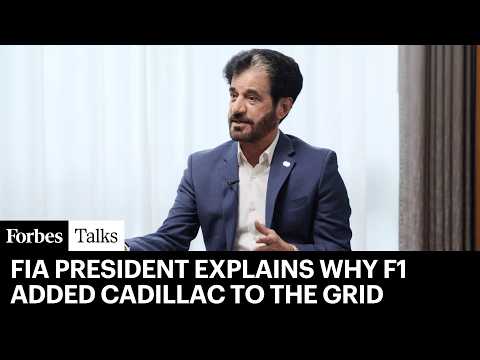
Inside The Negotiations That Put Cadillac On The Formula One Grid
AI Summary
Muhammad bin Sulayem, President of the FIA, discussed the organization's multifaceted role in Formula 1 and motorsport globally. He emphasized that while Liberty Media manages the commercial aspects, the FIA's core mission is to ensure fairness, safety, and competitiveness across all its championships, not to cultivate fans. He acknowledged that decisions, such as penalties imposed by stewards, can lead to fan dissatisfaction but reiterated the FIA's commitment to impartiality.
The commercial growth of Formula 1 has positively impacted the FIA, providing much-needed resources. Bin Sulayem highlighted that F1 is just one of seven championships overseen by the FIA, which also includes Formula E, World Rally Championship, and others. These resources are reinvested into the sport, particularly in grassroots karting, which serves as the foundation for future talent. The increased funding has also allowed for significant improvements in stewarding and race director training and education, areas that were previously underdeveloped. He stressed the difficulty of finding qualified individuals for these crucial roles, emphasizing the need for hard work and dedication in recruitment and development.
Regarding the Concord Agreement, the recent renewal was crucial for the FIA's financial health. Bin Sulayem revealed that prior to the agreement, the FIA was operating at an annual deficit of approximately $25 million, risking depletion of its reserves. He underscored the fundamental interdependence of the FIA and Formula 1, stating that "No FIA, no Formula 1." The new agreement has improved the financial relationship between the FIA and Formula 1 Management (FOM), allowing for better investment in staff, including officials who travel extensively. This investment is vital for ensuring that officials are well-rested and capable of making critical safety decisions at high speeds. The cost cap, a significant element of the agreement, has provided the FIA with greater leverage to ensure fairness and to police potential breaches by teams.
The cost cap, introduced to equalize performance among teams, has had an unintended but positive effect on team valuations, which have skyrocketed. Bin Sulayem noted that before the cost cap, the FIA was the only entity within the F1 ecosystem consistently losing money. He detailed the rigorous auditing process the FIA undertakes to ensure compliance with the cost cap, involving checks on engines, wind tunnels, and aerodynamics. He emphasized that penalties for cost cap breaches can encompass both sporting and financial repercussions, and that the FIA aims for a balanced approach, citing an instance where Red Bull was penalized with a reduction in wind tunnel time rather than solely a financial penalty.
The recent car regulation changes, implemented after 18 months of consultation with power unit manufacturers and teams, have been met with mixed reactions. Bin Sulayem stated that these changes were not sudden but a result of extensive deliberation. He acknowledged that some teams have encountered issues, particularly with the chassis or power unit, but pointed out that successful teams like Mercedes have not publicly voiced complaints, suggesting that the complaints often stem from those who did not execute the changes effectively. He expressed satisfaction with the current parity and competitiveness of the field, noting that decisions regarding electrification and safety are made through thorough consultation with drivers and technical departments.
The addition of Cadillac as an eleventh team was a controversial decision that generated significant friction. Bin Sulayem explained that the idea stemmed from the growing presence of Formula 1 in the United States and the desire to have a major American manufacturer involved. He initiated an expression of interest process, which was met with fierce opposition from existing teams concerned about diluting their share of revenue. Despite facing intense criticism, including from the British media, Bin Sulayem stands by the decision, believing it is beneficial for the sport's sustainability. He emphasized that the FIA's role is to identify and admit the "right team" that will enhance the business, and the team's subsequent performance is their own responsibility. He indicated that the possibility of a twelfth team would be considered only if it brings significant value.
Bin Sulayem addressed the growing number of cities seeking to host Formula 1 races. He stressed that the FIA's primary concern is track safety and homologation, ensuring that circuits meet stringent specifications. Security is also paramount. He highlighted the collaborative relationship with Formula 1 Management in evaluating and approving new venues, citing the return of Turkey to the calendar as an example of successful cooperation. He acknowledged that new cities are often attracted by the aesthetic appeal and entertainment value, but the FIA's role is to ensure these aspects are balanced with safety and logistical feasibility. He praised the United States model for its integration of entertainment and commercial success, suggesting it can serve as a benchmark for other events.
The ambitious goal of achieving net-zero carbon emissions by 2030 is a significant driver of rule changes. Bin Sulayem acknowledged that motorsport's direct environmental impact is small but stressed the FIA's responsibility to be part of the solution. The development of sustainable fuels is a key focus, potentially simplifying engine designs by reducing reliance on turbos and improving efficiency. He expressed interest in bringing back V8 engines, noting that the FIA regains control over engine regulations at the end of 2030. He also questioned the sole focus on electric vehicles, suggesting that sustainable fuels and hybrid solutions offer alternative pathways to cleaner air. He highlighted the ongoing efforts to make engines more cost-effective for teams and reduce their weight for improved safety and performance.
Regarding sustainability beyond the cars, Bin Sulayem discussed the FIA's efforts to improve the environmental accreditation of circuits and encourage sustainable practices. He also addressed the logistical challenges of moving the "traveling circus" globally, emphasizing that adjustments in scheduling and transportation have led to significant fuel savings. He noted that while achieving these goals is difficult due to various constraints, continuous efforts are made to reduce unnecessary travel and associated environmental impact, which also yields financial benefits.
The increased revenue generated by the new Concord Agreement will be directed towards several key areas. Bin Sulayem specifically mentioned improving safety and accessibility in karting, which he described as a neglected but crucial department. Funds will also be invested in research and development (R&D), particularly in departments requiring more staff, and in the FIA University for ongoing training and knowledge dissemination. The allocation of these funds is overseen by elected senate members and world councils, ensuring a robust governance structure for investment decisions. The ultimate goal is to strengthen the FIA, grow motorsport, and enhance its safety and accessibility, with a continued focus on environmental responsibility.
Finally, Bin Sulayem commented on the Miami Grand Prix, describing it as unique and reflecting the city's vibrant atmosphere. He noted that the event's success lies in its ability to blend racing with entertainment and a party-like environment, a model that is difficult to replicate elsewhere, even in other US cities like Las Vegas. He emphasized that the business model and the overall experience are distinct, contributing to Miami's specific appeal.