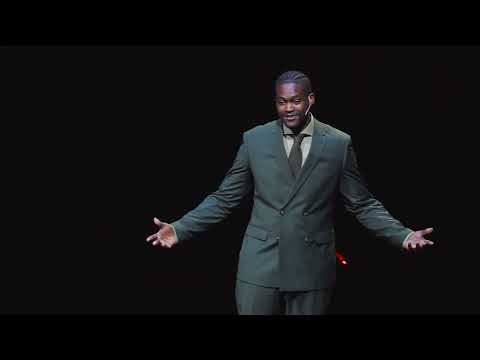
Realize Your Potential in the Age of AI | Tim Harrison | TEDxSpokane
Audio Summary
AI Summary
The speaker, Tim Harrison, a leadership coach, entrepreneur, poet, and man of faith, shares his journey and insights on realizing potential in a rapidly changing world shaped by artificial intelligence. He begins by recalling a quote from Howard Thurman: "Don't ask what the world needs. Ask what makes you come alive. Because what the world needs is people who have come alive." This quote inspired him after a period of personal adversity in college, where a basketball injury and betrayal led him to personal development and ultimately a dream job in strategy consulting.
However, the world changed in 2020 with the pandemic and social justice crisis. Driven by a conviction to make a difference, Harrison turned down his corporate job offer to start a nonprofit focused on bringing coaching and personal development to underestimated youth. He became a certified leadership coach, believing he had found what made him "come alive." Yet, two years later, the nonprofit faced significant challenges: his co-founder quit, their program was cut, and they were running out of cash, leaving him burnt out and questioning his life choices.
During Christmas Eve 2022, while at home, he discovered a new technology that would change everything: ChatGPT. He then explains why this discovery is relevant to everyone. He emphasizes that the tools available are becoming incredibly capable, with AI becoming increasingly prevalent in daily life, from online videos and messages to self-driving cars. This raises questions about AI's potential to solve global problems like climate change and disease, or to negatively impact critical thinking, creativity, and employment.
While no one knows the exact future, Harrison notes that powerful people are pushing AI progress due to unprecedented profits and impact. He asserts that AI is a "great multiplier," amplifying both positives and negatives. The key, he argues, is to focus on what we can control: "who we are when we're multiplied."
His personal experience with ChatGPT began with simple tests, like writing a poem, which quickly evolved into larger aspirations. He realized that if AI could coach, it could help his nonprofit overcome obstacles and reach far more students. Despite having no coding experience, he used ChatGPT to develop a working app for skilled coaching sessions overnight. He immediately tested it with students, who reported it made a difference.
This experience led to a profound realization: he had delivered 25 hours of coaching to 50 students in just 30 minutes, an amount that would typically take an entire semester. He envisioned thousands of students accessing similar sessions with minimal additional effort on his part, highlighting AI's potential to deliver "multiple lifetimes worth of coaching" from a single idea.
Harrison concludes that "the game has changed" because AI allows instant idea-to-execution, building quality products at low cost, and applying skills one doesn't possess. This shifts the bottleneck on human potential from external barriers (time, money, skills) to internal roadblocks. He illustrates this with examples of students, dreamers, and leaders held back by self-doubt, fear of failure, or resistance to change, despite AI offering universal tutors, digital employees, and expert advisors. He stresses that AI multiplies what's already there, and multiplying "any number by zero, you get zero." Therefore, developing ourselves is crucial.
He introduces "POWER" as an acronym for the five principles needed to overcome internal roadblocks and unlock potential in the age of AI: Purpose, Ownership, Wisdom, Execution, and Resilience. These principles represent uniquely human capacities to choose, change, and respond.
**Purpose** is about deciding to live intentionally rather than by default. For Harrison, this meant pivoting from basketball to consulting, then to the nonprofit, and finally to technology, constantly learning and growing into a better version of himself. He emphasizes that the world needs people who are "alive" and living on purpose, regardless of future job displacements.
**Ownership** involves understanding oneself and taking full responsibility for outcomes. Harrison realized his own leadership limitations contributed to his nonprofit's struggles. This introspection led to the idea of using AI to scale, which provided a solution to reach more students than ever before. He highlights that the hardest part wasn't building the app, but looking inward and acknowledging his complicity in past results.
**Wisdom** is about navigating a changing world. Using the analogy of a self-driving car, he explains that "what you don't specify will be decided for you." He advises against seeking a perfect plan, instead advocating for making a "flawed plan" and perfecting it through implementation, adapting and rerouting as needed.
**Execution** means doing the work, but differently with AI. While AI simplifies tasks, Harrison warns against becoming weak and dependent. He argues that humans grow through struggle, so AI should prompt us to "aim higher, go further, find harder problems to solve," redirecting our effort from building to deciding "what's worth building."
Finally, **Resilience** is about growing *because* of adversity, not just bouncing back. He recounts a situation where his coaching company's major project lost funding due to political shifts. In response, they leveraged AI to automate administrative work, saving resources. They reinvested these savings into a new program for entrepreneurs using AI, which was a success. When the original project's funding was later reinstated, they were in an even better position, demonstrating growth through challenges.
Harrison concludes by reiterating his mission to inspire and equip people to realize their potential. He stresses that in an AI-driven world, the bottleneck is internal. Developing "POWER"—purpose, ownership, wisdom, execution, and resilience—is crucial. This internal power, he asserts, "can never be taken away. It can never be automated. It can only be forfeited." He challenges the audience to consider what they will do with their power as the world changes.