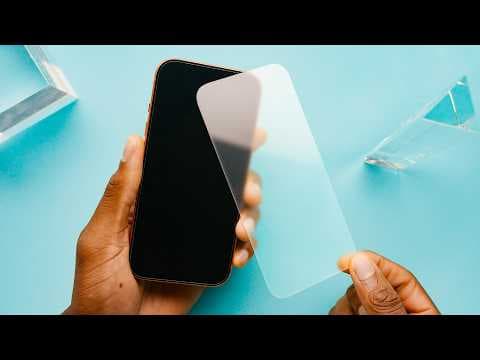
Glass is glass
Audio Summary
AI Summary
Smartphone companies often highlight improvements in shatter resistance and scratch resistance for their devices, but these claims can be misleading. The core issue is that shatter resistance and scratch resistance are inversely related. Making a material harder to resist scratches also makes it more brittle and prone to shattering. Conversely, making it softer to prevent shattering increases its susceptibility to scratches. It's essentially a trade-off, and dramatically improving both simultaneously is nearly impossible.
When a company claims a phone is "three to four times more shatter resistant," they are likely not lying, but they are not providing the full picture. This significant improvement in shatter resistance is often achieved by making the glass softer, thus reducing its scratch resistance. This explains why marketing often alternates between highlighting scratch resistance one year and shatter resistance the next.
Most high-end smartphones use specialized glass, such as Gorilla Glass from Corning. Since its introduction with the original iPhone in 2007, Gorilla Glass has seen numerous iterations. Examining Corning's claims over the years reveals a consistent pattern of alternating significant improvements between shatter resistance and scratch resistance. While marketing may present a unified upward trend in durability, the reality involves two distinct curves, each improving in turn.
Even with these advancements, glass remains vulnerable. Everyday elements like dust and sand, often containing quartz, are harder than glass and can cause scratches. No current glass is completely immune to this. This principle also applies to technologies like Apple's Ceramic Shield. While it offers improved shatter resistance, it also sees claims of increased scratch resistance in subsequent generations, suggesting a similar trade-off.
Independent tests sometimes verify claims of increased shatter resistance. However, attributing this solely to the glass is inaccurate. Other factors significantly influence a phone's ability to withstand drops, including the display's shape, the thickness and material of the bezels, and whether the edges are flat or curved. For instance, the iPhone 12's return to square sides, compared to the iPhone 11's rounded design, likely contributed to its improved shatter resistance, a factor that Apple includes in its overall durability claims without explicit clarification.
Beyond these headline features, there are other interesting properties of phone glass, such as oleophobic coatings that repel fingerprints and reduce smudges, and anti-reflective coatings. Therefore, when presented with claims of enhanced durability, it's important to remember that glass, despite technological progress, still operates within fundamental physical limitations.