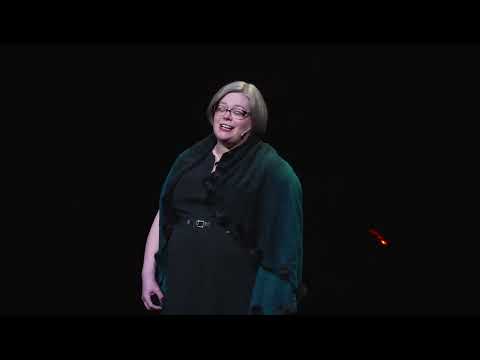
What's rooted isn't fixed | Hanna Morrell | TEDxSpokane
Audio Summary
AI Summary
The speaker introduces the concept of financial trauma through an anecdote about a client named Janie, who struggled with the decision of whether to eat out. Janie's reaction to the idea of evaluating her choice rather than herself revealed a deep-seated emotional response rooted in financial stress. This experience, along with the speaker's own, led her to become a trauma-informed financial coach.
Financial trauma, though not widely recognized by name, is commonly felt and manifests in various ways, such as avoiding bills, arguing with partners about money, overworking or over-restricting spending to manage stress, or feeling like a "financial burn victim." Conventional financial advice, which often suggests drastic measures like canceling subscriptions or eating out less, is presented as ineffective if it hasn't worked for individuals already. The speaker emphasizes that she is not there to shame people into extreme frugality but to address the underlying stories they carry about money.
These stories, often formed during times of rejection, scarcity, or failure, can prevent even extreme wealth from feeling safe. Money intertwines with every aspect of life, and beliefs about success or responsibility are rooted in these narratives. The speaker proposes a framework called "SPACE" to examine and rewrite toxic money narratives. This involves exploring core money experiences: what happened, who was there, and what thoughts and feelings were present. For those who can't pinpoint an exact event, the focus shifts to understanding "the story of the story." Janie, for instance, had a narrative that she had to judge herself to make perfect choices and constantly felt like she was failing.
The speaker explains that these stories, even toxic ones, initially serve as protective mechanisms. Janie's story aimed to protect her from the failure of making wrong choices. However, these protective narratives come at a cost, robbing individuals of peace, possibilities, self-worth, and bandwidth. Drawing on Bessel Vanderook's "The Body Keeps the Score," the speaker highlights how shame is isolating, leading to a preoccupation with hiding the truth from oneself and others, which expends vast energy and destroys interconnectedness. Trauma, including financial trauma, is isolating, and shame perpetuates a cycle of hiding and increased shame.
Sharing these stories, however, can loosen their grip and facilitate healing. Janie's sharing with her boyfriend and mother led to mutual connection and acceptance. The speaker then introduces the idea of exploring alternative truths and a life not driven by old money stories. Janie, after her breakthrough, began evaluating her choices rather than herself, developing a new narrative of resilience and self-trust, understanding that her self-worth was not contingent on her financial decisions.
A tool called "pendulation" is introduced, which involves moving back and forth between an old story and a new one to feel the contrast and recognize that a choice exists. Using Janie's example, participants are guided to feel the old story of judgment and shame for imperfect choices, and then the new story of resilience, self-trust, and evaluating choices. This practice helps to expand one's perspective, not by eliminating the old story, but by choosing how to respond to it.
Finally, the speaker provides prompts for individuals to work on their own money narratives: "When I think about money, I feel...", "I have learned that money means...", "I learned this narrative from...", "My money story is trying to protect me from, but it has also cost me...", and "Today I want to believe that is possible." The importance of sharing these stories with trusted individuals for connection is emphasized. A warning is given that this process can be overwhelming, potentially unlocking strong emotions or nothing at all, all of which are valid. If pain arises, individuals are advised to stop, recognize the pain as information, and seek support, as the process should not be undertaken alone. The speaker concludes by asserting that people can move from panic to clarity, and from avoidance to self-trust, not through restriction or harder work, but by rewriting their stories, thereby expanding around the past rather than changing it. The core message is that "you are not your money story," and current narratives are merely first drafts.