Shutter Story
AI Summary
In the YouTube demo for the paranormal horror game *Shutter Story*, Jacksepticeye introduces a unique gameplay experience centered on a photojournalist’s ability to detect the supernatural through image manipulation. The game follows a young man named Jack who visits his friend Eli, whose family home is plagued by increasingly bizarre and unsettling phenomena. While the adults in the house—Eli’s mother Marianne, father Tom, and uncle Robert—attempt to rationalize the flickering lights, sudden mold, and structural anomalies as mundane household issues, Eli is convinced the building is haunted. To prove his theory, Eli has acquired a specialized software package called "Spectralaware," which Jack uses throughout the demo to analyze family photographs and videos for hidden entities.
The narrative setting is immediately established as tense and "freaky." Jack observes strange shadows on the walls and witnesses the family’s dismissive attitude toward obvious red flags, such as worms appearing in the plumbing and the grandmother’s sudden, unexplained collapse. Eli feels isolated in his fear, comparing himself to a lone hero trying to convince a skeptical audience. He believes the house has been "talking" and "planning something" for months, and he views the software as his only hope for validation.
The core of *Shutter Story* lies in the technical mechanics of the Spectralaware software. The player must examine a series of scans from the family’s photo albums, using tools to adjust exposure and contrast or applying filters like "negative" and "night vision." The software provides a comprehensive guide to identifying four primary categories of hauntings:
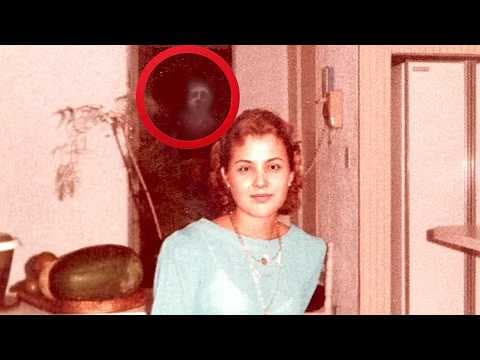
1. **Apparitions**: These are the most recognizable forms of ghosts, appearing as human-like spirits, unidentified individuals, or doppelgangers. They are often translucent and can be mistaken for living people if the camera used a long exposure. Players must cross-reference the visual evidence with the photo’s caption to see if every person pictured was actually present at the time the photo was taken.
2. **Impossible Events**: This category involves phenomena that defy logic and physics. Examples include autonomous objects that float or move without an external force, and "reality glitches" such as indoor rain, animals of impossible scale, or the appearance of portals and vortexes.
3. **Spectral Forms**: These entities manifest as wispy, gaseous mists or "shadow people." Unlike apparitions, they lack identifiable facial features or clothing. They often require the use of negative filters to be distinguished from bright backgrounds or night vision to be spotted in the dark.
4. **Similacra**: This is a more subtle haunting where the likeness of a face or figure forms within natural textures, such as wood grain, clouds, or floor tiles. These often resemble religious iconography and manifest of their own accord within the environment.
Jack’s investigation begins with relatively simple photos, but the complexity quickly increases. He discovers a floating rod-like object in a kitchen photo, which he classifies as an impossible event. Later, he finds a clear apparition—a face staring from the background of a photo where Eli and his mother were supposedly alone. As Jack progresses, he unlocks more advanced tools, such as night vision, which he uses to analyze a video file. This reveals a terrifying figure standing behind a curtain, staring directly at the camera.
The gameplay is punctuated by the escalating domestic drama. When Jack and Eli attempt to show the parents a printed photo of a ghost, Marianne brushes it off, telling Eli to go back to his "games." The parents are depicted as being under immense stress; Tom is struggling with the financial burden of a new baby and the health of the grandmother, leading him to ignore the blatant supernatural evidence around him. A particularly gruesome moment occurs when Eli leads Jack to a wall where worms are visibly emerging from the surface. Despite the "squelching" sound of the wall, Marianne insists it is merely a dampness issue that needs management, further highlighting the theme of parental denial.
The demo concludes with a significant revelation regarding the software’s true purpose. Eli explains that Spectralaware is not just a tool for documentation; once all the hauntings in the house have been correctly categorized, the software provides the user with a specific "exorcism process." This shifts the goal from mere observation to active survival, as the characters must identify the exact nature of the entity to successfully remove it.
In his final review of the demo, Jack manages to find seven out of eight hauntings. He notes that the game’s strength lies in its "tangibility" and its clever use of photo-editing mechanics, which reminds him of the early internet urban legends like Slender Man. He compares the atmosphere to *The Mortuary Assistant*, praising the way it turns a domestic setting into a place of clinical, yet terrifying, investigation. Jack expresses strong interest in the full release, noting that the game successfully takes familiar horror tropes and presents them through a fresh, interactive lens. He encourages his viewers to support the game’s development, emphasizing that the combination of storytelling and technical puzzle-solving makes *Shutter Story* a standout title in the indie horror genre.