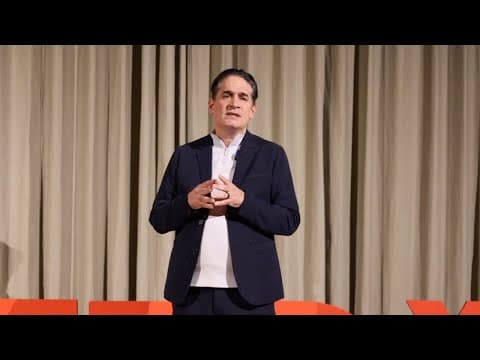
Nadie se sostiene solo: La fuerza de lo colectivo | Raul García Ruiz | TEDxCiudadJuarez
Audio Summary
AI Summary
Resilience is about growth, maturity, and maintaining dignity amidst pain, and it often involves learning to work with others. This understanding came while supervising nightclubs in Ciudad Juárez, Mexico, where a scene of young girls caring for siblings outside a bar, waiting for their mother who worked for meager pay, highlighted the uselessness of responsibility without compassion. This experience underscored that public work and life gain meaning through empathy, as no one can thrive alone. The real challenge arises when the collective is no longer valued, and indifference, a silent habit of looking away, becomes prevalent. This indifference weakens not only individuals but the entire community, jeopardizing mutual support.
Apathy fosters the belief that effort is futile, and distrust isolates people. This leads to fragmented lives where individuals carry burdens alone, burdens that would be lighter if shared. In communities like Ciudad Juárez, and many others facing similar economic, social, and security challenges, needs extend beyond the material. Beneath poverty, violence, and inequality lies a deeper need to feel part of something worthwhile again. Prolonged crises lead to a silent phenomenon of self-isolation, eroding trust in institutions, neighbors, and the city itself, and diminishing the ability to envision a shared future. When this community fabric weakens, even effective public policies and social programs fall short. Without this network of trust, belonging, and collaboration, a community cannot effectively respond to present or future crises, and individual prosperity is tied to the prosperity of the whole city.
Despite these challenges, hope remains through inspiring gestures and ordinary people choosing to help. Community is built through small, consistent actions that collectively make a significant impact. Examples include listening without judgment, supporting local businesses, offering employment, or organizing with neighbors. This active participation in mutual care is resilience. In Juárez, even amidst violence and pandemics, people refused to surrender, continuing to care for each other. Being part of civil society means intentionally improving one's piece of reality. When many do their part, invisible efforts become visible, transforming the community. For a truly resilient community, more than survival is needed; roots are essential. Rootedness is a commitment to co-responsibility for one's living place.
Three strategies are proposed to achieve this:
1. **Rebuild trust:** Recognize the dignity of others by fostering neighborhood encounters, informal meetings, and community activities. Promote active listening among citizens, schools, and businesses, and support mediation projects to reduce conflicts and strengthen bonds.
2. **Participate in everyday life through small, cumulative actions:** Support local businesses, maintain shared spaces, offer time, and collaborate with volunteer networks. The impact comes from consistency, not magnitude.
3. **Connect efforts:** Move from isolated initiatives to a collective vision. Strengthen belonging by creating alliances between citizens, institutions, groups, schools, and companies. Raise awareness of community initiatives to inspire participation and generate local platforms to coordinate efforts and avoid duplication.
This is not a magic formula but a deep conviction that what is given to the community returns multiplied. Just as friendship is born from discovering shared experiences, community strengthens when people realize their battles are not solitary, making life's burden more bearable. Instead of dismissing problems as not our own, consider what small act is within reach. By consciously living, questioning what divides, and building what unites, true resilience is found not in survival, but in belonging.