4 façons d'utiliser les pédales d'égalisation
Audio Summary
AI Summary
Hello everyone, I'm Guillaume from Audio Fanzine, and in this video, I'm going to show you four incredible ways to use the most underestimated effect in the world: the equalizer.
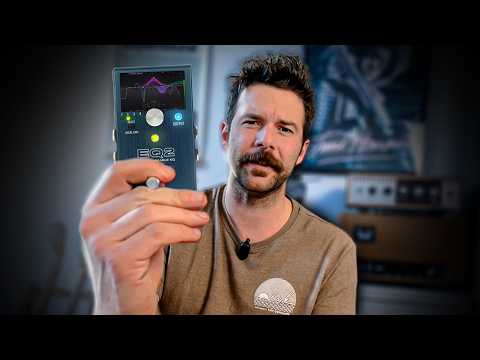
The equalizer is often seen as unsexy; it's not an overdrive, a distortion, or something pretty and magical. Yet, it's absolutely everything. It completely changes the game, and there are countless ways to use an equalizer, whether in a guitar rig, or with other instruments and audio signal chains in music production or recording. Pedals like the Source Audio EQ2, the classic Boss GE7, or the numerous other equalization pedals on the market can make a phenomenal difference to your sound. Today, I'll present four ways to use this pedal in the context of a guitar or bass rig.
The first use case is an equalization pedal at the beginning of your chain, always on. This is extremely useful for effect pedal enthusiasts who might have 15 pedals, 18 patch cables, and switchers. In this scenario, the equalization pedal essentially acts as a buffer. If your guitar sounds better plugged directly into the amp than through all your pedals, it's because there's significant impedance, resistance, and sometimes even signal conversion loss as the sound travels from your guitar through all those effect pedals to the amp. This often results in a loss of volume, definition, and especially high frequencies. An equalization pedal can easily compensate for all these issues. Most equalization pedals, particularly those I recommend, have a versatile output volume. This allows you to decrease the volume if you're boosting frequencies but want to maintain a unity gain, or to boost the volume to compensate for signal loss elsewhere in your effect chain. Unlike many buffers, an equalization pedal also lets you compensate for loss at specific frequencies, such as those high frequencies that tend to disappear. Thus, a pedal like this can boost your highs and volume slightly, counteracting what would normally be lost in an extensive pedalboard.
Moving on to the second use case, which also involves placing the equalizer at the beginning of the chain, but used more sporadically. This is to compensate for the output difference between guitars equipped with single-coil pickups and those with humbuckers. Humbuckers generally have a higher output level than single-coils. This not only causes a volume difference at the input of your amp or other pedals but also affects how those pedals react. Input volume dictates signal clipping when going into an overdrive or distortion pedal, or the saturated channel of an amp. A stronger input level from your guitar means a more pronounced effect, especially with overdrive, distortion, or even phasers. If you love a sound you get with a beefy humbucker but then switch to a single-coil and the sound falls flat because it lacks punch, you can use the equalization pedal. By boosting the mid-range slightly and increasing the output volume, your single-coil pickups gain more intensity, hitting your overdrive with greater intent. This provides a single pedal solution to compensate when switching guitars, helping you preserve the sound you love.
The third use for an equalizer is as an overdrive boost. We often overlook the volume capabilities of an equalization pedal, assuming it's just for tone correction. However, most equalization pedals offer tens of decibels of boost, often specified in their technical sheets. This high output level allows you to push an already slightly dirty amp or a distortion pedal, giving you more "violence" in your sound. Not only does it boost volume, but it does so with extreme precision, letting you cut specific frequencies. This is much harder to achieve with a typical overdrive pedal, which usually only has a single tone knob. This is why many metal guitarists use multi-band equalizers (7, 10, or 12 bands) or preamps. They can cut bass frequencies that enter a saturated amp, or harsh high frequencies that might sound unpleasant, while boosting the overall volume. This effectively transforms the equalization pedal into an extremely precise and powerful overdrive, taking your sound from "dad rock" to aggressive, modern tones.
Finally, the fourth use case is placing the equalization pedal in your amp's effects loop (or between the preamp and power amp) to fine-tune the final sound of your rig. This is a concept familiar to music producers. Typically, the first thing you do after recording a guitar track is apply an equalizer to cut and boost certain frequencies to place the guitar in the mix. An equalizer pedal in your effects loop allows you to simulate this live. Imagine your rig sounds great in your practice space, but you arrive at a concert venue with acoustics that don't suit your sound, and you need to make corrections. You can't always rely on a top-tier sound engineer. If you're playing at a local dive bar, the sound guy with his antique mixer might not be able to individually correct your guitar sound, only mix for the whole band. Having an equalizer as the last step in your amp's effects loop, or after the amplifier block in a multi-effects processor like a Quad Cortex or Line 6, makes a night-and-day difference to how your sound is perceived in the room. This helps you avoid unpredictable results when entrusting your sound to others and gives you finer control over what your audience hears. Ultimately, the audience comes for the sound, so make them happy with an equalizer.
These are just four of the many scenarios where an equalizer pedal can be a lifesaver. I'm sure many of you fall into at least one of these categories. There are so many other ways to use them, so please share your methods in the comments. Tell me how and why you use this effect, or if you don't, perhaps consider adopting it. Check out the links in the description. Don't forget to subscribe to Audio Fanzine to stay updated on all our upcoming content. Take care, and I'll see you in the next video. Bye!