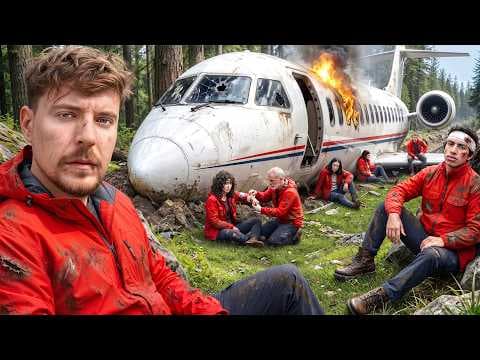
100 People Simulate Being Stranded In The Wilderness
Audio Summary
AI Summary
One hundred people were stranded in the wilderness for a survival challenge, with a $250,000 prize going to the team with the most members remaining at the end. The participants were divided into two teams: the Blue Team, comprised of survival experts, and the Red Team, made up of amateurs. The Red Team was given a significant advantage, being told about the challenge beforehand and allowed to purchase any supplies they deemed necessary from a store. In contrast, the Blue Team was only informed they were participating in a MrBeast video and packed for various climates without knowing the specific challenge.
Upon arrival, the difference in preparation was evident. Red Team members showcased items like large packs of water, tarps, and lighters. The Blue Team, having packed for an unknown challenge, had a wider array of gear, some preparing for extreme cold. The Blue Team immediately focused on building simple debris shelters, emphasizing insulation. One expert, Seth, with a decade of experience, noted the need for a team effort to gather leaves for insulation. The Red Team, despite their supplies, ended up with a small "kids tent." When asked if they thought they could beat the professionals, the Red Team expressed confidence, stating they were "professionals in their own way."
The first night proved challenging for the Blue Team. Despite their expertise, the drastic temperature drop and wet conditions made sleeping nearly impossible. Two experts from the Blue Team were the first to tap out, citing exhaustion, dehydration, and the physical inability to sleep due to the cold ground. Meanwhile, the Red Team, utilizing their purchased resources like tents and sleeping bags, enjoyed a more comfortable night.
On Day 2, the Blue Team recognized the urgency of improving their shelters. Seth explained the importance of piling leaves about a foot thick for insulation and dryness, emphasizing that it would require collective effort. The Red Team, meanwhile, continued to enjoy their amenities, with one member proudly showcasing their "massive" fort and expressing confidence in its ability to withstand rain. They also focused on keeping their food safe and dry.
As days progressed, the Red Team’s initial advantage began to dwindle due to reckless consumption of their supplies. By Day 4, their snacks were depleted, and hunger became a significant issue. They decided to forage for food and water. The Blue Team, guided by Seth, turned the forest into a "grocery store," identifying edible plants and building a fish trap. The Red Team, despite having fishing gear, only managed to catch trash.
To address the growing hunger, hidden food caches were revealed, containing items like beets and apples, designed to provide minimum sustenance if managed correctly. Both teams established community pantries to ration the food. However, internal conflicts arose within the Blue Team regarding food management. Julia expressed concern that others would "go crazy on the food," leaving nothing for those willing to "starve for a week." The experts cooked a large dinner from the cache, but tensions flared over communication and control. Randy on the Blue Team discovered that some teammates had hoarded food, leading to their elimination and a realization that internal struggles could undermine their goal of winning the $250,000 prize.
Despite Randy's attempt to boost morale and prevent further eliminations, self-eliminations continued on the Blue Team, fueled by arguments over food rationing and differing leadership styles. One contestant, finding it difficult to be part of a team due to being "oppositionally defiant," chose to leave. By Day 5, the Blue Team was down by nine members.
The Red Team's strategy of sharing resources and working together initially helped them, despite the limited rations. However, the lack of food eventually led to their first six eliminations, as members yearned for comfort food like Waffle House buffets. They described the hardest parts of the challenge as the food, the sun, and the bugs.
A rainstorm hit the wilderness, further testing both teams. The Blue Team, having improved their shelters, managed to stay relatively dry and warm. The Red Team, however, faced a "complete flood" in their camp, with soaked shoes, socks, and clothes. The cold and wet conditions led to more eliminations from both teams – six from the Red Team and two from the Blue Team.
A new challenge was introduced: 50 cans of food were delivered to each team. The team that returned the most unopened cans in 72 hours would win a reward. If tied, neither team would win. The Red Team, despite their hunger, decided to be disciplined and hide the cans to prevent anyone from opening them, hoping to win the reward. The Blue Team also decided to save all their cans. Ultimately, both teams returned all 50 cans, resulting in no reward for either. This outcome led to immediate frustration and three more eliminations from the Red Team, who regretted not eating the food.
Morale on the Blue Team dipped significantly after losing three more members, with sleep deprivation and hunger taking a toll. Seth, a key survivalist on the Blue Team, decided to leave due to business commitments, despite having taught everyone essential survival skills. His departure was a blow to the team, who acknowledged his value.
The Red Team, with fewer members, was forced to take on more responsibilities. They managed to adapt, with one member stepping up to cook and successfully preparing a meal with chopped chives and carrots. They felt they could "manage" and had "proven that I can do a lot more than even I thought I could do."
Another heavy rainstorm hit, again soaking the Blue Team's camp and pushing them to their limits. The Red Team, however, found comfort in their tents, enjoying "filler days" and waiting out the rain.
On Day 14, a new challenge was presented: five boxes containing crucial survival items. Both teams would open them one at a time, and the first team to press a button for an item would claim it, leaving the other team with nothing for that specific item. If both teams rejected an item, the next item would be revealed. If both teams rejected all five boxes, they would both receive all items.
The first box contained fishing gear, which both teams rejected, believing there were no fish in the river. The second box offered cast iron pots and pans. The Red Team considered taking it to prevent the Blue Team from getting it, but ultimately rejected it. The third box contained Feastables peanut butter cups, a tempting treat that both teams struggled to resist but ultimately passed on. The fourth box, building supplies, was also rejected by both, as they felt their shelters were adequate.
The final box contained steaks, Jack Links, and seasonings. The Red Team debated whether the Blue Team would press the button to prevent them from getting it. The Blue Team, driven by hunger, had Patrick press the button immediately, securing the meat for his team but creating a rift among his teammates, especially a vegetarian member who felt ignored. This decision led to more eliminations from both teams, fueled by frustration and a sense of betrayal among the Red Team for losing the reward.
The Blue Team celebrated their victory in the challenge, enjoying steaks for the first time in weeks. This protein boost gave them renewed energy. However, the focus quickly shifted to the increasing prize money per person as more contestants left. Trinh on the Blue Team, driven by a desire for a larger share, started acting selfishly, leading to arguments and accusations of being "toxic" and "selfish." This further fractured the Blue Team.
Meanwhile, the Red Team, despite their losses, found strength in unity. They worked together to cook a freshly caught fish, which tasted surprisingly good. They emphasized the importance of teamwork and selflessness.
As the days continued, the Blue Team continued to experience internal conflict and eliminations, with members expressing bitterness and a desire to leave. The Red Team, conversely, thrived on their camaraderie, enjoying "relaxation time" by the river and demonstrating resilience.
On Day 20, a final challenge was announced: a flare gun was hidden in the Red Team's camp, and the first team to find it would decide when the video ended by firing it. This meant they could end the game immediately or prolong it, but they had to consider the number of remaining members on each team. The Red Team strategized to search the furthest corners of their camp to burn calories for the Blue Team.
Both teams frantically searched for the flare gun. The Red Team, despite some initial disorganization, spread out to cover their camp. Ultimately, Taylor from the Red Team found the flare gun. After 20 days, the Red Team decided to fire the flare immediately, ending the challenge.
The final count revealed 11 members remaining on the Blue Team and only 9 on the Red Team. The Blue Team, the survival experts, won the $250,000 prize, which would be divided among their remaining 11 members, each receiving $22,000. The Red Team, though they lost, was compensated with $4,000 each for their participation. The video concluded with the insight that while skill and resources are important, working together is ultimately what matters most in such a challenge.