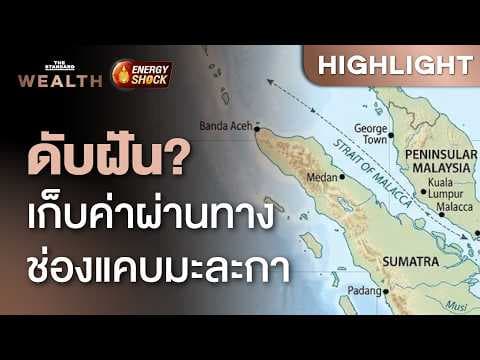
จะเกิดอะไร? ถ้าอินโดนีเซียเสนอเก็บค่าผ่านทางช่องแคบมะละกา | THE STANDARD WEALTH
Audio Summary
AI Summary
The Strait of Malacca has become a topic of discussion due to a proposal from Indonesia to collect tolls or fees from commercial ships passing through it. This idea was inspired by Iran's stated intention to charge tolls in the Strait of Hormuz. Indonesia's Minister of Treasury, Pubha Yudiswa, suggested these fees as a new revenue source for the government, aiming to elevate Indonesia's role in the global economy.
The Strait of Malacca is a crucial strategic point and the busiest shipping lane globally, with over 100,000 ship voyages last year. Indonesia acknowledges that collecting tolls unilaterally would be impossible, suggesting a profit-sharing method with Malaysia and Singapore.
However, both Singapore and Malaysia have declared their opposition to the proposal. Singapore's Foreign Minister, Dr. Vivian Balkrishnan, emphasized that the right to cross the strait is protected under the United Nations Convention on the Law of the Sea (UNCLOS) and is a right, not something requiring payment. Malaysia also reaffirmed its commitment to international law and refused to collect such fees.
Analysts are concerned that if tolls are successfully collected in the Strait of Hormuz or Malacca, it could set a precedent for other countries, potentially leading to the end of freedom of navigation and encouraging similar actions in disputed areas like the South China Sea. The situation is being closely monitored.