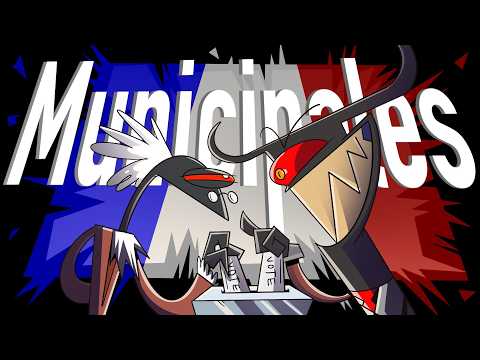
Diable Positif: Les Municipales avec Axel Lattuada
AI Summary
The following summary explores the intricate world of French municipal elections, as explained through a satirical dialogue set in a fictionalized version of Hell. The discussion arises when the infernal districts face a new requirement: they must hold elections to determine their leaders, mirroring the municipal systems used in the world of the living.
In France, unlike the presidential election, which is a direct vote, the election of a mayor is an indirect process. When citizens go to the polls for municipal elections, they are not voting directly for a specific individual to become mayor. Instead, they vote for a list of municipal councilors and community councilors. These elected officials then take on the responsibility of electing the mayor for a six-year term. The number of councilors to be elected depends entirely on the population of the commune, ranging from as few as seven members for villages with fewer than 100 inhabitants to as many as 69 for cities with a population of 300,000 or more.
The voting system itself underwent significant changes intended to be fully implemented by 2025. While smaller communes once had specific rules, the standard system is now a proportional list ballot with a "majority bonus." This means voters choose from fixed lists and cannot add or remove names. To promote gender equality, these lists must respect parity, alternating strictly between male and female candidates. This municipal vote carries weight far beyond local governance because it heavily influences the composition of the Senate. Senators are not elected by the general public but by "grand electors," 95% of whom are delegates from municipal councils.
Regarding the allocation of seats, the list that comes out on top—either in the first round with an absolute majority (over 50%) or in the second round—automatically receives half of the available seats as a majority bonus. The remaining seats are distributed proportionally among all lists that received at least 5% of the cast votes. For a list to proceed to the second round, it must secure at least 10% of the vote, though lists can merge with others that earned at least 5% to bolster their chances. Notably, blank votes are not included in these calculations. Once the council is formed, the mayor is elected during the first council meeting, which must take place between the Friday and Sunday following the final round of voting. The mayor must secure an absolute majority in the first two rounds; if a third round is necessary, a relative majority—simply having more votes than any other candidate—is sufficient to win.
Special rules apply to the three largest cities: Paris, Lyon, and Marseille (often called the PLM cities). Historically, voters in these cities chose lists within specific sectors or districts. However, a 2025 reform introduced two separate ballots and two different ballot boxes. One box is for electing district or sector councilors, while the second is for electing members of the central city council. It is the central council that ultimately elects the mayor for the entire city. In these major urban centers, the majority bonus for the central council is set at 25% rather than the standard 50%. Additionally, in Lyon, a third ballot box is used to elect metropolitan councilors for the surrounding region.
To be eligible to run for the position of mayor or councilor, a candidate must be a French citizen or a national of an European Union member state. They must be at least 18 years old and registered as a voter in the commune or, at the very least, be a local taxpayer. Certain professions are barred from running in the areas where they work to prevent conflicts of interest; this includes municipal employees and certain magistrates. While EU nationals can serve as municipal councilors, they are legally prohibited from holding the office of mayor or deputy mayor. Furthermore, a mayor cannot simultaneously serve as a member of the French Parliament. While it is not a strict law, it is a long-standing tradition that government ministers resign from their mayoral duties upon joining the cabinet.
The role of a mayor is multifaceted, serving as a bridge between the national government and local politics. Under the authority of the Prefect, the mayor is responsible for publishing laws, executing security measures, and organizing elections. Under the authority of the Public Prosecutor, the mayor acts as an "officer of civil status," overseeing the registration of births, marriages, and deaths. As the executive head of the commune, the mayor carries out the decisions made by the municipal council, manages the budget, signs contracts, and oversees communal property. They also hold significant police powers within their jurisdiction.
Finally, the summary addresses the financial aspect of the role. Mayors do not receive a traditional salary; instead, they receive non-taxable indemnities. These payments vary based on the size of the population they serve, ranging from approximately €1,048 to €5,960 gross per month. There are also discretionary envelopes for professional expenses. Despite the heavy administrative responsibilities and the potential for political scandal, the position remains a cornerstone of French democracy, balancing state mandates with the specific needs of local communities.