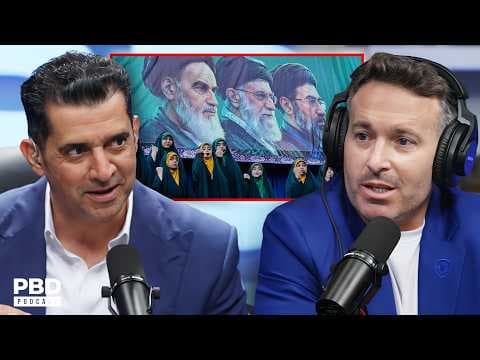
"June 14th Is The DEADLINE" - Why Trump Has 6 Weeks To End The Iran War
Audio Summary
AI Summary
Iran has submitted a 14-point proposal to the U.S., which the U.S. rejected, specifically seven to eight points. Iran's Supreme Leader has vowed to protect the nation's nuclear and missile capabilities, repeatedly stating that they will not compromise on this front. The Supreme Leader, in a statement read by a state television anchor, declared that the only place Americans belong in the Persian Gulf is "at the bottom of its waters," signaling a confrontational stance in negotiations. This rhetoric comes as Iran's economy faces severe pressure, with its oil industry heavily impacted by a U.S. naval blockade that prevents its tankers from reaching international waters. Despite these economic challenges, Iran maintains its control over the Strait of Hormuz, a critical passageway through which one-fifth of global crude oil is transported. This control has contributed to global oil prices, with Brent crude hitting $126.
The Iranian leadership views its nuclear, missile, and other technological capabilities as national assets crucial to its identity, supported by 90 million Iranians both domestically and abroad. The specific points rejected by the U.S. have not been fully publicized, but reports suggest the 14 components of Iran's proposal include demands such as binding non-aggression guarantees from the U.S., an end to hostilities across all fronts (including Israel and Lebanon), withdrawal of U.S. forces from the Iranian region, an end to the U.S. naval blockade, reopening of the Strait of Hormuz under a new joint system, full lifting of U.S. sanctions, release of $30 billion in frozen Iranian assets, compensation for war damages, resolution of all regional conflicts tied to the war, recognition of Iran's regional security role, and an end to sovereign interference in Iran's international affairs. Additionally, Iran proposed delaying nuclear negotiations until after the war ends, with possible temporary freezes or limits on enrichment later, and no upfront nuclear concessions in the initial deal phase.
Critics argue that Iran cannot be trusted. Jake Sullivan, a former national security advisor for Biden, emphasized verifying everything with Iran, rather than trusting them. This sentiment is echoed by others, including Muhammad bin Zayed (MBZ), the King of the United Arab Emirates, who explicitly warned against trusting the Iranian regime. The UAE, having experienced repeated attacks from Iran, is actively aligning with the U.S. and Israel, exiting OPEC, and strengthening ties through the Abraham Accords for economic stability and security. Israel has even deployed its Iron Dome system to the UAE, marking a significant step in their cooperation.
The aggressive nature of Iran's demands, particularly the statement about Americans in the Persian Gulf, suggests that Iran is not genuinely seeking a resolution. Their proposals are seen as entirely beneficial to Iran while completely undermining U.S. interests. This unyielding stance is attributed to the support Iran receives from China and Russia, which emboldens them to act with what is described by the Farsi word "poru" – meaning shameless, cheeky, or brazen. Without China and Russia pressuring Iran to negotiate seriously, Iran is expected to continue its defiant behavior.
The U.S. is perceived to have a deadline, possibly June 14th (Trump's birthday), for resolving the situation with Iran. This deadline is tied to the desire to move past the Iran issue before major summer events and to focus on domestic economic improvements. However, Iran is aware of this perceived deadline and seems intent on using it to their advantage, doubling down on their demands. The ongoing conflict is further complicated by past actions, such as the killing of Iranian leaders, which make genuine negotiation extremely difficult given the deep-seated animosity and the Iranian regime's willingness to sacrifice its own people for survival. Negotiating with such a regime, which operates under different rules than traditional groups, requires a unique approach, possibly involving strong international pressure from allies like Russia and China.