How the Nuclear Football Works
Audio Summary
AI Summary
On May 10th, 1963, President John F. Kennedy was photographed with the nuclear football, a briefcase containing everything needed to command America's nuclear arsenal. This was the first known photograph of the item, which has remained by the president's side for 63 years.
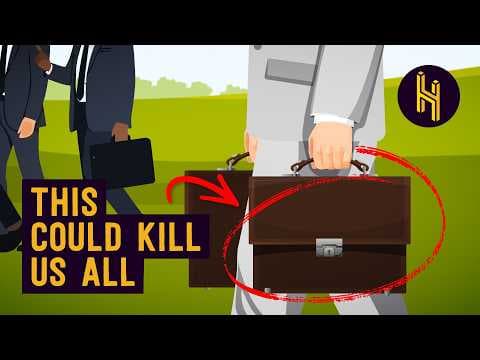
There are actually three nuclear footballs: one for the president, one for the vice president, and a spare at the White House. The football is a modified aluminum briefcase, carried in a leather satchel by one of the president's six military aides. These aides are high-ranking officials who have passed a rigorous Category 1 Yankee White background check.
Inside the football, the first item is likely the "black book," a 75-page binder with condensed nuclear strike plans, including estimated casualty counts and "cartoons and color schemes" for clarity. These plans are an abridged version of OPLAN 8010-12, identifying five global threats: Russia, China, North Korea, Iran, and possibly Syria. The options range from limited strikes for de-escalation to major strikes against economic, political, and nuclear targets.
Other items include informational packets with emergency alert system procedures and a list of classified hiding sites for the president. The most crucial item is the "gold codes" or "biscuit," a laminated card containing authentication codes for launching a nuclear strike. While sometimes carried in the football, presidents have also carried it on their person, with instances of codes being misplaced.
To launch a strike, a secure link is established to the National Military Command Center. The Pentagon confirms the president's identity using a two-letter phonetic challenge, matched against the daily-changing codes on the biscuit. Once confirmed, the order is executed and cannot be vetoed.