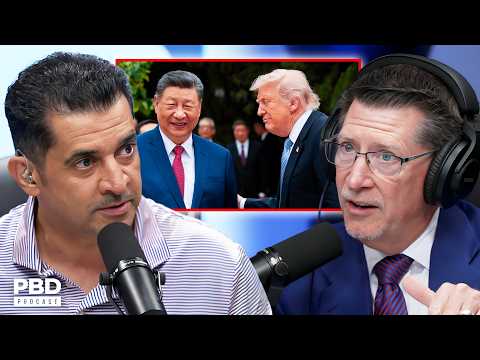
"Xi Jinping Is MAGA" - The Most SHOCKING Moments From Trump's HISTORIC China Summit
Audio Summary
AI Summary
The recent visit of the US President to China and the subsequent release of conversation clips highlighted Taiwan as China's foremost issue, repeatedly emphasized by Chinese officials. The US President underscored the significance of his relationship with the Chinese leader, noting it as the longest-standing presidential relationship with a Chinese leader, characterized by mutual respect and problem-solving. He expressed that this relationship has been an honor and that they have worked through difficulties effectively. China's leader, in turn, acknowledged the US President's statements, even suggesting that the President was "making America great again," which was humorously interpreted as China's leader officially joining the MAGA movement.
The conversation also touched upon the 250th anniversary of American independence, with the Chinese leader stating that the spirit of patriotism, innovation, and enterprise in the US, alongside China's rejuvenation, could progress hand in hand, benefiting the whole world. However, there was a brief, interjected segment where the hosts seemed to cut off a discussion, indicating a desire to move past certain points.
Regarding the key issues discussed, the economic aspect seemed less impactful than anticipated, with a perceived lack of substantial outcomes. A significant point of concern was the authorization for Nvidia to sell its H200 chips to ten Chinese companies, a move that raised eyebrows given previous discussions about restricting advanced chip sales to China. Additionally, the CEO of Citigroup received permission to operate a large securities business in China, and Boeing secured an order for 200 planes, with rumors of a larger potential order. The US Trade Representative's office indicated a positive outlook on ongoing discussions regarding trade and tariffs, although there remains an expectation of continued "cheating" by China.
Criticism arose from a clip where the President, in a seemingly joking manner, mentioned that both countries spy on each other. While acknowledging the truth of mutual espionage, some felt it was inappropriate to voice this so openly. The discussion also touched upon the controversial topic of China purchasing American agricultural land, with concerns about national security and past incidents of alleged agricultural sabotage by Chinese operatives.
The conversation then shifted to the effectiveness of US policies, with a mention of a 20% tariff imposed on China due to fentanyl, a measure that was highlighted as unprecedented. The idea of "keeping enemies closer" was brought up in relation to the significant presence of American business leaders, including CEOs from Tesla, Apple, Nvidia, and BlackRock, at the meeting, suggesting a potential for future substantial deals. However, historical context was invoked, recalling the trade deal following a previous presidential visit to Beijing, which was later followed by the COVID-19 pandemic, leading to a cautious perspective on current engagements.
Concerns were also raised about Chinese espionage within the US, exemplified by the discovery of a Chinese police station in Manhattan and the reported spying activities of a mayor in Arcadia, California. The presence of spy balloons during the current administration and the purchase of farmland near military bases further fueled these anxieties. The discussion concluded with a strong sentiment of distrust towards China, with a wish that the President had more directly addressed the origins of COVID-19.
The economic disparity between the US and China was emphasized, with statistics showing the US GDP significantly outperforming China's and a much higher GDP per capita in the US. This led to the assertion that China is not in America's league and needs such meetings more than the US does. The perceived ceremonial aspects of the visit, including the music played at a state dinner, were noted, with a humorous anecdote about the President's wife referring to "YMCA" as the "gay national anthem." The segment concluded with a promotional message for merchandise, including limited-edition hats and apparel, emphasizing the brand's message of a bright future and encouraging viewers to visit a website to make purchases.