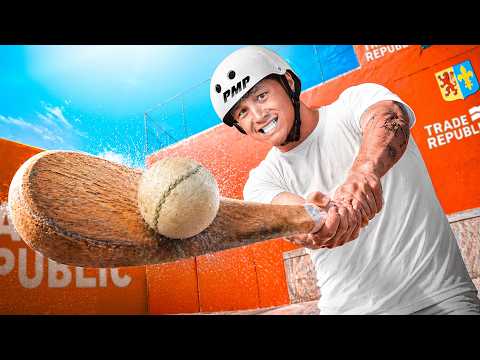
Immersion Avec Un Champion Du Monde De Pelote Basque
AI Summary
This video offers an in-depth immersion into the life of Dan Ncol, a world champion in Basque pelota. The presenter, Tristan, aims to experience and understand the multifaceted world of a high-level athlete beyond just the sport itself. Over three days, Tristan follows Dan, exploring his training, physical preparation, connection to nature, silence, and personal philosophy.
The journey begins with Tristan's arrival, meeting Dan, and immediately being introduced to the tools of his trade – the *palas*, the wooden bats used in the sport. Dan, a world champion in both team palacorta and solo palalarga, possesses an impressive array of titles. The initial interaction highlights the physical demands of the sport, with the *palas* weighing nearly a kilogram.
Their first destination is Bilbao, Spain, for training. Tristan explains that this video is not a typical "progress" video but an "immersion" format, allowing for a more in-depth look at the athlete's life, including moments usually cut from edited videos. This approach aims to provide a more authentic glimpse into the athlete's world.
Dan shares his background, having grown up in Bayonne and later moved to Toulouse for sports training. At 36, he acknowledges he's in the latter stages of his career but notes that pelota allows athletes to compete at a high level for longer, citing his partner who plays at 42. However, he stresses that professional pelota does not provide a sole income, necessitating other work. For ten years, Dan held a physically demanding job collecting waste, which started at 4 AM, allowing him afternoons for training. This demanding schedule eventually led him to develop his passion for Basque pelota further, organizing summer camps and becoming a physical trainer.
The narrative shifts to Tristan's recent experience attending a four-day retreat focused on conscious connected breathing, a practice he learned about through a previous video. He describes the retreat as a "wake-up call," designed to help participants disconnect and reconnect with themselves through various workshops, including martial arts, introspection, and non-verbal expression. A significant aspect of this retreat was extended periods of silence, fostering deep connections and self-discovery. Tristan emphasizes that he applies these practices to himself before transmitting them, highlighting the importance of embodying what he teaches.
Returning to the pelota experience, Dan explains the core principle of the sport: hitting a ball against a wall (*fronton*) in such a way that the opponent cannot return it. He warns Tristan that what looks easy from the sidelines is incredibly difficult in practice, particularly the speed and precision required. Tristan admits his initial impression was of a simple game involving hitting a bouncing ball, but he quickly realizes the sport's complexity and technicality.
The group then travels to Spain, where they indulge in local cuisine before heading to the *fronton* in Bilbao. Tristan learns that a *fronton* is a Basque pelota court, characterized by a wall against which the ball is struck. Dan, a double world champion, takes a moment to enjoy a coffee before training.
The video captures Dan's training session, emphasizing the specialized hand protection he uses. The *fronton* itself is described as an immense space with high ceilings, creating a unique acoustic environment. The game's objective is to hit the ball within specific boundaries, with faults occurring if the ball goes out of bounds or hits the ceiling. Tristan draws parallels to paddleball, noting the absence of a net. The speed of the ball is highlighted, reaching up to 150 km/h with the *palas* and an astonishing 300 km/h with the *chistera* (a glove-like basket). Tristan acknowledges the necessity of protective gear, particularly a helmet.
Observing the professionals, Tristan describes feeling an almost compulsive urge to play, likening it to a dog watching someone throw a stick. He recognizes the sport's physical and technical demands, noting the possibility of hitting the ball after one bounce or on the volley. The unpredictable trajectory of the ball is compared to a Pikachu, making it difficult to anticipate.
The narrative then delves into the first practical challenge: learning to serve. Tristan compares it to serving in tennis, ping-pong, or badminton, but quickly realizes the significant difference in Basque pelota, specifically in *palacorta*. The objective is to serve from a designated line and have the ball bounce beyond a specific mark. This initial exercise proves to be a "PM pi" in itself, requiring players to move back line by line until they reach the regulation serving zone. Even hitting the wall from the first line is a challenge, and progressively moving back tests their ability to maintain accuracy and power. The difficulty of centering the ball on the *pala* becomes apparent, as does the sheer force required.
After much practice, Tristan and Antoine begin to achieve the basic service requirements. The next stage involves making the bounce fall beyond line number 4. This requires a specific technique of throwing the ball and hitting it from underneath. The concept of "practice makes perfect" is reinforced as they repeat the exercises, focusing on correction and repetition.
The video encounters a technical issue: a corrupted SD card leads to the loss of footage from the initial training session. Tristan compensates by explaining the exercises and their objectives verbally. He emphasizes the difficulty of achieving a legal serve, which involves hitting the ball from a specific line (line 10) and ensuring it bounces behind line 4, a considerable distance from the wall. The process involves starting close to the wall and gradually moving back with each successful serve.
The challenge of hitting the ball accurately and with sufficient power is evident. Tristan notes that even at full effort, centering the ball on the *pala* is incredibly difficult. The weight of the *pala* (around 1 kg) is also a significant factor, making it distinct from lighter tennis or paddle rackets. The physical exertion required is considerable, with the impact on the arm and shoulder being substantial.
The day concludes with a well-deserved meal. Tristan reflects on the intensity of the experience, attributing his fatigue to the previous day's long drive and the preceding retreat. He mentions a past injury to Dan, where a *pala* hit him in the head at age 12, leading to the current practice of using resin for better grip.
The next day begins with a physical training session with Dan's long-time physical trainer, Christophe Damien. The focus is on high-intensity, short-duration sessions tailored for a high-level athlete. Tristan finds himself in a strength training session, designed to develop explosiveness, ballistic work, and power, crucial for the sport. He contrasts this with his own more general bodybuilding routine, highlighting the specificity of athletic preparation. Christophe explains that for Dan, at his age and level, the goal is maintenance and developing sport-specific qualities.
Tristan then reciprocates by inviting Dan to his own training routine, a circuit of pull-ups, push-ups, and dips. He describes this as his method for maintaining physical condition, emphasizing its intensity and effectiveness.
Later, they visit a significant location for Dan: a majestic 600-year-old oak tree in the Landes forest. Dan uses this place for meditation and rejuvenation. Tristan shares his own appreciation for nature and its restorative powers, finding solace in quiet moments in natural surroundings. Dan explains his connection to this tree as a place of personal grounding and energy, linking it to his father's work in energy healing. He attributes his remarkable lack of serious injuries in a physically demanding sport to this holistic approach, a stark contrast to his friend Antoine, who has suffered severe injuries.
The narrative then shifts back to the pelota court for the second day of practice. They visit a different *fronton*, this one smaller and with a net at the top, making high shots more challenging. The court's fast surface further increases the ball's speed. Dan introduces various types of *pelotas* (balls), from adapted ones for beginners to the heavier leather balls and the standard ones used in palacorta and palalarga.
The day's objective is to improve their skills and, ideally, score at least one point against Dan in a 2-on-1 match. Tristan and Antoine struggle immensely to even maintain rallies, finding it impossible to return the ball with the required precision and consistency. The difficulty of hitting the ball accurately, especially with the heavy *pala* attached to the hand, is emphasized. The technique involves not just hitting but also centering the ball on the small surface of the *pala*.
Tristan compares the experience to playing paddle tennis but with significantly more physical demands and a steeper learning curve. He notes the sensation of the skin sticking to the *pala*, causing pain during hand movements. The challenge of volleying, in particular, proves extremely difficult, requiring precise timing and body positioning.
After extensive practice, Tristan manages to string together a sequence of volleys followed by groundstrokes, a small victory in itself. Antoine also works on his technique. The physical toll of the sport becomes apparent, with Tristan developing blisters. After over an hour and a half of practice, they acknowledge the sport's immense difficulty and the need for months of dedicated training to achieve proficiency. The initial goal of playing a full match against Dan is deemed unrealistic.
The video then shifts to another aspect of Dan's life: his work with conscious connected breathing. He invites Tristan to experience a session. Tristan describes his fascination with altered states of consciousness and his training in breathwork. He explains the technique as a gentler version of Holotropic Breathwork, aimed at facilitating emotional release and self-awareness. Dan finds the session powerful and deeply impactful.
The evening involves a relaxed gathering with friends, including Morgan and Antoine, at a local restaurant. They discuss the challenges of playing pelota and the dream of building a *fronton* in their own retreat center. Dan shares his ambitious vision for a holistic retreat center that integrates physical training, mental well-being, and recreational spaces.
The final day begins with a refreshing dip in the ocean, a natural form of cryotherapy. Tristan recounts a challenging cold-water immersion experience with Wim Hof, highlighting the mental discipline required. Dan also shares his personal use of cold water exposure for personal development.
The video concludes with Tristan reflecting on his three-day immersion. He expresses gratitude for meeting Dan, an authentic and passionate individual who embodies discipline and dedication. Tristan emphasizes that the experience taught him more than just the sport itself, highlighting the importance of human connection and passion. He encourages viewers to experience a professional pelota match and provides links to Dan's events and activities. Tristan also expresses his intention to shift his video content towards more immersive, real-life experiences, moving away from purely performance-driven content. The video ends with a call for viewer feedback on future content ideas and a final farewell from Tristan.