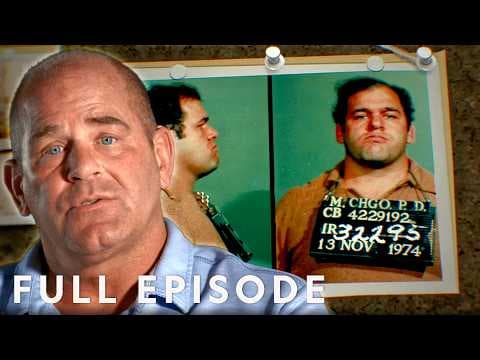
Escaping the Mob (Full Episode) | Inside the American Mob Compilation
Audio Summary
AI Summary
The La Cosa Nostra, commonly known as the mafia, operates on a code of honor and respect, demanding lifelong allegiance. Disobeying this code often results in death. Louis DeMarco, a junkie who robbed a made member of the Philadelphia La Cosa Nostra, was ordered killed by Angelo Bruno. Vincent Falcone and the narrator, Leonetti, ambushed DeMarco, shooting him in the back of the head and then emptying their guns into him. They then disposed of their weapons and fled. Leonetti viewed this first murder as a "good deed" for his family, eliminating a "bad man."
By 1980, the U.S. government intensified its battle against the mafia, aiming to demonstrate that no one is above the law. Despite these efforts, the Cosa Nostra remained immensely powerful, a force for corruption and extreme violence, particularly in Philadelphia, Chicago, and New York. These cities were home to five major crime families, notorious for bringing men into their ranks but rarely letting them leave alive.
This narrative delves into the lives of individuals who witnessed this secret society firsthand, some speaking openly, others remaining in the shadows due to fear. Michael Franzese, for instance, was profoundly impacted by the 1971 shooting of mob boss Joe Colombo and the subsequent murder of Joe Gallo. This event prompted him to seek answers from his father, Sonny Franzese, a legendary and notorious figure in organized crime, described as "100% gangster" and a strict follower of the mob code. Sonny was rumored to have killed dozens of people, an assertion Michael disputes.
Growing up, Michael idolized his father and detested law enforcement, who constantly shadowed their family. He recounted an incident where a detective, showing him a gun, threatened his father, leaving a lasting impression of hatred towards the police. Michael always saw his father as the hero and the police as the enemy. Another incident involved his father confronting a police officer who disrespected him in a crowded restaurant, with Sonny daring the officer to shoot him. These moments solidified Michael's perception of his father's power and his own loyalty.
In 1971, while Sonny was in prison for bank robbery, Michael visited him, expressing his desire to join the life. Sonny initially reacted with anger, urging Michael to pursue an education, but Michael insisted on helping the family. Sonny then posed a critical question: "If you had to kill somebody, could you do it?" Michael, after some thought, replied that he believed he could under the right circumstances. Sonny affirmed this as "the right answer" and instructed him to do whatever he was told, marking Michael's entry into the mob.
Meanwhile, in Chicago, Frank Calabrese Junior grew up unaware of his father, Frank Calabrese Senior's, true profession. Frank Senior was a prolific loan shark and a feared hitman for the Chicago mob, known for his brutal methods, including strangulation and throat-slitting. Frank Junior idolized his father, who maintained a strict separation between his criminal activities and home life, often telling his son not to "bring your business in the home."
As Frank Junior got older, he noticed FBI agents around their house, but his father's secrecy kept him oblivious to the extent of his involvement. Frank Senior's loan-sharking operation was massive, with millions of dollars on the street. Despite the Chicago mob's rule against involving children, Frank Senior began grooming his teenage son for the family business without permission, treating him as a "secret weapon." Frank Junior initially viewed these tasks as chores, but over time, he became deeply involved, progressing from collecting money to extortion, violence, arson, and assisting in murders. He excelled at violence, which further drew him into his father's world, feeling he had no choice but to be a "good son."
In 1986, Frank Senior assigned Frank Junior the task of killing John Fecarotta, a fellow mobster who had botched a cover-up in the murder of Tony and Michael Spilotro, and also personally wronged the Calabrese family. Frank Junior felt obligated to carry out the hit, but his uncle Nick intervened, claiming a better plan if he went alone. Frank Junior was initially angry, but Nick's intervention later proved to be a crucial, albeit disastrous, move for the Chicago mob.
Back in New York, Michael Franzese began his career as a Colombo family associate. He was summoned to meet Tom DiBella, the acting boss, who confirmed Michael's desire to join the life. DiBella laid out the strict terms: 24/7 availability to serve the family, with the family taking precedence over everything, even a dying mother. Michael was placed under Captain Andrew Russo and instructed to obey him without question. His recruitment period involved observing and listening in social clubs and during drives, absorbing the intricacies of the mob life.
As an associate, Michael's primary role was to earn money for the boss. He quickly became a successful earner, learning the unwritten rules of the mob, such as the 25% kickback to the family, with the rest kept by the earner. His first significant scam involved fraudulent work orders for shipping container repairs, generating tens of thousands of dollars monthly. This success quickly made him the biggest earner in the Colombo family, and possibly among all five New York families, positioning him for the ultimate honor: becoming a "made man."
Michael anticipated his initiation, which occurred on Halloween night in 1975 at Anthony Colombo's catering hall. The ceremony was dark and intense, involving a blood oath. Andrew cut Michael's finger, letting blood drop, and a picture of a saint was placed in his hands and lit aflame. Tom DiBella declared, "Tonight, Michael Franzese, you're being born again," into the life of La Cosa Nostra. Michael swore to dedicate his life to the organization, understanding that betraying his brothers would result in death and burning in hell like the saint in his hands. He was then embraced by the captains and welcomed as a "friend of ours," with promises of protection for his family. The message was clear: "We don't earn for you, you're gonna earn for us." Michael left feeling exhilarated, a "new creation" within the life.
By 1982, Michael Franzese, nicknamed the "Yuppie Don" by the media (a title he despised), was a highly successful and sophisticated earner for the Colombo family. He leveraged his business acumen, often exploiting legitimate contacts who brought him schemes. One such lucrative venture involved labor unions, where he facilitated a sweetheart deal with a major developer, keeping the union out of a construction project in Queens in exchange for a cut of the profits. This involved charging the developer for every converted apartment and whacking up the money among everyone involved.
His most significant and infamous scam was the "daisy chain gasoline scam." In the 1970s, New York State changed its gasoline excise tax collection method, making distributors responsible for payment on an honor system. Franzese exploited this by setting up numerous dummy corporations that would buy gasoline, sell it without paying taxes, and then disappear before the government could collect. He operated 18 licensed companies, primarily out of Panama, making it nearly impossible to trace the money back to him. This scheme generated millions of dollars a week, making him immensely wealthy, with a private jet and helicopter.
Rumors circulated that Michael was making billions, leading to media reports that he was becoming powerful enough to break away from the Colombos and start his own family. Around this time, his father, Sonny, was released from prison. The combination of Michael's immense wealth and Sonny's release made them both targets of law enforcement. Success in the mob could be as dangerous as failure, especially if the organization suspected skimming. Michael was even told his own father had put a contract on him.
One night, Sonny called Michael for a meeting with "Junior" (the boss). Sonny insisted they arrive separately, with him going in first. Michael strongly objected, recognizing the dangerous setup, but eventually conceded. He then met Jimmy Angelina, a captain he had known his whole life, who drove him to a house in Brooklyn. Michael noticed an unknown man in the back and felt a growing sense of dread, realizing he was being led into a trap. He started to pray, believing he was going to die, knowing that in the mob, being walked into a room by a friend often meant not walking out alive.
Inside, Michael was grilled about the gas business and the money, with the mobsters subtly asserting their authority. To his surprise, he emerged alive. On the drive back, Michael confronted Jimmy for not preparing him. Jimmy's response, "If it was the other way around would you have told me anything?", made Michael realize he wouldn't have. Jimmy then revealed that Sonny had been in the meeting before Michael and had offered no help, leaving Michael to fend for himself. This betrayal deeply affected Michael, making him realize he couldn't trust his own father and feeling the walls closing in. He was caught in a dilemma: continue making money and face further danger, or stop and lose everything. He decided to continue.
In Chicago, Frank Calabrese Junior was also growing disillusioned. He witnessed the destructive nature of mob life on people, including his father, who developed multiple personalities. He saw increasing infighting and strengthening FBI presence. Wanting out, Frank Junior decided to leave the life. His father was holding nearly $400,000 of his money, so Frank stole it from a hiding place, believing it was rightfully his.
His father soon discovered the theft and summoned Frank. Believing they were going to reconcile, Frank met him. However, his father lured him into a garage, slammed the door, and held a gun to his face, threatening to kill him for disobedience. Frank, maintaining eye contact, used emotional "trigger words" like "Dad, I'm your son," which ultimately prevented his father from pulling the trigger. This terrifying encounter cemented Frank Junior's fear and distrust of his father.
In the early 1980s, Michael Franzese began to feel the pressure from law enforcement, who had launched a major undercover operation targeting his gasoline scam. Despite his public denials, the FBI considered him a significant target, receiving information from cooperating witnesses. Faced with a lengthy trial and the prospect of a severe sentence (he believed he would get "1,000 years"), Michael decided to plead guilty and agreed to pay $10 million in restitution, though he largely defaulted on this. He realized his two biggest mistakes were trusting his father and surrendering his life to La Cosa Nostra, which left him with death threats, a disowning father, and no friends. Feeling utterly hopeless, he cooperated with the FBI, which led to a reduced sentence. He served 35 months and 13 days in prison, including 29 months and seven days in solitary confinement, during which he strengthened his faith and began reading the Bible.
Michael Franzese's survival after leaving the mob remains a mystery, with some speculating he paid his way out. He considers himself "the most blessed guy walking the streets," acknowledging his fate should have been death or life imprisonment. However, the past still haunts him, particularly the murder of his close friend, "Champagne" Larry Carrozza. Larry had an affair with Michael's sister, a severe transgression in the mob world. Michael was pressured to "take care of it," but he refused due to his closeness with Larry. Larry was later found shot once behind the ear, a murder that weighs heavily on Michael's heart. Today, Michael relies on his faith for coping, believing he has been forgiven for his past actions.
While Michael Franzese left the life, his father Sonny never did, remaining active in the mob until the age of 96, serving multiple prison sentences. In Chicago, Frank Calabrese Senior's mob legacy led to prison for both him and his son. In 1995, they were indicted for a loan-sharking operation involving threats and violence. Frank Junior initially saw prison as a blessing, hoping to escape his father. However, they ended up in the same prison. Frank Junior attempted to reconcile with his father, but soon realized his father's manipulative nature and addiction to the street life meant he would never change.
Faced with a choice between confronting his father (which would likely result in his own death) or cooperating with the FBI, Frank Junior made the painful decision to cooperate. He wrote a letter from prison, offering to provide information against his father. He refused immunity or obligations to the FBI, only wanting to keep his "sick man locked up forever." He initially declined to wear a wire but later realized it was necessary to get his father's confessions in his own words. Despite the extreme danger of being unmonitored in prison, Frank used his intimate knowledge of his father to extract information about various murders