8 Jours Sans Dormir : L’Expérience qui a mal tourné (MK Ultra) - Old Thread
AI Summary
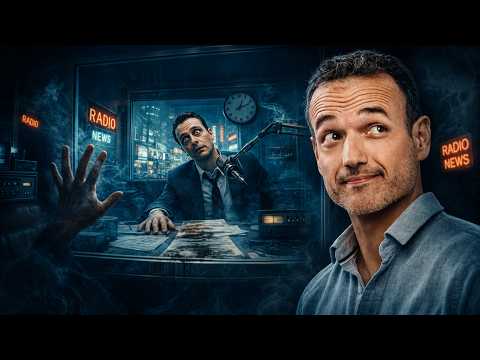
In January 1959, in a glass booth in the heart of Times Square, New York, radio host Peter Trip began a live broadcast. Outside, a crowd gathered, and international press looked on. Trip, however, was fixated on a doctor who had just entered the booth. Convinced the doctor was a grim reaper come to bury him, Trip panicked, screamed, and fled into the street, requiring several people to subdue and return him to the booth. At that moment, Trip had not slept for nearly eight days. This is the story of his attempt to conquer sleep for fame, and how sleep, in part, conquered him.
The video will cover three main points: the effects of sleep deprivation on Trip’s brain over eight days, an unexpected connection to CIA operations, and a simple three-digit method for easier sleep.
The context of American radio in the late 1950s was crucial. It was the era of "Mad Men," rock and roll’s explosion, and television’s rise, which was siphoning programs from radio. Radio stations became a gladiatorial arena where hosts aimed to stand out through extreme stunts: eating 50 hot dogs live, broadcasting from a moving car, or being buried for hours. One popular variant was the “wakeathon” or “sleep marathon,” where a DJ would lock themselves in a studio and attempt to stay awake for days or even weeks while continuing their show. The unofficial record at the time was around 180 hours, already detrimental to the brain.
Peter Trip, a 32-year-old charismatic host of "Your Hit Parade" on WMGM in New York, was a rising star. He was married, a father, and financially successful, seemingly living the ideal life. However, he conceived a grand idea: a wakeathon not in a closed studio, but in a transparent glass booth in Times Square, visible to everyone, day and night. Officially, the event was a charity drive for The March of Dimes, an organization fighting polio. Unofficially, Trip knew this was a massive publicity stunt and a way to counter rumors about shady practices among DJs.
Before the event, several doctors warned Trip, including Dr. Jolyon West, then head of psychiatry at the University of Oklahoma and a leading expert on sleep deprivation. West considered the operation dangerous but, unexpectedly, agreed to join the scientific team monitoring Trip. This was an unprecedented opportunity for a researcher, as no ethics committee would allow such an experiment in a lab. Trip was offering his brain for study, free of charge. West's name is important for the story's later developments.
On January 20, 1959, Peter Trip entered the glass booth, and the clock began. The first 48 hours were triumphant. Trip interacted with passersby, joked on air, and welcomed guests. The international press covered it like a space mission, and donations poured in for the charity. Trip was not confined to the booth continuously; he had access to a nearby hotel room for showering, eating, and changing. However, he was under constant surveillance by doctors and nurses whose job was to keep him awake. They administered tests, played cards with him, and regularly took him to labs for examinations.
By the third day, Trip’s temperament began to shift. He became irritable and unpleasant. His body temperature dropped, a documented effect of prolonged sleep deprivation. He complained of fatigue but refused to stop.
Around the fourth and fifth days, Trip struggled with simple mental tasks. He failed to recite the alphabet completely and faltered on basic addition. He would forget what he was saying mid-sentence and sometimes just lose his train of thought.
The third stage, around the sixth day, saw Trip experiencing vivid hallucinations. He saw spiders crawling from his shoes and mice and kittens running between his legs. At the hotel, he saw flames erupt from a drawer, convinced scientists had set it to trap him.
By the fourth stage, around the sixth day, these hallucinations became his reality. Trip became convinced that the medical staff was conspiring against him, attempting to poison him, setting his room on fire, and plotting his downfall. This is when the grim reaper incident in Times Square occurred.
In the final hours, Trip stared at a wall clock and believed he saw his friends’ faces. He began to doubt his own identity, calmly telling the doctors, "Everyone thinks I am Peter Trip, but it's not true. I am not him. I must tell you, I am an impostor." This was a profound dissociation, a split personality where he no longer recognized himself. Yet, he continued the broadcast, his voice on the radio indistinguishable from the real Peter Trip. The psychiatrists would later term this a “sleep deprivation psychosis,” a state where a person believes they are their own impostor.
The doctors, realizing Trip wouldn’t naturally reach 200 hours, made a controversial decision: they administered methylphenidate (Ritalin) for the final 66 hours to keep him awake. This decision complicated the scientific interpretation, as it became unclear how much of his psychosis was due to sleep deprivation and how much to the drug. Dr. William Dement, part of the observation team and later a pioneer in sleep medicine, believed Ritalin was more likely the cause of the hallucinations.
During these final hours, researchers connected an electroencephalogram (EEG) to Trip’s skull. Astonishingly, his awake brain generated brainwaves characteristic of REM sleep in approximately 90-minute cycles. REM sleep is the dreaming phase, essential for brain rest. Trip’s brain was dreaming while he was awake. These REM cycles coincided with his hallucinations, suggesting his brain was compensating for the lack of sleep by dreaming during waking hours. This observation on Peter Trip became a cornerstone of modern sleep medicine, proving that REM sleep is not optional and that the brain will find ways to achieve it, even during the day, leading to psychosis if deprived.
This experience highlighted that the quality of sleep, particularly the amount of REM sleep, is more critical than the sheer number of hours. Trip, unknowingly, demonstrated this to the world decades before science could precisely measure it.
At 2011 hours and 10 minutes, Trip finished his wakeathon and was immediately taken to the hospital. He slept for over 13 hours, with a significant portion in REM sleep, setting a record for the longest dreaming episode recorded at the time. He told doctors he felt fine, and the press hailed his success.
However, Trip’s record was short-lived. Other DJs soon surpassed him: Dave Hunter in Florida with 225 hours, and Tom Allen in Honolulu with 260 hours. Trip’s feat was overshadowed, though his achievement paved the way for others.
More significantly, while Trip was experiencing hallucinations, a scandal was brewing. In the fall of 1959, the U.S. Congress investigated "payola" in radio – where record companies paid DJs to play their music. The investigation revealed widespread bribery, and Peter Trip was indicted for commercial corruption, accused of accepting $3,650 in bribes. In 1961, he was found guilty of 35 counts, receiving a $500 fine and a six-month suspended sentence. He lost his job and his marriage.
This is where the story takes an unexpected turn involving Dr. Jolyon West. West, a brilliant psychiatrist known for his work on brainwashing and mental manipulation techniques, had co-authored a seminal paper on sleep deprivation based on his observations of Trip. Decades later, Senate investigations and declassified CIA documents revealed West’s involvement in Project MKUltra, the CIA’s illegal human experimentation program aimed at mind control. West was a major contractor for MKUltra, leading sub-project 43 at the University of Oklahoma, which studied hypnosis and dissociative states – the ability of the mind to fragment and detach from one’s identity.
While there’s no evidence Trip’s wakeathon was a CIA operation, the timing is striking. The same psychiatrist, funded by the CIA to study dissociative states, was observing a man drugged with Ritalin, experiencing identity dissolution and believing he was an impostor. West’s observations likely provided valuable research material for a program aimed at disintegrating personality. Most MKUltra archives were destroyed in 1973, making definitive conclusions difficult.
The narrative then shifts to Randy Gardner, a 17-year-old high school student in 1963 who decided to break the sleep deprivation record for a science fair project. He aimed for Tom Allen’s 260 hours. With two friends assisting him, Gardner stayed awake for 11 days and 24 minutes, reaching 264 hours without sleep. He was hospitalized, slept for about 15 hours, and was declared healthy, with no significant psychosis or paranoia. For decades, Gardner was seen as a counterexample to Trip, proving that one could break sleep records without stimulants and recover.
However, in 2007, at age 60, Gardner began to suffer from severe, persistent insomnia. He described himself as "a wreck," mentally breaking down and experiencing extreme distress. He called it his "karmic revenge." While science cannot definitively link his later insomnia to the 1964 experiment, the coincidence is notable.
In 1997, the Guinness World Records stopped homologating sleep deprivation records, deeming them dangerous to public health, akin to withholding food, water, or oxygen – essential elements for life.
The author’s research into Trip and Gardner led to a profound understanding: sleep is not just a function or an option, but a vital cleansing process. Science has discovered that during deep sleep, the brain undergoes lymphatic cleaning, removing toxic waste products like beta-amyloid proteins, which are linked to Alzheimer's disease. A single night of sleep deprivation can significantly impair memory function.
The author then shares a practical method for better sleep, the "3-2-1" method:
- 3 hours before bed: Stop eating.
- 2 hours before bed: Stop working or consuming stressful information (like social media).
- 1 hour before bed: Stop all screen use.
This method helps lower cortisol levels and improves the quality of deep sleep, crucial for lymphatic cleansing.
The author promotes his new book, "Bien