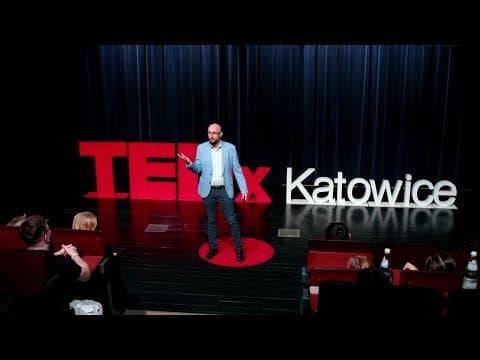
Cyfrowa Harmonia: Jak żyć w zgodzie z postępem? | Ariel Zgórski | TEDxKatowice
Audio Summary
AI Summary
The video emphasizes how deeply integrated technology has become in our lives, leading to the collection of vast amounts of personal data. This data is not just from our smartphones but encompasses a whole ecosystem of connected devices, including laptops, smart TVs, smartwatches, and smartbands. All these devices communicate and continuously gather information about us, creating a comprehensive digital profile.
The speaker illustrates this with personal examples, showing statistics like "151,567, 18, 42" which represent a significant amount of collected data. They highlight that this data collection is constant, with thousands of small data points being gathered every second. This data is then shared with "big tech" and other companies who wish to utilize it.
The transcript delves into the health implications of this data collection, noting that devices track steps, heart rate, and weight. Smart scales, for instance, don't just record current weight but also track trends over time. The speaker also mentions having around 150,000 pictures, a substantial amount of personal information. The sheer volume of data generated by our everyday devices is staggering.
A crucial point is that this information is often used "not because of us." While we are aware that data is being collected, most people are not fully conscious of *how* their data is being used or which applications are actively collecting it. The speaker mentions tools like ChatGPT as examples of popular AI that knows our activities, but points out that there are many other less obvious tools at play. This leads to a state of "ignorance of the data on us." We are aware that data is being collected, but we often choose to ignore its implications or the extent of its use. Companies leverage this data for personalization and business purposes.
The speaker uses Apple's product launches as an example of how companies present their technology. Instead of focusing solely on new features, Apple often begins by sharing stories about people's lives, implying that technology is meant to enhance human experiences.
The video then shifts to a personal anecdote about running marathons. The speaker describes how they used data from their training, including changes in heart rate and workout routines, to prepare for a marathon. They also recount a negative experience during an ultramarathon where they pushed their body too hard and suffered an injury. In this instance, their phone and GPS were in the car, highlighting a potential gap in immediate safety technology. However, they also mention that in other situations, they have configured technology to act as a safety net, enabling emergency calls when needed. This underscores the dual nature of technology: it can be used for personal improvement and goal achievement, but it also has the potential to be a critical safety tool. The speaker emphasizes that technology can be used "to be aware" and "to achieve a certain goal," or it can be configured to "help in the critical moment."
The core message is an encouragement to become more aware of our data and how it's being used. The speaker suggests focusing on specific aspects that are important to us, whether it's health, life, or safety. The idea is not to overhaul everything at once, but to start with one or two key areas. The current state of spending excessive time in front of screens is presented as abnormal, and increased awareness can be the catalyst for change.
The speaker advocates for a proactive approach to data. Instead of passively accepting data collection, we should actively engage with it. The concept of "ignorance" is contrasted with "awareness." While we have the data, we often lack the knowledge or will to act upon it. The speaker believes that by looking at our data, we can identify patterns and set achievable goals. They use the example of a marathon as a long-term, significant undertaking, but emphasize that even smaller, consistent steps can lead to success. The process of achieving a goal, like improving fitness, involves daily actions and consistent effort.
The video touches upon the future of technology, envisioning a time when robots will be commonplace in homes, handling tasks we don't want to do. This is presented as a progression from current technologies, just as laptops have become smaller and more portable. The speaker anticipates future devices that will be able to "see everything we see" and "hear everything we see," potentially serving as advanced advertising tools but also providing valuable information.
Ultimately, the video encourages viewers to be conscious of their data, to understand its implications, and to use it intentionally to achieve personal goals. The speaker shares their personal goal of becoming healthier and more athletic, acknowledging that it's a long journey. They suggest focusing on one key objective at a time, rather than trying to achieve too many things simultaneously. The process, the daily effort, is presented as the most important aspect of achieving any goal. The speaker concludes by urging viewers to consider their own perspective and how they can work with their data to improve their lives.