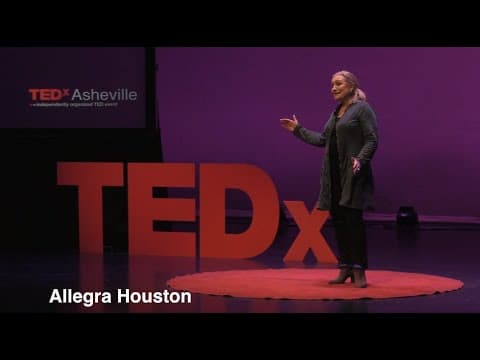
Imaginative Intelligence: your creativity, your insight, your self | Allegra Huston | TEDxAsheville
Audio Summary
AI Summary
Albert Einstein famously advised a mother to have her son read fairy tales to foster imagination, which he believed was crucial for intelligence, even more so than knowledge. He illustrated this with his own thought experiments, like imagining riding a beam of light, which led to his theory of relativity. While we now recognize various forms of intelligence beyond the purely "smart" kind, a significant realm of mental activity remains unaccounted for: imaginative intelligence.
This intelligence encompasses creativity, unexpected ideas, and gut feelings. It's the nonrational part of our mind that recombines information in useful ways, and imagination is its gateway. Deepening our connection to imaginative intelligence allows us to live more authentically, addressing the common regret of not living a life true to oneself. This often happens because we distrust our imaginative intelligence, especially if we've prioritized rational thinking, leading to anxiety and a feeling of being an imposter.
Rational intelligence is essential for practical functioning, but imaginative intelligence offers a broader guidance system. It includes curiosity, humor, awe, beauty, values, and what fulfills us. Crucially, imaginative intelligence often operates beyond language, communicating through images, bodily sensations like chills or a dropped stomach, and intuitive knowing that defies logical explanation. By naming and dignifying this intelligence, we can foster a partnership between our rational and imaginative minds.
Cultivating imaginative intelligence involves engaging in creative practices, experiencing awe and beauty, and embracing play. These activities strengthen our imagination, build self-trust, and expand our possibilities, ultimately enabling us to live more courageously and authentically.