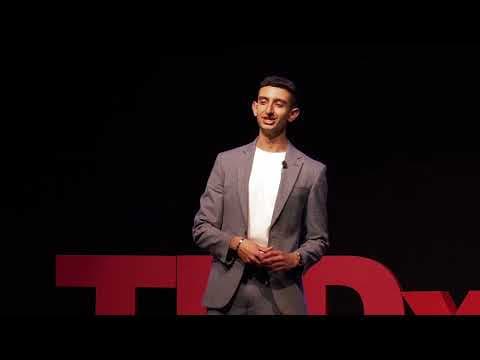
Engineering harmony | Keshav Ganesh | TEDxUniversity of Manchester
Audio Summary
AI Summary
The speaker recounts a childhood meeting with Buzz Aldrin, which ignited an obsession with space and how to reach it. However, studying aerospace engineering revealed that the Apollo program's success was not pre-programmed perfection but a messy, human miracle. The talk, "Engineering Harmony," emphasizes that great breakthroughs occur when differences are actively integrated, not avoided.
The speaker highlights three key instances from the Apollo program. First, the story of the "human computers," African-American women like Katherine Johnson, who manually checked calculations from early IBM computers. Despite racial and gender prejudice, astronaut John Glenn specifically requested Johnson verify the numbers for his orbital flight, demonstrating that ambitious projects cannot afford prejudice and demand all available genius. This friction, born from weaving differences, catalyzed innovation.
Second, the "battle of the specialists and the generalists" between Grumman Aerospace engineers, who optimized for elegance, and NASA flight controllers, who planned for every conceivable disaster. These groups, speaking different "languages," were forced into the same room to form Team 9. This awkward collaboration saved the mission because engineers understood "why" things happened, and controllers knew "what" to do. This synergy, seen also in the discovery of graphene, didn't just win a Nobel Prize; it changed the world.
Finally, the "generational weave" saw veteran aerospace pioneers collaborate with newer engineers. The Saturn 5 rocket, an old-school engineering beast, was the veterans' domain, while its guidance computer, pure digital magic, belonged to the newer generation. The veterans provided discipline and rigorous testing, preventing recklessness, while newer engineers offered breakthrough tools, preventing conservatism. This blend of tradition and innovation, also exemplified by the Manchester Baby computer, didn't just put humans on the moon but also put cell phones in our pockets.
The speaker concludes by reflecting on the Jodrell Bank Observatory, a symbol of this engineering harmony, where old steel holds new electronics, used by scientists globally. In a polarized world, the Apollo program teaches that friction is necessary for progress. The greatest challenges, from climate change to AI ethics, require weaving our differences into a strength no single group could achieve alone.