On est parti observer les serpents avec Ilian, biologiste
AI Summary
In this video, a wildlife enthusiast and biologist explores a site in the Essonne department, south of Île-de-France, to observe snakes in their natural habitat. The specific location is kept confidential to protect the animals from poaching. The speaker emphasizes that all snake species in France are strictly protected by law; it is illegal to touch, capture, kill, or even move them. When encountering a snake, the rule is to observe from a distance and leave the animal undisturbed.
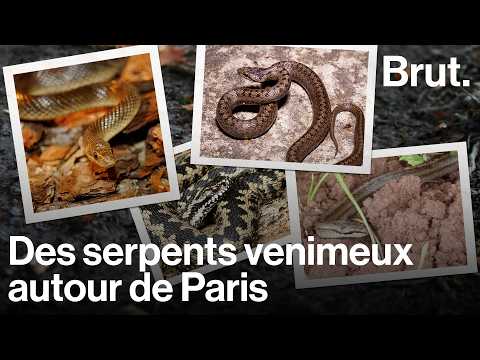
France is home to fourteen snake species, five of which can be found in the Île-de-France region. On the site visited in the video, several species are present, including the Asp viper, the smooth snake, the Aesculapian snake, the Helvetic snake (formerly known as the grass snake), and the adder. To distinguish between a viper and a colubrid (couleuvre), one can look at the head scales and the eyes. Vipers typically have vertical, slit-like pupils, while colubrids have round pupils. However, the speaker notes that pupil shape can be affected by light levels, making it a potentially unreliable indicator for the untrained eye. A more definitive trait of vipers is the presence of mobile venomous fangs at the front of the mouth.
Regarding safety, the speaker addresses the common fear of snake bites. While vipers are venomous, they are not as deadly as often perceived. In France, hundreds of people are bitten annually, yet the mortality rate is extremely low, with an average of only one death every five to ten years. If bitten, the absolute priority is to remain calm and go directly to a hospital. The speaker warns against using venom pumps, attempting to suck out the venom by mouth, or applying tourniquets, as these methods are ineffective and can worsen the injury. Furthermore, vipers often deliver "dry bites"—bites where no venom is injected—because venom is a precious resource they prefer to save for hunting prey rather than defense. Symptoms of envenomation, such as swelling, redness, and pain, usually appear between twenty minutes and two hours after the bite.
The video also delves into the biology and behavior of these reptiles. Snakes are ectothermic, meaning they cannot regulate their own body temperature and must move between sun and shade to stay healthy. This process is known as thermoregulation. Following the winter hibernation, males and juveniles are the first to emerge to bask in the sun. Females typically follow in mid-March or early April, leading to the mating season. Interestingly, vipers are viviparous, meaning they give birth to fully formed young in late summer rather than laying eggs.
From an evolutionary perspective, the speaker explains that snakes are essentially lizards that lost their legs over time as an adaptation to a subterranean lifestyle. Despite their negative reputation in Western culture, which the speaker traces back to biblical stories like Adam and Eve, he points out that other cultures, such as Hindus, hold snakes like the cobra in high regard.
Finally, the speaker describes the sensory world of the snake. While they lack external ears and cannot hear sounds in the traditional sense, they possess internal ears that pick up vibrations through their skeletons. This allows them to sense the footsteps of humans from a distance. The speaker likens the hobby of searching for different species to a real-life version of "Pokémon," where he uses a "Pokédex" mindset to track down and document various species, such as his favorites, the aquatic Tentacled Snake and the sea snakes of the *Laticauda* genus. He concludes by advocating for the protection and understanding of these often-unloved creatures.