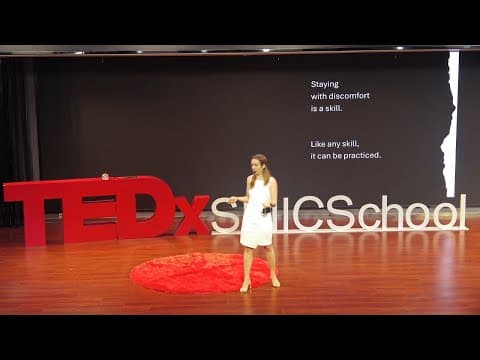
The Power of Discomfort | Marion Campan | TEDxSMICSchool
Audio Summary
AI Summary
The speaker introduces an experiment: putting phones away for 20 minutes to observe internal reactions to discomfort. Some may feel calm, others discomfort, a tension between the urge to check and the willingness to self-control. This tension is discomfort, and the focus is on reshaping our relationship with it, as the quality of life depends on our ability to stay with discomfort.
The speaker shares a personal practice of a 10-day silent meditation retreat annually. This involves complete silence, no external stimuli like phones, books, or music, and no eye contact. The schedule starts at 4:00 a.m. with a two-hour meditation. People often question why anyone would voluntarily endure such an experience, and the speaker admits to questioning it on day three. The motivation isn't to be insane or a guru, but to handle discomfort differently.
During meditation, one is alone, and many internal, uncomfortable thoughts and feelings arise, such as pressure, waiting, expectations, change, conflict, and social norms. These experiences intensify in silence. The speaker recounts a physical discomfort during a one-hour meditation where the instruction was to remain in one position. After 40 minutes, extreme burning pain in the feet began. The mind exacerbated the pain, creating catastrophic scenarios like losing legs. However, by observing and staying with the discomfort, the pain eventually faded. This led to a crucial realization: the discomfort itself isn't the problem, but our resistance to it.
The speaker uses the analogy of a snow globe. When life's events (like a nasty comment, injustice, or changed plans) "shake" us, the "snow" of discomfort swirls. The problem isn't the shaking, as life inevitably happens, but our unconscious habit of continuously shaking the globe, prolonging the discomfort. The solution is to simply stay with it and do nothing, allowing the snow to settle. This "staying with discomfort" is a skill that requires practice.
The speaker identifies common ways we deal with discomfort:
1. **Avoidance:** Procrastinating difficult tasks by finding other work.
2. **Resistance:** Mentally rehearsing scenarios to feel in control, like anticipating a difficult conversation.
3. **Suppression:** Trying to ignore or deny discomfort, like a losing team captain telling members not to think about their loss.
4. **Discharge:** Expelling discomfort onto others, like snapping or yelling.
5. **Freezing:** Becoming overwhelmed, indecisive, silent, or immobile.
These reactions, if habitual, lead to a life of avoidance and resistance. Instead, we can practice with small discomforts. We can welcome them, like bumping a foot or feeling slightly cold, and choose not to react with anger or suppression. Alternatively, we can provoke small discomforts, like taking a cold shower or free diving, and observe the experience without reacting.
This practice cultivates a "space of being," where we neither avoid, resist, nor suppress. This is challenging because we are rarely taught how to simply "be." Learning to deal with small discomforts without reacting prepares us for larger life challenges, such as hurt or loss. When we can stop shaking the snow globe and let the discomfort settle, freedom emerges—freedom to choose our actions and reactions, and to decide our next steps. The speaker concludes with James Baldwin's quote: "Not everything that is faced can be changed, but nothing can be changed until it's faced."